Why Is My Cat Not Drinking Water? 7 Proven Solutions That Actually Work
📅 June 27, 2026 · ⏱ 19 min read · By Arbsbuy Pet Experts
⚡ Quick Answer
Cats have a naturally low thirst drive — their wild ancestors obtained most of their water from prey, so cats evolved to drink very little. The most effective way to increase a cat’s water intake is switching from dry food to wet food: a single 3oz can of wet food contains approximately 75ml of water, more than most cats drink voluntarily from a bowl in an entire day. Signs of real dehydration: skin that does not spring back immediately when gently pinched, dry or sticky gums, sunken eyes, and lethargy.
💡 Expert Tip
Place water sources in multiple locations throughout the home — at least one away from the food bowl. In the wild, water near a kill is often contaminated, so cats are instinctively suspicious of water placed next to food. Many cats strongly prefer moving water: a pet water fountain typically doubles or triples voluntary water intake compared to a static bowl. Wide, shallow bowls also encourage drinking — cats dislike their whiskers touching the sides of a deep, narrow bowl.
🐱
Written by the Arbsbuy Pet Care Team
Vet-reviewed content | Published: June 5, 2026 | Arbsbuy LLC — U.S. Registered Pet Store
🕐 12 min read📝 3,200+ words🐱 Cat Health✅ Vet-reviewed
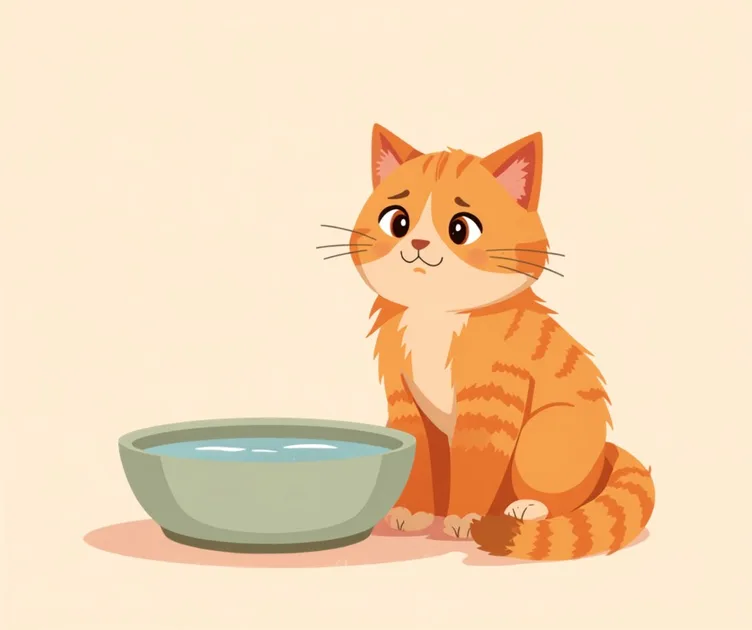
You fill the bowl with fresh water. You watch your cat walk right past it without a second glance. Hours later, the water level has barely changed. If you have found yourself wondering why is my cat not drinking water, you are in very good company — it is one of the most common concerns cat owners bring to their veterinarians every year.
The good news is that a cat not drinking water from their bowl does not always mean something is seriously wrong. In many cases, the reasons a cat avoids their water bowl have simple, practical solutions. However, there are situations where a cat not drinking water is an early warning sign of a medical condition that requires veterinary attention — and knowing the difference could literally save your cat’s life.
In this complete guide, we cover the 7 most common reasons why cats do not drink water, the warning signs of dehydration to watch for, and — most importantly — 7 proven solutions that actually work to get your cat drinking more. Whether your cat has always been a reluctant drinker or has suddenly stopped drinking, this guide gives you the answers you need.
🐾 Quick Answer
The most common reasons a cat is not drinking water include their low natural thirst drive (inherited from desert ancestors), a preference for moving water over still bowl water, bowl placement issues, stress, and underlying health problems. The most effective single solution is switching from a still water bowl to an automatic cat water fountain — which can double or triple a cat’s daily water intake.
How Much Water Should a Cat Drink Daily?
Before diagnosing why your cat is not drinking water, it helps to know what normal cat hydration actually looks like. The general veterinary guideline is that cats need approximately 3.5 to 4.5 ounces (100–130ml) of water per 5 pounds (2.3kg) of body weight per day. For an average 10-pound domestic cat, that works out to roughly 7–9 ounces — just under a cup — of water every day.
🐱Small Cat (5 lbs)~3.5 oz~100ml per day
🐱Average Cat (10 lbs)~7 oz~200ml per day
🐱Large Cat (15 lbs)~10 oz~300ml per day
However, these numbers apply to cats eating primarily dry food. Cats on a wet food diet may drink significantly less from their bowl — and this is completely normal. Wet cat food is approximately 70–80% water, meaning a cat consuming a full wet food diet gets a large portion of their daily water requirement from their meals. If your cat is eating wet food and drinking very little from their bowl, they may still be perfectly hydrated.
Cats eating dry food exclusively, on the other hand, receive almost no moisture from their meals and are therefore entirely dependent on their water bowl for hydration — making the cat not drinking water problem far more serious in dry-food cats than in wet-food cats.
7 Reasons Why Your Cat Is Not Drinking Water
Understanding exactly why your cat is not drinking water is the essential first step to fixing the problem. Here are the seven most common causes, from the most benign to the most serious.
1
Cats Have an Evolutionary Low Thirst Drive
This is the root cause behind almost all cat hydration challenges, and it is not something you can change — only work around. Domestic cats evolved from desert-dwelling ancestors (Felis silvestris lybica) who obtained nearly all of their water from the prey they consumed. As a result, cats are biologically wired to have a low thirst drive — they do not instinctively feel thirsty until they are already mildly dehydrated. This means a cat not drinking water proactively is, unfortunately, completely normal cat behavior. The solution is to make drinking more appealing and accessible — not to wait for your cat to feel thirsty enough to drink.
2
Dry Food Diet — The Hidden Dehydration Risk
A cat eating only dry kibble receives less than 10% of their daily water intake from food — compared to 70–80% for cats eating wet food. This creates a chronic, low-grade dehydration risk that many cat owners are not aware of. If your cat is eating primarily dry food and also not drinking enough water from their bowl, they are almost certainly chronically dehydrated — even if they appear perfectly healthy. This form of slow-building dehydration is a leading contributor to kidney disease and urinary tract problems in cats over time.
3
Bowl Placement Problems
Where you place your cat’s water bowl matters more than most owners realize. Cats are instinctively cautious animals — in the wild, eating and drinking near their “kill” (food source) near potential predators would be dangerous. Many cats are uncomfortable drinking from a bowl placed directly next to their food bowl, as the scent of food near the water signals contamination to their instincts. Similarly, water placed near the litter box is instinctively avoided. Move the water bowl to a completely separate location from both the food bowl and the litter box.
4
Bowl Material and Cleanliness
Cats have a highly developed sense of smell — estimated to be 14 times stronger than a human’s. Plastic water bowls absorb odors and develop bacteria in micro-scratches on the surface, creating a smell that cats detect and find repellent — even when the bowl appears clean to human eyes. Many cats that appear to be not drinking water are actually avoiding a bowl that smells wrong to them. Switching to a ceramic, glass, or stainless steel bowl and cleaning it daily often resolves the problem immediately.
5
Stress and Environmental Changes
Cats are extraordinarily sensitive to changes in their environment. A new pet in the home, a house move, changes in your work schedule, construction noise, new furniture, or even a different brand of cat litter can trigger stress that suppresses your cat’s already-low thirst drive further. Stress-related water refusal typically resolves within 3–7 days once the stressor is removed or the cat adjusts to the change. However, if a cat not drinking water is accompanied by hiding, reduced appetite, or changes in litter box habits, it may indicate significant stress that warrants veterinary advice.
6
Dental Pain or Underlying Medical Conditions
This is the most important cause to rule out: sometimes a cat not drinking water is signaling that drinking is physically painful or that an underlying illness is affecting their appetite for food and fluids. Dental disease, tooth abscesses, and gum inflammation can make the act of lapping water painful. More seriously, kidney disease, diabetes, urinary tract infections, and gastrointestinal illness can all cause a cat to stop drinking. If your cat has abruptly stopped drinking water — especially combined with other behavioral changes — contact your veterinarian promptly.
7
The Cat Prefers Moving Water — An Instinctive Preference
In the wild, still water is far more likely to be contaminated than moving water from streams and rivers. Cats have retained this instinctive preference for moving water — which is why so many cats are fascinated by dripping taps, will drink from running faucets, and ignore their static water bowl entirely. A cat that ignores their water bowl but drinks enthusiastically from a dripping faucet is not being difficult — they are following a survival instinct thousands of years old. An automatic cat water fountain directly addresses this instinct and is the single most effective solution for cats that avoid still water.
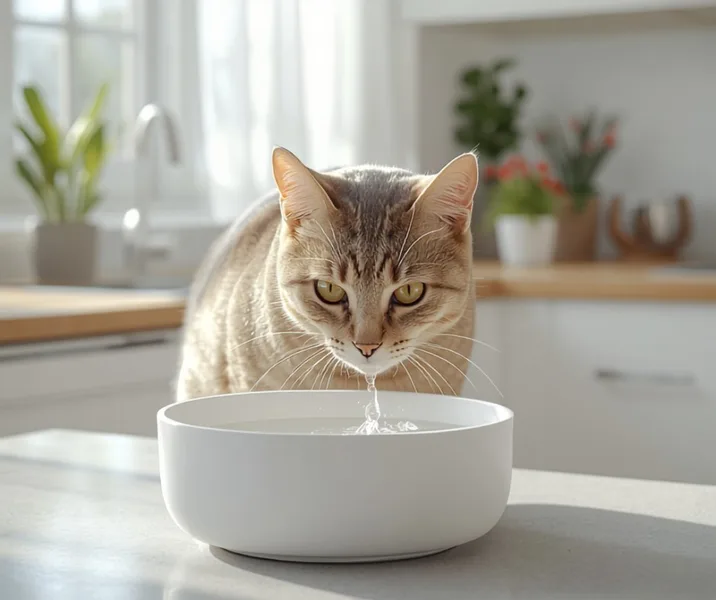
A recirculating pet fountain encourages cats to drink more by keeping water fresh and moving.Warning Signs Your Cat Is Dehydrated
If you are concerned about why your cat is not drinking water, knowing the signs of dehydration allows you to assess whether the situation is a behavioral issue to manage at home — or a medical emergency that requires immediate veterinary attention. According to PetMD veterinary experts, the following signs indicate your cat may be dehydrated:
👅Dry, sticky, or pale gums (healthy gums are pink and moist)
😿Sunken or dull-looking eyes — loss of normal brightness
🐾Skin that stays tented when gently pinched (poor skin elasticity)
😴Unusual lethargy, weakness, or reluctance to move
🍽️Reduced appetite or complete refusal to eat
🚽Reduced urination or very dark, concentrated urine
🤢Vomiting or diarrhea worsening the fluid loss
🌡️Panting (unusual in cats — often indicates serious distress)
The Skin Pinch Test: Gently pinch a small fold of skin on the back of your cat’s neck or between the shoulder blades, then release. In a well-hydrated cat, the skin immediately springs back flat. In a dehydrated cat, the skin returns to its normal position slowly — or in severe cases, remains tented. This is a simple, vet-recommended home test for assessing dehydration.
⚠️ Seek Immediate Veterinary Care If:
Your cat has not drunk any water for more than 24 hours
Your cat has not urinated in 12 or more hours (possible blockage — life-threatening)
Your cat shows multiple dehydration signs simultaneously
Dehydration is combined with vomiting, diarrhea, or extreme lethargy
Your cat has abruptly stopped drinking with no obvious environmental trigger
7 Proven Solutions to Get Your Cat Drinking More Water
If you have identified why your cat is not drinking water and confirmed there is no immediate medical emergency, these seven solutions — listed in order of effectiveness — will help increase your cat’s daily water intake significantly.
💧 Solution 1: Switch to an Automatic Cat Water Fountain
This is consistently the most effective single change cat owners can make. An automatic cat water fountain continuously circulates and filters water — mimicking the moving streams that cats instinctively prefer. The sound of flowing water attracts cats to drink, and the constant circulation keeps water oxygenated and fresh. Multiple studies and veterinary reports confirm that most cats significantly increase their daily water intake within 24–48 hours of switching from a still bowl to a fountain. If your cat ignores their water bowl, a fountain will very likely solve the problem. Our Arbsbuy automatic cat water fountain runs continuously, filters impurities, and encourages your cat to drink more every day — shipped free from our USA warehouse.
💧
Arbsbuy Automatic Cat Water Fountain
Continuously circulates fresh filtered water · Mimics natural moving water · Most cats double water intake within 48 hours · Free USA shipping · 30-day guarantee.
If your cat is eating primarily dry kibble, incorporating wet food — even partially — dramatically increases their total daily water intake through food moisture. Wet cat food is 70–80% water, meaning a single 3oz can of wet food delivers approximately 2.4oz of water directly into your cat’s system. Many veterinarians recommend a mixed diet of wet and dry food as standard practice for indoor cats, specifically for this hydration benefit. Even adding wet food to just one meal per day makes a measurable difference in overall hydration levels.
📍 Solution 3: Place Multiple Water Stations Around the Home
One water bowl in one location is often not enough — especially in multi-level homes or larger spaces. Place fresh water in at least two or three different locations throughout your home, away from both food bowls and litter boxes. Some cats discover a water location they prefer and will consistently use that one. Others drink more simply because water is more accessible throughout the day. For multi-cat households, provide at least one water source per cat, plus one additional — following the same principle as the litter box rule.
🥣 Solution 4: Switch to Ceramic, Glass, or Stainless Steel Bowls
If you are currently using plastic water bowls, replace them immediately. Plastic bowls absorb odors and harbor bacteria in micro-scratches, making the water smell unpleasant to your cat’s sensitive nose — even after washing. Ceramic, glass, or stainless steel bowls are odor-neutral, easier to keep genuinely clean, and far more appealing to cats. Wash water bowls daily with warm water and mild dish soap, rinse thoroughly, and refill with fresh water. This simple change resolves water avoidance in a surprising number of cats.
🍗 Solution 5: Try Flavored Water (Low-Sodium Broth)
Adding a small amount of low-sodium chicken broth or tuna juice (from tuna packed in water, not oil) to your cat’s water bowl makes it significantly more appealing. The scent and flavor attract cats to investigate and drink. Start with a very small amount — a teaspoon per bowl — and increase if your cat responds positively. Important: always use low-sodium or sodium-free broth specifically, as regular broth contains high levels of sodium that can harm cats. Commercial cat milk or bone broth made specifically for cats is an alternative option.
🧊 Solution 6: Try Different Water Temperatures
Some cats prefer cold water, while others drink more readily when water is at room temperature. Experiment with adding a few ice cubes to your cat’s bowl in warmer months — many cats are attracted to the sound and movement of ice, and enjoy drinking cold water. Other cats ignore cold water entirely. There is no universal preference; the key is to experiment and observe what your specific cat responds to. Some cat owners find their cats drink enthusiastically from a bowl that has been slightly chilled but not ice-cold.
🔄 Solution 7: Refresh Water Multiple Times Daily
Cats are extremely sensitive to water freshness. Water left in a bowl for even a few hours can collect dust, fur, and microscopic debris that cats detect and avoid. Many cat owners solve the cat not drinking water problem simply by refreshing the water bowl two or three times per day rather than once. If using a water fountain, clean and refill the reservoir at least every 48–72 hours, and replace the filter according to the manufacturer’s schedule. Fresh water encourages drinking — stale water discourages it.
Cat Water Fountain vs Bowl: Which Is Better?
The evidence clearly favors water fountains for addressing the core issue of why cats do not drink water — but here is a direct comparison to help you decide:
Feature
Still Water Bowl
Cat Water Fountain
Mimics natural water source
❌ Still water
✅ Moving water like streams
Attracts reluctant drinkers
❌ Rarely
✅ Consistently effective
Keeps water fresh longer
❌ Stagnates quickly
✅ Continuously circulated
Filtered water
❌ Unfiltered
✅ Carbon filter removes impurities
Average water intake increase
—
✅ 50–100% increase reported
Maintenance required
Daily refilling only
Daily top-up + weekly deep clean
Cost
$ (very low)
$$ (one-time investment)
Best for
Cats that drink adequately
✅ Cats that avoid still water
“I was skeptical about fountains until I tried one with my own cats. Within 48 hours, their water intake doubled. The sound of trickling water, the ripples on the surface — it activates their prey drive and makes drinking interesting.”
— Veterinary practitioner, published on FelinaCarehub
For cats that are chronically dehydrated or that consistently ignore their water bowl, a cat water fountain is not a luxury — it is a genuine health investment. The long-term cost of kidney disease and urinary tract treatment in cats far exceeds the one-time cost of a quality fountain.
When to See a Veterinarian About Your Cat Not Drinking Water
Most cases of a cat not drinking water have behavioral or environmental causes that respond to the solutions above. However, certain situations require prompt veterinary evaluation. Contact your vet if:
Your cat has completely stopped drinking for more than 24 hours
Your cat has not urinated in 12 or more hours — this may indicate a urinary blockage, which is a life-threatening emergency in male cats especially
The water refusal is combined with vomiting, diarrhea, or extreme lethargy
Your cat has lost weight noticeably over a short period
You notice your cat pawing at their mouth, drooling, or showing signs of oral pain
Multiple dehydration signs are present simultaneously
Your senior cat (over 8 years) suddenly reduces water intake — kidney disease risk increases significantly with age
According to ASPCA cat care guidelines, senior cats should have annual blood and urine panels specifically to detect early kidney disease — which is far more manageable when caught early. For more comprehensive information on keeping your cat healthy, our Cat Psychology & Care Bible covers cat health, hydration, behavior, and preventative care in over 150 pages of expert guidance.
✅ Good news: The Cornell Feline Health Center notes that many hydration-related health issues in cats — including early kidney disease — can be significantly slowed or managed with dietary changes and improved hydration. Addressing a cat not drinking water issue early is one of the most impactful preventive health steps a cat owner can take.
Frequently Asked Questions
❓ Why is my cat not drinking water but is eating normally?
A cat that eats normally but does not drink from their bowl is usually displaying instinctive behavior — particularly if they eat wet food (which provides moisture directly) or if they prefer moving water over still water. Check whether your cat drinks from taps or other moving water sources. If so, an automatic cat water fountain will likely resolve the issue. If your cat is eating dry food and not drinking, monitor for dehydration signs and consult your vet if none of the solutions above produce improvement within 48–72 hours.
❓ How long can a cat go without drinking water?
A cat can technically survive 3–4 days without water before organ failure occurs, but dehydration symptoms begin within 24 hours. This is a dangerous situation — never intentionally test your cat’s limits. If your cat has not consumed any water (through food or direct drinking) for 24 hours, contact your veterinarian. Do not wait until the 48 or 72-hour mark.
❓ Do cats prefer cold or warm water?
Individual preference varies. Some cats are attracted to cold water — particularly with ice cubes — while others drink more readily at room temperature. Experiment with both to identify your cat’s preference. Most cats are neutral toward water temperature but respond strongly to freshness and movement, which is why fountains outperform static bowls of any temperature.
❓ Is a cat water fountain worth it?
For most cats — especially those that avoid still water, eat dry food primarily, or have a history of urinary tract issues — a cat water fountain is absolutely worth the investment. The reported average increase in water intake is 50–100%, and the long-term health benefits (reduced kidney disease and urinary tract problem risk) far outweigh the one-time cost. Browse our automatic cat water fountain options at Arbsbuy — free USA shipping on every order.
❓ Why does my cat prefer drinking from the tap?
This is one of the clearest indicators that your cat has a strong instinctive preference for moving water. In the wild, moving water is significantly safer to drink than still water — it is less likely to be contaminated. Cats that drink from taps or faucets are displaying this ancient survival instinct. A cat water fountain that continuously circulates water provides the same appeal as a dripping tap — in a purpose-built, hygienic format.
❓ Should I add water to my cat’s dry food?
Yes — this is a simple and effective way to increase your cat’s daily water intake, particularly for cats on a dry food diet that are not drinking enough. Add 2–3 tablespoons of warm water to your cat’s dry kibble and mix well. Many cats accept this willingly, especially if introduced gradually. This technique — combined with a water fountain — is one of the most effective dual approaches to addressing chronic dehydration in dry-food cats.
❓ Can I give my cat flavored water?
Yes — in moderation, with safe ingredients. Low-sodium chicken or beef broth (specifically sodium-free or very low sodium), tuna water from canned tuna in water (not oil), or commercially produced cat milk can be added in small amounts to encourage drinking. Always verify the ingredient list — avoid any broth containing onion, garlic, or high sodium, as these are toxic or harmful to cats. Flavored water is best used as a short-term strategy, not a permanent replacement for clean, fresh water.
Final Thoughts — Why Is My Cat Not Drinking Water?
If you have been asking why is my cat not drinking water, the answer almost always comes down to one of seven causes — from their evolutionary low thirst drive, to bowl problems, to an instinctive preference for moving water, to underlying health conditions. The good news is that the majority of cases are entirely solvable with the right approach.
Start with the most impactful change first: switch to an automatic cat water fountain. In our experience and based on widespread veterinary and owner reports, this single change resolves water avoidance in the majority of cats within 24–48 hours. Combine it with wet food, multiple water stations, and ceramic or glass bowls for the best results.
Monitor your cat for dehydration signs, and do not hesitate to contact your veterinarian if your cat stops drinking suddenly, shows any signs of illness, or if home solutions do not produce improvement within 2–3 days. Early intervention always produces better outcomes.
For a comprehensive guide to cat health, behavior, and preventive care — including complete nutrition and hydration guidelines — explore our expert-written Cat Psychology & Care Bible ebook. And to find the right cat water fountain for your home, browse our complete cat products collection — all shipped free from our USA warehouse with a 30-day money-back guarantee.
🐱
Shop Premium Cat Products at Arbsbuy
Automatic water fountains, calming beds, litter mats & interactive toys · Free USA shipping · 30-day guarantee · USA warehouse
Journal of Feline Medicine and Surgery: Increased water intake via wet food reduces urinary tract disease incidence by 46% — https://journals.sagepub.com/home/jfm