
⚡ Quick Answer
Cat litter box problems have two root causes: medical (urinary tract infection, bladder crystals, constipation, arthritis in older cats making box entry painful) or behavioural. Always rule out a medical cause first — a cat suddenly eliminating outside the box is communicating discomfort, not acting out. For behavioural litter box avoidance, the most effective fixes are: add one more litter box (total = number of cats + 1), switch to unscented clumping litter, make the box larger (it should be 1.5× the cat’s body length), and scoop at least once daily.
💡 Expert Tip
Most cat litter box problems — including long-standing ones — resolve with three changes: a larger box (most commercial boxes are too small), unscented litter (heavily scented litters repel cats even if the cat initially seems to accept them), and daily scooping (cats require a clean surface and will avoid a heavily used box). Make all three changes simultaneously before assuming a medical cause.
📋 Table of Contents
- This Is Never Spite — Understanding Cat Elimination
- 4 Categories of Cat Litter Box Problems
- 🚨 Emergency Warning Signs — Go to the Vet Now
- 10 Real Causes and Specific Fixes
- The Perfect Litter Box Setup — Complete Checklist
- How to Re-Train a Cat to Use the Litter Box
- Cleaning Accidents Correctly — The Enzymatic Method
- Multi-Cat Household Special Guide
- Frequently Asked Questions
- Final Thoughts
You discover that your cat has urinated on the sofa again. Or found a pile behind the television. Or noticed the tell-tale wet patch on the bed. Cat litter box problems — the umbrella term for any inappropriate elimination behaviour — are the single most common behavioural complaint in cat ownership, affecting at least 10% of all indoor cats at some point in their lives. More significantly, inappropriate elimination is the primary reason cats are surrendered to shelters in the United States.
Before anything else: your cat is not doing this out of spite, revenge, or deliberate defiance. Cats are hardwired to eliminate in a substrate that allows digging and burying — litter box avoidance means something in their world is wrong and the litter box is no longer meeting their needs. Understanding what that something is — whether medical, environmental, social, or preference-based — is the key to solving the problem completely. This guide gives you the full diagnostic framework and the specific solutions for every common cause.
🐱 Quick Answer
Cat litter box problems are caused by: dirty box, wrong litter type, box too small or covered, wrong location, too few boxes, medical conditions (UTI, FIC, arthritis), stress, or urine marking. Always rule out medical causes first with a vet visit — UTI and Feline Idiopathic Cystitis are the most common medical causes. Follow the n+1 rule (one box per cat plus one extra), use unscented clumping litter, scoop daily, and place boxes in quiet private locations away from food and water.
This Is Never Spite — Understanding Cat Elimination Behaviour
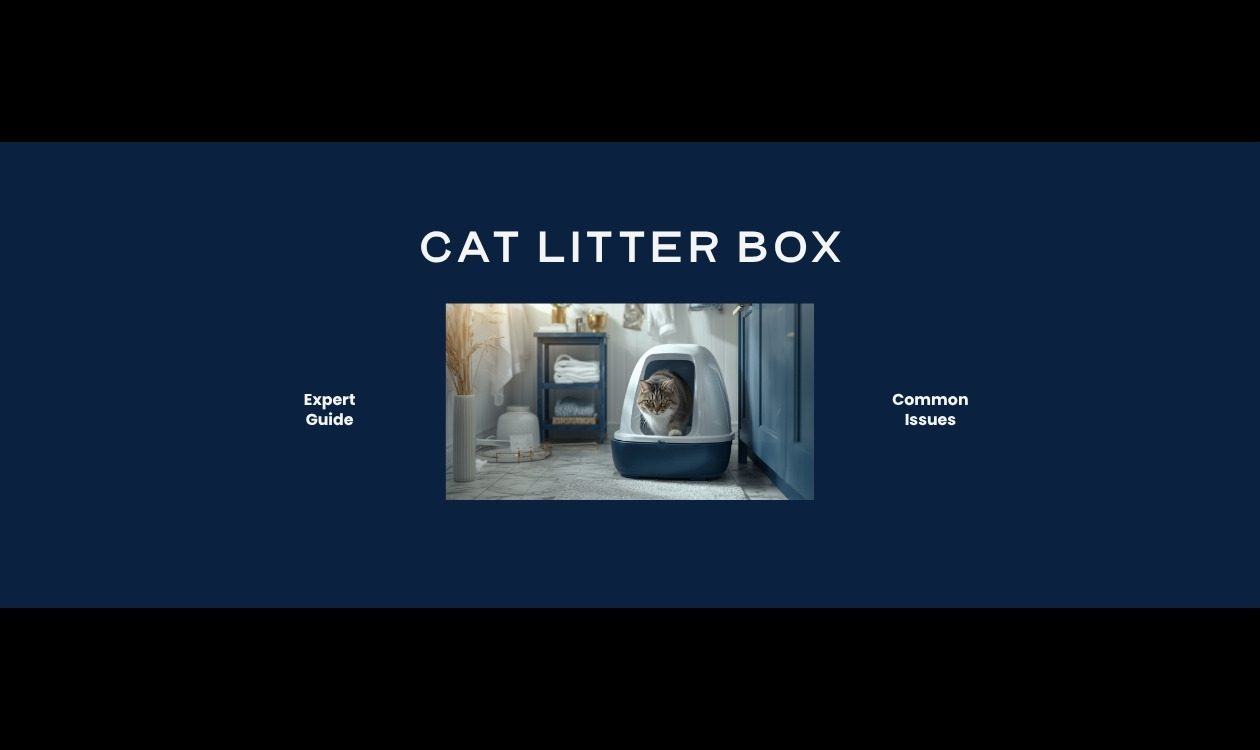
Cat litter box problems are never acts of revenge or spite. Cats do not have the cognitive capacity for planned retaliatory behaviour — they are not urinating on your pillow because you went on holiday. They are doing it because something about their current elimination environment is not meeting their needs, and they are communicating this in the only language available to them.
According to Texas A&M College of Veterinary Medicine, “inappropriate elimination can stem from a number of underlying causes, including behavioural or medical problems” — and the solution depends entirely on identifying which cause is present. This framing matters practically: a cat that is punished for eliminating outside the box becomes more anxious, which worsens the problem. Understanding and addressing the cause is the only path to resolution.
4 Categories of Cat Litter Box Problems
The AAFP/ISFM Feline Inappropriate Elimination Guidelines classify all cat litter box problems into four categories — identifying which category applies is the first diagnostic step before any solution can be chosen:
🚨 Medical Cause
- Cat uses box but frequently, in small amounts, or with obvious discomfort
- Blood visible in urine or stool
- Straining or crying in the litter box
- Sudden onset without environmental change
- Always rule out first — veterinary exam required
⚠️ Litter Box / Substrate Aversion
- Cat avoids the litter box itself or the litter type
- Eliminates just outside the box, on the edge, or on nearby surfaces
- May shake paws after using the box (litter discomfort)
- Triggered by: dirty box, wrong litter, scented litter, covered box
🗺️ Location Preference
- Cat prefers a specific location or surface over the litter box
- Consistently uses the same spot (carpet, bathroom mat, specific corner)
- Box may be technically acceptable but in the wrong location for this cat
- Solution: add a litter box at the preferred spot initially
🔱 Urine Marking (Spraying)
- Small amounts of urine on vertical surfaces — walls, furniture, doors
- Usually unspayed/unneutered cats, or stress-triggered in spayed/neutered
- Often triggered by outdoor cat sightings, new pets, or household stress
- Different mechanism than toileting — requires different intervention
🚨 Emergency Warning Signs — Seek Immediate Veterinary Care
🚨 These Signs Require Same-Day Emergency Veterinary Care
Before attempting any home solutions for cat litter box problems, watch for these emergency warning signs — they indicate life-threatening conditions that cannot wait:
Male Cat Straining — No Urine
Repeatedly visiting the litter box but producing no urine or tiny drops. Urethral obstruction — fatal within 24–48 hours without treatment. Emergency now.
Visible Blood in Urine
Pink, red, or brown-tinged urine indicates significant urinary tract inflammation or injury. Veterinary care within 24 hours — same day for males.
Crying in the Litter Box
Vocalization during elimination indicates significant pain — from urinary crystals, obstruction, or severe cystitis. Immediate vet care.
Lethargy + Not Eating + Litter Issues
Combined symptoms of appetite loss, weakness, and elimination changes suggests serious systemic illness — same-day veterinary evaluation.
Hard, Distended Abdomen
A firm, painful abdomen alongside litter box problems suggests urinary retention or obstruction — life-threatening emergency.
Complete Urine Absence 24+ Hours
A cat that has not produced any urine in 24 or more hours — regardless of other symptoms — requires immediate veterinary evaluation.
10 Real Causes of Cat Litter Box Problems — And Their Specific Fixes
Medical Condition — Always Rule Out First
Urinary tract infections (UTI), Feline Idiopathic Cystitis (FIC), urinary crystals, kidney stones, diabetes, and arthritis are among the most common medical causes of litter box problems in cats. FIC — inflammation of the bladder without a bacterial cause — is particularly prevalent and causes intense urinary urgency that may prevent a cat from reaching the box in time. Arthritis in senior cats makes the physical act of climbing into or out of a high-sided box painful, causing avoidance. According to the ASPCA, medical causes must always be ruled out before any behavioural intervention begins.
✅ Fix
Veterinary examination, urinalysis, and blood panel. Never attempt to solve litter box avoidance behaviourally before getting a vet-clear diagnosis. If medical cause is confirmed: treat the condition. For senior cats with arthritis: provide a litter box with very low sides for easy entry.
Dirty Litter Box — The Most Preventable Cause
Cats have a sense of smell estimated at 14 times more sensitive than a human’s. A litter box that a human considers “needs cleaning soon” may already smell unacceptably foul to a cat. If the box is not scooped at least once daily, many cats will seek alternative surfaces. Cats that refuse a box that smells acceptable to you are exercising entirely normal feline cleanliness standards — they are not being difficult.
Importantly, a box that is technically clean by human standards but retains old urine odour within the plastic of the box itself can still deter a cat. Litter boxes should be fully replaced every 6–12 months as the plastic absorbs ammonia over time.
✅ Fix
Scoop minimum once daily — twice is better. Complete litter replacement weekly (for clumping) or more frequently. Wash the box monthly with hot water and unscented soap. Replace the litter box itself annually.
Wrong Litter Type or Scented Litter
Cats have strong substrate preferences — and most prefer unscented, soft-grain clumping litter that closely mimics the loose soil they would naturally choose outdoors. Scented litters — however appealing they smell to humans — are frequently offensive to cats’ far more sensitive noses. Crystal litters, pellet litters, recycled paper litters, and coarse textures are rejected by many cats simply based on texture under the paw. A sudden change to a different litter brand, texture, or fragrance is one of the most common triggers for litter box avoidance in cats.
✅ Fix
Switch to unscented, fine-grain clumping litter if you have not already. Introduce any new litter type by mixing 25% new litter with 75% old litter, increasing the new over 2 weeks. If your cat has developed a preference for a specific surface (carpet, towels), place a small amount of that material under the litter initially to bridge the preference.
Box Too Small or Has a Hood / Cover
The most common commercial litter boxes are too small for many adult cats — particularly large breeds like Maine Coons, Ragdolls, and Norwegian Forest Cats. A cat should be able to turn a full circle inside the box without touching the sides. When a cat exits the box to eliminate over the edge (what owners describe as “missing the box”), the most common cause is a box that does not provide adequate space for their elimination posture and turning radius.
Hooded or covered litter boxes — marketed as more aesthetically pleasing and containing odours — trap exactly those odours inside from the cat’s perspective. A box that smells manageable from the outside may be overwhelming inside. Many cats strongly reject hooded boxes — and given the choice between a hooded and an open box, will consistently choose the open option.
✅ Fix
Use a box that is at least 1.5 times the length of your cat. Remove hoods and covers — most cats prefer open boxes. The ideal homemade litter box: a large, low-sided plastic storage container (approximately 66x45cm) provides generous space at low cost.
Wrong Location — Loud, Busy, or Near Food
Cats require a quiet, private, low-traffic location for elimination — one that provides multiple escape routes and freedom from surprise. A litter box placed next to a washing machine, in a high-traffic hallway, near the dog’s food, or in a location where the cat has previously been startled will be avoided. Additionally, placing food and water bowls near the litter box violates the cat’s instinctive avoidance of eating near elimination areas — and may cause them to avoid either the food, the litter box, or both.
✅ Fix
Move the box to a quiet, low-traffic area with two exit routes. Never place the box near food, water, or noisy appliances. On each floor of a multi-storey home. Never in a basement if the cat is elderly or has mobility issues.
Too Few Litter Boxes — Multi-Cat Tension
In multi-cat households, litter box tension is among the most common — and most overlooked — causes of cat litter box problems. A dominant cat may guard a single litter box, making it inaccessible to subordinate cats who then use alternative locations. Even without overt aggression, cats may simply avoid a box that smells strongly of another cat, or one positioned in a dominant cat’s territory.
✅ Fix
Follow the n+1 rule — one box per cat plus one additional. Place boxes in multiple locations across the home, not clustered together (cats consider clustered boxes as one box). In a two-storey home: minimum one box on each floor per cat.
Stress and Environmental Change
Feline Idiopathic Cystitis (FIC) — the most common cause of urinary symptoms in cats under 10 years old — is directly triggered by psychological stress. Even in the absence of FIC, stress causes cats to reduce litter box use in favour of more perceived-secure elimination sites. Common stress triggers: a new pet, a new baby, house move, changes in owner schedule, redecorating, new furniture, outdoor cats visible through windows, or conflict between household cats.
✅ Fix
Identify and mitigate the stressor. Feliway Classic diffusers significantly reduce stress-related inappropriate elimination. Provide additional hiding spots and elevated perches. Increase predictable routine. Block outdoor cat views if territorial stress is the trigger.
Negative Association with the Litter Box
A single negative experience in the litter box — a painful urination episode, a startling noise, being ambushed by another cat, or being picked up while in the box — can create a lasting aversive association. The cat connects the litter box with the unpleasant experience and avoids it even after the original cause is resolved. This is learned aversion — it is particularly common after a UTI or FIC episode that has been medically resolved.
✅ Fix
Provide a completely new box in a completely new location — different in both appearance and position from the previous box. The new box allows the cat to form a new association without the baggage of the old location. Never interrupt a cat while they are using the litter box for any reason.
Urine Marking / Spraying
Spraying — depositing small amounts of urine on vertical surfaces — is fundamentally different from inappropriate toileting. It is a communication and territorial behaviour, not a litter box problem per se. Unspayed females spray when in heat; unneutered males spray to mark territory. Spayed/neutered cats spray when experiencing territorial stress — typically from the presence of an outdoor cat or conflict with a household cat.
✅ Fix
Spay or neuter if not already done — this resolves spraying in 90% of males and most females. For spayed/neutered cats: identify and mitigate the territorial stressor (block window views of outdoor cats, separate conflicting household cats). Feliway Multi-Cat specifically addresses inter-cat tension.
Senior Cat Mobility and Cognitive Issues
Senior cats (10+ years) may develop litter box problems for two distinct reasons: arthritis that makes climbing over high box sides painful, or cognitive dysfunction syndrome (feline dementia) that causes disorientation — the cat simply cannot remember where the litter box is located, or forgets to use it until it is too late. Both causes are manageable once recognised.
✅ Fix
For arthritis: switch to a box with very low sides (cut down a storage container to a 5cm entry ramp). For cognitive dysfunction: add more boxes throughout the home so the cat is never far from one, and maintain identical locations — never move boxes for seniors. Night lights help with nighttime orientation.
The Perfect Litter Box Setup — Complete Checklist
📦 The Box Itself
- Large enough to turn full circle inside without touching sides
- No hood, cover, or liner — most cats reject these
- Low sides for kittens and senior cats (under 10cm entry height)
- Made of smooth, non-porous material — no rough textures
- Replace every 6–12 months as plastic absorbs odours
🪣 The Litter
- Unscented — no artificial fragrances or deodorisers
- Fine-grain clumping — the most widely accepted texture
- 3–4 cm depth — deep enough to dig and cover
- Never switch types abruptly — transition over 2 weeks
- Full litter replacement and box wash weekly
📍 Location
- Quiet, low-traffic area — bathroom or bedroom corner ideal
- Multiple exit routes — never in a dead-end space
- Away from food and water bowls — separate rooms ideal
- Away from noisy appliances (washing machine, dryer)
- Accessible 24/7 — never behind a closed door
🧹 Maintenance
- Scoop solid waste and clumps minimum once daily
- Complete litter replacement weekly (clumping litter)
- Wash box monthly with hot water and unscented soap only
- Never use bleach or strongly scented cleaners on the box
- Litter mat outside the box to catch tracked litter
How to Re-Train a Cat to Use the Litter Box
Vet Check First — Always
Before any retraining begins, get a veterinary examination and urinalysis. Training a cat back to the box while a UTI or FIC is unresolved is futile — they will continue to avoid it due to pain association. Begin retraining only after a medical clear.
Provide a Brand New Box in a New Location
A completely new box eliminates the negative associations built with the old box. Place it in a location your cat has been using for accidents — if they have been using the corner of the bedroom, place a new box there initially.
Confine to a Small Space Initially
For cats with established avoidance patterns, temporarily confining them to a single room with a litter box, food, water, and a bed resets the elimination choice. With limited space, cats will use the available box and rebuild the positive association with it over 1–2 weeks.
Clean All Accident Sites Thoroughly
Enzymatic cleaner on every accident site — if the cat can smell previous elimination spots, they will continue to use them. Standard carpet cleaners do not neutralise the ammonia compounds that attract cats back to the same spot.
Reward Box Use — Never Punish Accidents
When you observe your cat using the litter box, give quiet, calm praise or a small treat immediately. Never punish accidents — this creates anxiety that worsens the avoidance. The cat cannot connect punishment to an action that happened moments ago, and the anxiety created actually makes future accidents more likely.
Gradually Expand Space and Move Box If Needed
As the cat reliably uses the new box, gradually expand their access to more of the home over 2–3 weeks. If the box is in an ideal location, leave it there. If it is in a temporary accident-site location, move it incrementally toward the desired permanent location — maximum 5 centimetres per day.
Cleaning Accidents Correctly — The Enzymatic Method
Cleaning a cat urine accident with standard household cleaners — including white vinegar and baking soda — leaves ammonia compounds that attract cats back to the same spot. Only enzymatic cleaners (specifically formulated to break down the uric acid crystals in cat urine) fully neutralise the odour at a molecular level.
✅ Correct Cleaning Protocol: Blot — do not rub — fresh urine with paper towels until as dry as possible. Apply enzymatic cleaner generously, ensuring it reaches as deep as the urine penetrated (urine soaks through carpet into underlay). Allow the enzymatic cleaner to air-dry completely — do not use heat or blot it out. Repeat a second time if any odour remains after drying. On hard floors: apply, leave for 10 minutes, then wipe clean. Products like Nature’s Miracle, Rocco & Roxie, and Simple Solution are widely available and effective.
⚠️ Never Use These on Cat Urine Accidents
- Ammonia-based cleaners — ammonia smells like urine to cats and actively attracts them back
- Steam cleaners on carpet — heat sets urine proteins permanently into carpet fibres
- Bleach — toxic to cats; the chlorine smell does not deter re-use
- Standard carpet cleaners — do not neutralise uric acid crystals, only mask smell temporarily
Multi-Cat Household — Special Litter Box Guide
The n+1 Rule — Non-Negotiable in Multi-Cat Homes
One cat needs 2 boxes minimum. Two cats need 3 boxes. Three cats need 4 boxes. This provides each cat with a box they can consider “theirs” while reducing territorial conflict over shared resources.
Critically — the boxes must be in different locations across the home, not clustered together. Cats consider three boxes in the same room as effectively one location. Spread them across different rooms and different floors for maximum effectiveness.
Cat-to-cat dynamics matter enormously. If you notice one cat blocking access to the box (sitting nearby, staring at the entrance), this is resource guarding — the victim cat will use alternative locations. Add boxes away from the guarding cat’s territory, and consider whether the household dynamic needs intervention.
Cat Psychology & Care Bible — Complete Cat Behaviour Guide
150+ pages · Litter box psychology · Stress management · Multi-cat dynamics · Health chapter · PDF worldwide · $9.99
Frequently Asked Questions — Cat Litter Box Problems
Final Thoughts — Cat Litter Box Problems
Cat litter box problems are among the most solvable cat behaviour challenges — when approached with understanding rather than frustration. The vast majority of cases have a clear, identifiable cause and a specific, effective fix. The key is following the diagnostic process: rule out medical causes first, then identify whether the issue is box aversion, location preference, or social stress, and apply the intervention appropriate to that specific cause.
The golden standards that prevent most litter box problems from developing in the first place: scoop daily, use unscented fine-grain clumping litter, provide n+1 boxes in multiple quiet locations, use boxes large enough for your cat, never use covered boxes unless your specific cat has demonstrated a preference for them, and keep all food, water, and noisy appliances well away from the elimination area.
For a comprehensive guide to understanding cat psychology, behaviour, and health — including an in-depth section on feline stress management that addresses the most common trigger for litter box avoidance — our expert-written Cat Psychology & Care Bible is available for instant download worldwide. For premium cat products including litter mats, automatic water fountains, and interactive enrichment toys that reduce stress-related elimination issues, visit our complete cat products collection at Arbsbuy — free USA shipping and 30-day guarantee.
Shop Premium Cat Products at Arbsbuy
Litter mats · Water fountains · Calming toys · Interactive enrichment · Free USA shipping · 30-day guarantee
Sources: ASPCA — Litter Box Problems | Texas A&M Veterinary Medicine — Feline Inappropriate Elimination | PetMD — Cat Litter Box Guide | VCA Animal Hospitals — House Soiling in Cats
📄 Sources & References
- AAFP Feline Elimination Disorders Guidelines: Cat litter box management — the one-box-per-cat-plus-one rule and placement guidelines — https://www.catvets.com/guidelines
- Cornell Feline Health Center: Inappropriate Elimination in Cats — litter box aversion vs behavioral spraying vs medical causes — https://www.vet.cornell.edu
- Journal of Feline Medicine and Surgery: Effect of litter type and box cleanliness — cats prefer fine-grain, unscented litter overwhelmingly — https://journals.sagepub.com/home/jfm
- ISFM: Cat Litter Box Environmental Guidelines — size, depth and placement for multi-cat households — https://icatcare.org/advice/cat-care