
⚡ Quick Answer
The best cat toys for indoor cats work with the hunt-catch-kill-eat sequence that drives all feline play behaviour. Structure your cat’s enrichment in three categories: interactive wand toys for daily active hunting sessions (15–20 minutes, ideally morning and evening), puzzle feeders that require problem-solving for food access (replace at least one daily meal), and solo play toys (crinkle balls, small furry mice) for self-directed play. Rotate toys every 3–5 days — novelty drives engagement, and even highly favourite toys lose appeal with constant, unbroken access.
💡 Expert Tip
The single highest-impact enrichment change for an under-stimulated indoor cat is two structured interactive play sessions daily of 15–20 minutes each. Use a wand toy, move it like prey — low to the ground, in irregular bursts with pause-and-freeze moments, occasionally “hiding” behind furniture. End each session with a small food reward to complete the natural hunt cycle. Cats that receive this structured play consistently show measurably lower stress behaviours within 7–14 days.
📋 Table of Contents
- Why Indoor Cats Need More Toys Than You Think
- The Hunting Sequence — What Cats Need to Complete
- What Makes the Best Cat Toy? — 5 Key Criteria
- 7 Types of Best Cat Toys for Indoor Cats Explained
- Best Cat Toys by Cat Personality Type
- How to Play with Your Cat — Expert Protocol
- Budget-Friendly DIY Cat Toy Ideas
- Cat Toy Safety — What to Avoid
- Frequently Asked Questions
- Final Thoughts
Your cat sleeps 14 hours a day, eats twice, stares out the window for an hour, then knocks something off the shelf for entertainment. Sound familiar? This is the daily reality for millions of indoor cats across the USA — and while it might look peaceful, it represents a chronic state of under-stimulation that has serious consequences for feline health and wellbeing. Finding the best cat toys for indoor cats is not just about keeping your cat entertained — it is about meeting a genuine biological need.
Indoor cats retain all the hunting instincts and cognitive capabilities of their wild ancestors — but without prey to stalk, chase, and catch, those instincts have nowhere to go. The best cat toys for indoor cats replicate the elements of the hunting sequence that cats are hardwired to perform — and the results of providing adequate daily play are measurable: reduced anxiety, healthier weight, better sleep quality, and significantly fewer behavioral problems.
This complete guide covers everything you need to know about choosing and using the best cat toys for indoor cats in 2026 — from understanding why toys matter, to the seven types of toys that work best, how to match toys to your cat’s unique personality, and how to structure daily play sessions for maximum enrichment benefit.
🐱 Quick Answer
The best cat toys for indoor cats are wand/feather toys for supervised hunting play (10–15 minutes, twice daily), puzzle feeders for mental stimulation at mealtime, and self-play toys like track balls and electronic toys for solo entertainment. Rotate toys every 3–4 days. Complete the full hunting sequence in every play session — stalk, chase, pounce, catch, kill, and rest — to provide genuine behavioral satisfaction.
Why Indoor Cats Need More Cat Toys Than You Think
The statistics about indoor cat health in the USA paint a clear picture of a widespread enrichment problem. Over 60% of indoor cats are overweight or obese, making feline obesity the most common preventable health problem in pet cats — and inadequate physical activity is the primary cause. But the consequences of under-stimulation go well beyond weight.
Without adequate enrichment through play, indoor cats commonly develop:
- Obesity and metabolic disorders: Indoor cats that do not engage in daily active play gain weight rapidly — with associated risks of diabetes, joint problems, and shortened lifespan
- Stress-related urinary conditions: Chronic environmental boredom is a major trigger for Feline Idiopathic Cystitis (FIC) — one of the most common and painful conditions affecting indoor cats. According to the Cornell Feline Health Center, environmental enrichment significantly reduces FIC recurrence rates
- Behavioral problems: Aggression toward owners, excessive grooming (overgrooming to the point of hair loss), inappropriate scratching, and nocturnal hyperactivity (the midnight “zoomies”) are all signs of insufficient enrichment
- Cognitive decline in older cats: Mental stimulation through play maintains cognitive sharpness in aging cats — reducing the risk of feline cognitive dysfunction syndrome (cat dementia)
- Depression: Yes — cats can become clinically depressed. Signs include loss of appetite, social withdrawal, excessive sleeping, and complete disinterest in previously enjoyed activities
“Play is not optional for indoor cats. It is the primary mechanism through which they express natural behaviors, maintain physical health, and achieve psychological wellbeing. The consequences of inadequate play accumulate gradually — but they are very real.”
— Dr. Tony Buffington, DVM, PhD, Diplomate ACVN, Ohio State University College of Veterinary Medicine
The Hunting Sequence — What Your Indoor Cat Needs to Complete
Understanding why certain cat toys for indoor cats work better than others requires understanding the feline hunting sequence. In the wild, a cat’s day is structured around a complete behavioral cycle that provides both physical and psychological satisfaction. The best cat toys replicate as many stages of this sequence as possible.
This sequence matters enormously for play design. A laser pointer that never allows the cat to actually catch anything — permanently stuck at the “chase” phase — leaves cats in a state of chronic frustration. This is why many cats that play with laser pointers for extended periods become more anxious, not calmer. The best cat toys for indoor cats allow the complete sequence: stalking and chasing followed by a genuine physical catch, then a treat or wet food portion to simulate the “consume” phase, followed by rest. This complete cycle produces genuine behavioral satisfaction and the calm, settled cat behavior that owners want.
What Makes the Best Cat Toy? — 5 Key Criteria
Unpredictable Movement
Cats habituate instantly to predictable patterns. The best toys change direction, speed, and behavior unpredictably — mimicking real prey that tries to escape. Consistent, mechanical movements lose a cat’s interest in minutes.
Multi-Sensory Engagement
Top-rated cat toys engage at least three senses: visual (movement), auditory (crinkle, chirp, squeak), and tactile or olfactory (catnip, varied textures). Multi-sensory toys maintain engagement significantly longer than single-sensory options.
Safety First
No small parts that can be swallowed, no strings longer than the cat’s body length for unsupervised use, non-toxic materials, no sharp edges. Inspect toys regularly and discard any that are damaged or excessively worn.
Durability
Cats are serious hunters — they will bite, kick, claw, and wrestle toys with full force. Quality toys withstand this treatment for months. Cheap toys that fall apart within days create safety hazards from ingested materials.
Personality Match
The “best” cat toy is the one your specific cat will actually engage with. A shy, anxious cat needs different toys than a bold, high-energy cat. Observe what movements, textures, and sounds your cat responds to most strongly.
Rotation Potential
The best cat toy collections include multiple types that can be rotated every 3–4 days. Cats are novelty-seeking — a toy they have not seen for a week is treated with the same enthusiasm as a brand new toy.
7 Types of Best Cat Toys for Indoor Cats Explained
Wand and Feather Teaser Toys — The Gold Standard
Wand toys — a flexible rod with feathers, ribbons, or small toys attached — are consistently rated the most effective of all cat toys for indoor cats by feline behaviorists. They allow the complete hunting sequence: you control the “prey” movement, allowing your cat to stalk, chase, pounce, and catch at the appropriate moment. The human-guided movement is infinitely variable — unlike electronic toys — meaning your cat never fully habituates.
The key is varied, realistic movement: drag the toy slowly along the floor, dart it behind furniture, lift it in erratic flight patterns, let it “land” and twitch as if injured. Change direction and speed unpredictably. End every session by allowing your cat to fully catch and hold the toy — do not end on a frustrated, uncaught “prey” — then follow with a meal or treat to complete the hunting sequence. Use wand toys only during supervised sessions — the string presents a strangulation and ingestion risk for unsupervised play.
Puzzle Feeders and Treat Dispensers — Mental Enrichment Powerhouse
Puzzle feeders replace the food bowl with a mentally engaging challenge that requires cats to manipulate compartments, slide panels, or bat balls to access their kibble or treats. This transforms every meal into a foraging activity that engages the stalk-and-catch instinct through food-seeking behavior. The results are measurable: slower eating (reducing vomiting in fast eaters), mental fatigue that produces calmer behavior, and reduced caloric intake through slower consumption.
Puzzle feeders range from beginner level (simple bat-to-release track balls) to advanced multi-step puzzle boards. Start at the easiest level and progress as your cat masters each stage. A cat that abandons a puzzle feeder entirely is usually experiencing frustration from a difficulty level that is too high — reduce the difficulty immediately. These are the best cat toys for cats left alone during work hours, providing meaningful occupation without requiring owner participation.
Electronic and Motion-Activated Toys — Technology Meets Instinct
Electronic cat toys have improved dramatically in 2026 — the best models feature randomized movement patterns that genuinely surprise cats, infrared sensors that activate when the cat approaches, and programmable activity schedules that switch on during the times your cat is naturally most active (typically dawn and dusk). Robotic mice that dart unpredictably across the floor, butterfly toys with motion-sensor activation, and rotating feather toys that randomly pause and restart are all highly effective for independent play sessions.
The critical quality factor is movement unpredictability — toys with consistent, mechanical patterns lose a cat’s interest within minutes. Look for models that change direction, pause, speed up, and restart in genuinely random sequences. These are the best supplement to owner-led wand toy sessions, providing stimulation during the hours when direct play is not possible.
Catnip and Silvervine Toys — Olfactory Enrichment
Catnip contains nepetalactone — a compound that triggers a euphoric behavioral response in approximately 50–70% of cats (the response is genetic — not all cats are affected). Silvervine, an Asian plant increasingly used in cat toys, produces a response in 80% of cats including many that do not respond to catnip. Both are completely safe and non-addictive. The response — rolling, rubbing, vocalizing, and playful “drunken” behavior — lasts approximately 5–10 minutes before the cat becomes temporarily immune (for 30 minutes to an hour).
Catnip and silvervine toys are excellent for initiating play in reluctant cats and providing a brief, intense enrichment burst. Refresh dried catnip toys by storing them in a sealed bag with fresh catnip — the scent dissipates over time. Do not give catnip to cats that are pregnant or nursing, or to kittens under 6 months (they typically do not yet respond to it).
Track Balls and Roller Toys — Paw-Activated Solo Entertainment
Track ball toys — plastic tracks with balls that spin and roll when batted — provide hours of unsupervised self-entertainment for cats motivated by movement. The ball is contained within the track (eliminating the chase of a loose ball that rolls under furniture), but moves unpredictably when batted, sustaining engagement. These are among the safest toys for unsupervised use — no loose parts, no strings, durable construction.
Multi-level track systems with multiple balls and varying track geometries provide the most sustained engagement. Some cats will bat a track ball toy for 20–30 minutes at a time; others prefer shorter interactions throughout the day. Both are healthy engagement patterns.
Kicker Toys and Stuffed Animals — Full-Body Engagement
Kicker toys are elongated plush toys — often filled with catnip — designed for cats to grab with their front paws, bite, and “rabbit kick” with their powerful back legs. This full-body wrestling behavior is a normal, healthy expression of the kill-and-consume phase of the hunting sequence. Kicker toys are particularly valuable for high-energy cats, cats with aggression issues, and large breeds (Maine Coons, Ragdolls, Bengals) that need a robust physical outlet.
A kicker toy gives cats a safe, appropriate target for this behavior — directing it away from hands, feet, and other pets. Choose kicker toys that are proportionate to your cat’s size: too small and they lose interest; too large and they cannot grip effectively.
Environmental Enrichment — Beyond Traditional Toys
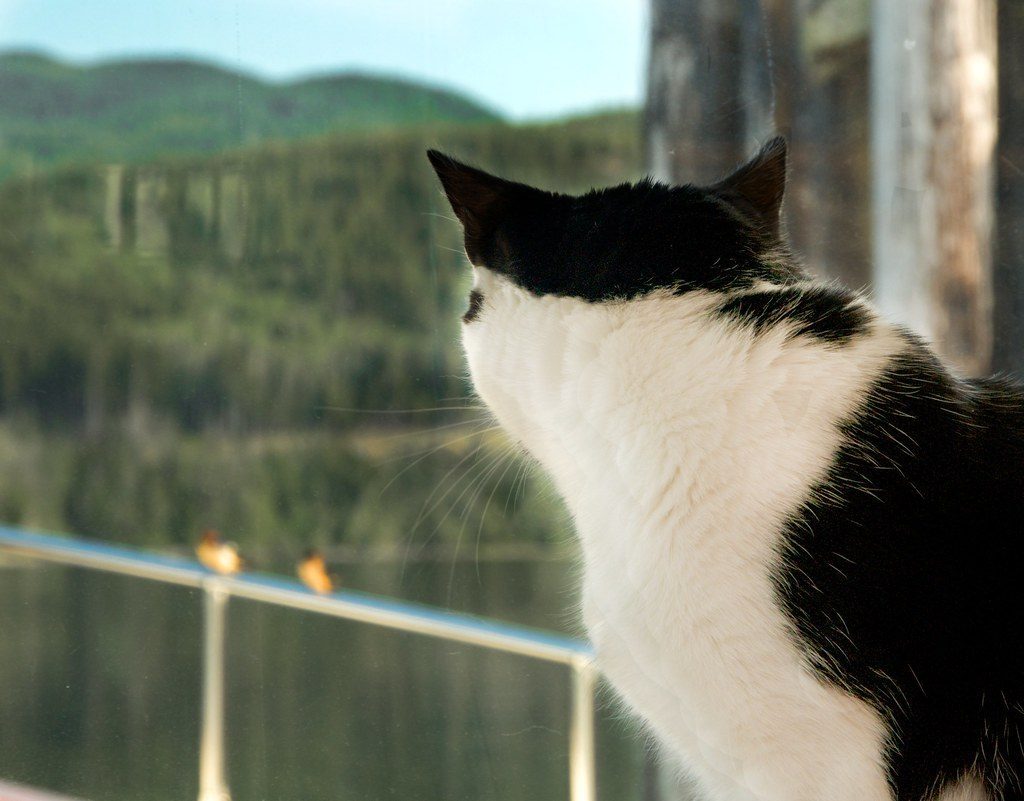
The richest enrichment for indoor cats combines toys with environmental enhancements that provide ongoing sensory stimulation throughout the day without requiring owner involvement. A window perch with a bird feeder placed directly outside transforms your cat’s window into a live nature documentary — providing hours of visual and auditory stimulation. A cat grass planter (wheatgrass, oat grass) provides safe grazing and olfactory enrichment. A cardboard box left in the room becomes an exploration and hiding space that many cats prefer over expensive cat furniture.
These environmental enrichments are not just supplementary — for cats that spend 8–10 hours alone while owners are at work, they may provide the majority of daily stimulation. Combined with a puzzle feeder for lunch and an electronic toy on a timer, a well-enriched environment can sustain your cat’s wellbeing through even long work-from-office days.
Best Cat Toys by Cat Personality Type
The best cat toy for indoor cats is not the same for every cat. Understanding your cat’s unique personality type helps you invest in toys they will actually use — rather than the toys that look most appealing to you.
The High-Energy Hunter
Always active, leaps at everything, brings you socks at 3am, loves to run at full speed
→ Wand toys, electronic robotic mice, kicker toys, multi-level track ballsThe Lazy Lounger
Prefers sleeping, plays briefly then stops, motivates through food more than fun
→ Puzzle feeders, catnip toys, slow scheduled electronic toys, crinkle matsThe Anxious Cat
Startles easily, hides from visitors, sensitive to new things, needs gradual introduction
→ Quiet snuffle mats, kicker toys, wand toys at low intensity, catnip miceThe Senior Cat (8+ years)
Lower energy, may have joint stiffness, still needs stimulation at reduced intensity
→ Slow wand play, puzzle feeders, catnip toys, window perches, track ballsThe Baby Kitten
Explores everything with mouth and claws, short attention span, needs safe materials
→ Wand toys (supervised only), crinkle balls, age-appropriate puzzles, soft kickersThe Intellectual
Gets bored with simple toys quickly, opens doors, watches everything with calculating interest
→ Advanced puzzle feeders (levels 3–5), interactive track systems, variety rotation every 2 daysHow to Play with Your Cat — The Expert Protocol
Having the best cat toys for indoor cats is only half the solution. Using them correctly — particularly wand toys, which require owner direction — produces dramatically better results than casual, ad hoc play.
The Twice-Daily Play Session Protocol
ASPCA feline enrichment guidelines recommend a minimum of two interactive play sessions per day, each lasting 10–15 minutes. The most effective timing aligns with cats’ natural crepuscular activity peaks — early morning (dawn) and evening (dusk). Many behavioral problems, including nocturnal hyperactivity, resolve dramatically when owners implement consistent morning and evening play sessions.
| Time | Play Type | Duration | Why |
|---|---|---|---|
| Dawn (6–8am) | High-energy wand play | 10–15 min | Channels natural dawn hunt drive — reduces morning hyperactivity and ankle attacks |
| Before leaving | Puzzle feeder setup | Passive all day | Provides occupation during alone time — reduces separation-related stress behaviors |
| Mid-day | Electronic toy on timer | 30–60 min bursts | Breaks up the long solo home period — prevents boredom peak in the afternoon |
| Evening (6–8pm) | Wand play → treat/wet food | 10–15 min | Completes the hunting sequence with the consume phase — produces deep, satisfying rest |
| Before bed | Brief kicker or solo toy | 5 min | Final energy release before overnight rest — reduces the 2am zoomies |
✅ The Single Most Important Tip: Always end wand toy sessions by allowing your cat to fully catch the toy — hold it still and let them grip it. Then immediately follow with a small treat or wet food portion. This completes the catch → consume phases of the hunting sequence and produces genuine behavioral satisfaction — the calmer, more settled cat that every owner wants after playtime.
Budget-Friendly DIY Cat Toy Ideas That Actually Work
The best cat toys for indoor cats do not have to be expensive. Some of the most reliably engaging cat toys cost nothing — because they tap directly into cats’ novelty-seeking and sensory instincts.
Cardboard Box Maze
Cut holes in the sides of a large cardboard box — large enough for your cat’s head and paws but not body. Place treats inside. The box becomes a combined puzzle, hiding spot, and exploration challenge. Most cats will engage with a new cardboard box for days.
Cost: Free (reused shipping box)Toilet Roll Treat Puzzle
Fold the ends of an empty toilet paper roll, fill with kibble or treats, and give to your cat. They must roll, bat, and manipulate the tube to release the treats. Simple, effective, and genuinely engaging — especially for cats that are new to puzzle feeding.
Cost: FreePaper Bag Crinkle Toy
A large paper shopping bag (with handles removed for safety) placed on the floor becomes an instant enrichment toy. The crinkle sound, the tunnel-like interior, and the collapsibility all engage multiple senses simultaneously. Supervise to ensure the bag does not become a suffocation risk.
Cost: FreeCat Toy Safety — What to Avoid
⚠️ Cat Toy Safety — Never Leave These Unsupervised
- Wand toys with strings: Strings longer than the cat’s body length are strangulation and ingestion risks — always store wand toys out of reach after play sessions
- Small parts under 1 inch: Feather pieces, bells, and small fabric components can be swallowed — inspect toys regularly and discard any that are shedding small parts
- Rubber bands and hair ties: Extremely appealing to cats but will cause intestinal blockage if swallowed — a veterinary emergency
- Plastic bags: Crinkle appeal is high but suffocation risk is real — never give plastic bags as toys
- Bells and button eyes: Can be extracted from plush toys and swallowed — choose stitched features over attached components
- Laser pointers as sole play: Safe physically, but the permanent inability to catch the beam creates chronic frustration — always follow laser pointer sessions with a physical toy the cat can actually catch
- Toys with catnip that are excessively worn: Old, worn catnip toys can collect bacteria and mold in the catnip stuffing — replace every 2–3 months
Shop Premium Cat Products at Arbsbuy
Interactive toys, automatic water fountains, calming beds, litter mats & expert cat care ebooks · Free USA shipping · 30-day guarantee · USA warehouse
Frequently Asked Questions About Cat Toys for Indoor Cats
Final Thoughts — Best Cat Toys for Indoor Cats
Finding the best cat toys for indoor cats comes down to understanding three things: your cat’s unique personality and prey preferences, the complete hunting sequence they need to enact daily, and the combination of toy types that covers supervised play, mental stimulation, and solo enrichment throughout the day.
The investment in quality indoor cat toys pays dividends in every dimension of your cat’s health — healthier weight, reduced stress behaviors, sharper cognitive function, and the deep, satisfying rest that follows a well-completed hunting sequence. Start with a wand toy for supervised daily play, add a puzzle feeder for mealtime enrichment, and supplement with a reliable self-play toy for the hours you are away.
For a comprehensive guide to cat psychology, behavior, and enrichment strategies — including understanding why your cat does what they do and how to build the richest possible indoor environment — explore our expert-written Cat Psychology & Care Bible ebook. For premium cat products including automatic water fountains, calming beds, litter mats, and more, browse our complete cat products collection at Arbsbuy — free USA shipping from our U.S. warehouse with a 30-day money-back guarantee.
Cat Psychology & Care Bible — Instant Download
150+ pages · Expert cat behavior guide · Enrichment strategies · Health & nutrition · PDF worldwide · $9.99
Sources: Cornell Feline Health Center | ASPCA — Cat Enrichment | PetMD — Cat Health
📄 Sources & References
- Journal of Veterinary Behavior (2019): Environmental enrichment and indoor cat welfare — 73% reduction in problem behaviors — https://www.journalvetbehavior.com
- ISFM: Feline Environmental Needs Guidelines (FENI) — play, hunting simulation and enrichment requirements — https://icatcare.org/advice/cat-care
- Cornell Feline Health Center: Indoor Cat Enrichment — preventing obesity, boredom and stress-related illness — https://www.vet.cornell.edu
- AAFP: Feline Life Stage Care Guidelines — play and exercise recommendations for indoor cats by age — https://www.catvets.com/guidelines/practice-guidelines/life-stage-guidelines