⚡ Quick Answer
Dogs need approximately 1oz of water per pound of body weight per day in normal conditions — a 30lb dog needs roughly 900ml, a 60lb dog needs roughly 1,800ml. Active exercise, hot weather, lactation, illness, and high-sodium diets all increase this requirement significantly. The most reliable indicator of good hydration is pale yellow urine — dark yellow or orange urine indicates dehydration. The most effective way to increase a dog’s water intake is adding water or low-sodium broth to their kibble at mealtimes.
💡 Expert Tip
Place multiple water sources in different rooms rather than one central bowl. Dogs drink more water when water is conveniently placed throughout their living space — particularly after exercise, when the water bowl may be across the house from where the dog rests. For dogs prone to urinary crystals, bladder stones, or kidney disease, increasing water intake through wet food and multiple water points is the most impactful non-prescription intervention available.
Water is the single most important nutrient in your dog’s diet — more critical in the short term than food, protein, or any supplement. Yet most dog owners give hydration far less attention than feeding, exercise, or grooming. Understanding how to keep your dog hydrated properly, across every season and every type of activity, is one of the most impactful things you can do for your dog’s long-term health.
This guide covers the science of canine hydration, how to calculate your dog’s daily water needs, the early warning signs of dehydration most owners miss, the best water sources for different situations, and a full set of practical strategies for keeping your dog drinking consistently — whether at home, on a hike, or on a road trip. Links throughout connect to our more detailed guides on specific hydration gear and situations.
- Why Hydration Matters More Than Most Owners Realise
- How Much Water Does a Dog Need Per Day?
- Signs Your Dog Is Dehydrated
- The Best Water Sources for Dogs in Every Situation
- How to Encourage a Dog That Drinks Too Little
- Hydration in Hot Weather: Summer Safety
- Hydration for Senior Dogs
- Hydration After Exercise
- The Complete Dog Hydration Toolkit
- Frequently Asked Questions About Dog Hydration
- Keeping Your Dog Hydrated: The Key Takeaways
Why Hydration Matters More Than Most Owners Realise
A dog’s body is roughly 60 to 70 percent water by weight, and nearly every biological process depends on it. Water regulates body temperature through panting and sweating through paw pads. It carries nutrients and oxygen through the bloodstream. It lubricates joints, cushions organs, and supports the digestive system in processing food and eliminating waste. It is the medium in which every biochemical reaction in your dog’s body takes place.
When water intake drops even slightly below the amount the body is losing, the effects cascade. A dog that is just 2 percent dehydrated shows measurable reductions in physical and cognitive performance. At 5 percent dehydration, serious symptoms begin — lethargy, reduced appetite, dry gums. At 10 percent, organ function is compromised and emergency veterinary care is required. At 15 percent, dehydration becomes fatal.
The alarming part is how quickly a dog can reach moderate dehydration without obvious signs, particularly during hot weather or vigorous exercise. Active owners who bring their dogs hiking, running, or to the dog park in summer often underestimate how much water their dog needs because the dog appears fine — until it does not.
How Much Water Does a Dog Need Per Day?
The standard guideline from veterinary nutrition authorities is approximately one ounce of water per pound of body weight per day under baseline conditions — a calm day at a comfortable temperature with moderate activity. A 20-pound dog needs roughly 20 ounces (about 600ml) of water per day. A 50-pound dog needs around 50 ounces (approximately 1.5 litres).
These figures are starting points, not fixed targets. Several factors increase the daily requirement significantly.
Activity Level
A dog that goes on a one-hour walk needs more water than a dog that spends the day resting. A dog that runs, swims, or hikes for several hours can need two to three times the baseline amount. The harder and longer the activity, the more water is lost through panting and metabolic heat.
Temperature and Humidity
Dogs regulate body temperature almost entirely through panting, which is an evaporative cooling process that uses water. In hot weather, panting accelerates dramatically and water loss rises accordingly. High humidity reduces the efficiency of panting, so dogs may pant more intensely to achieve the same cooling effect, losing even more water per hour than they would in dry heat.
Diet
Dogs fed wet or raw food get a significant portion of their daily water intake through food — wet dog food is typically 70 to 80 percent water. Dogs on dry kibble receive almost no water from food and must compensate entirely through drinking. This is one reason dry-fed dogs often need more available water than wet-fed dogs of the same size.
Health and Life Stage
Puppies, nursing mothers, and senior dogs all have higher water requirements than healthy adult dogs at rest. Dogs recovering from illness, particularly those with diarrhoea or vomiting, lose water rapidly and must replace it to avoid compounding their condition. Dogs on certain medications, including diuretics or steroids, may need more water than usual — consult your vet if your dog is on long-term medication.
Signs Your Dog Is Dehydrated
Catching dehydration early is far easier than managing it once symptoms become severe. Here are the signs to watch for, from early to advanced.
Early Warning Signs
- Dry or tacky gums. Healthy gums feel moist and slightly slippery. Dry or sticky gums are one of the earliest and most reliable indicators of dehydration.
- Reduced skin elasticity. Gently pinch the skin at the back of your dog’s neck and release. Properly hydrated skin springs back immediately. Dehydrated skin stays tented for a second or two before returning to normal. This is called the skin turgor test.
- Slightly sunken eyes. Well-hydrated eyes appear bright and slightly prominent. Even mild dehydration can give the eyes a dull, slightly recessed appearance.
- Reduced urine output. A dog that is not drinking enough will urinate less frequently and produce darker, more concentrated urine. If your dog goes significantly longer than usual between urinations, take note.
Moderate to Severe Signs
- Lethargy and weakness. A dog that is noticeably less energetic than usual, reluctant to move, or slow to respond to stimulation may be significantly dehydrated.
- Loss of appetite. Dogs that are dehydrated often stop eating, which compounds the problem as wet food or broth would contribute to rehydration.
- Excessive or laboured panting. Some panting is normal after exercise. Panting that continues long after rest, is unusually rapid or laboured, or occurs in cool temperatures is a warning sign.
- Vomiting or diarrhoea. These can both cause and result from dehydration, and the cycle can escalate quickly in warm weather or during illness.
If your dog shows moderate or severe signs, offer water immediately in small amounts rather than letting them drink freely — large rapid water intake can cause nausea and vomiting in a dehydrated dog. If symptoms do not improve rapidly, contact your vet. Severe dehydration requires intravenous fluid replacement, not just increased drinking.
The Best Water Sources for Dogs in Every Situation
Consistent access to fresh, clean water is the foundation of dog hydration. The right water source depends on where your dog is and what they are doing.
At Home: The Water Bowl
A clean water bowl in a consistent, easily accessible location is the baseline. Choose a bowl that is wide enough for your dog to drink comfortably without their whiskers touching the sides — many dogs are sensitive to whisker contact and will drink less from narrow bowls. Stainless steel and ceramic bowls are easier to keep clean than plastic, which develops micro-scratches that harbour bacteria over time.
Position the bowl away from the food bowl in a quiet location — some dogs are reluctant to drink when they feel they must watch for food competition simultaneously. In multi-dog households, use multiple bowls in different locations to ensure all dogs have access without competition.
Change the water twice a day minimum. Dogs often avoid water that has been sitting for more than a day because it tastes flat or stale. Rinsing the bowl before refilling removes the biofilm that develops from saliva contact and discourages bacteria growth. A clean, freshly filled bowl will prompt more drinking than a bowl topped up repeatedly over several days.
At Home: Water Fountains
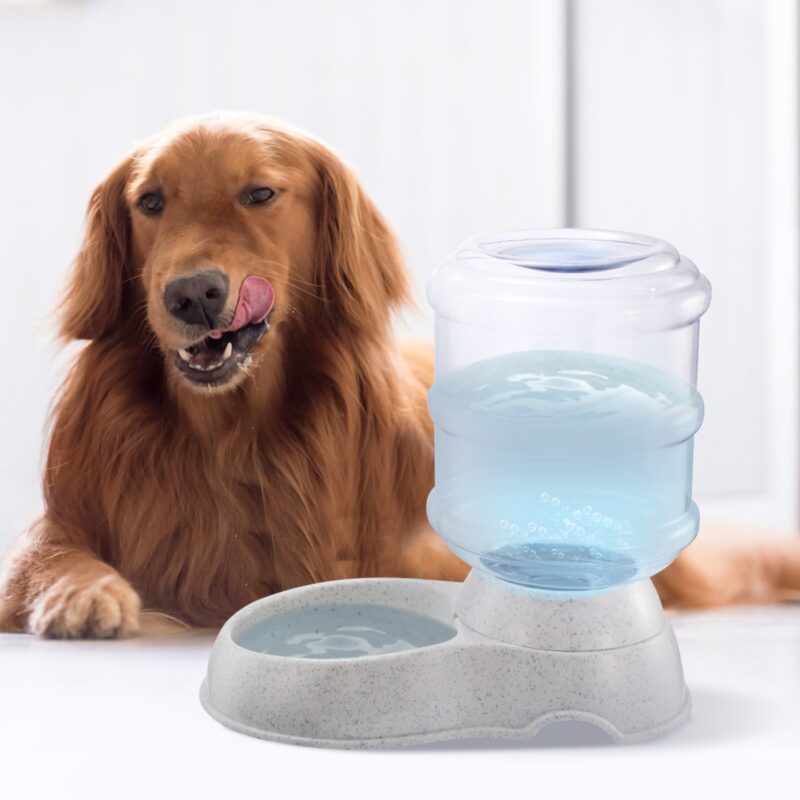
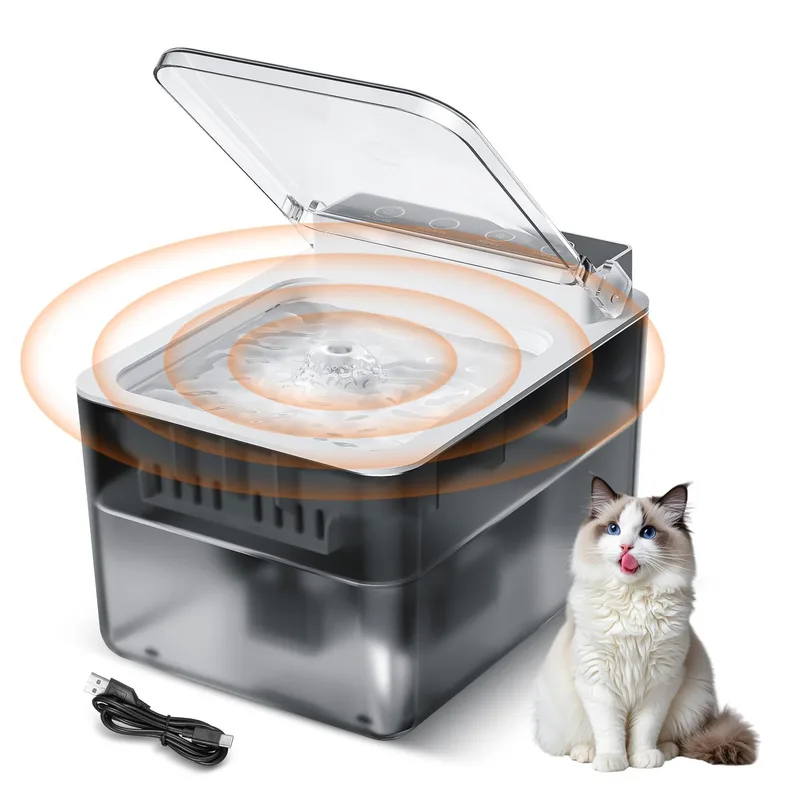
Recirculating water fountains keep water moving, which oxygenates it and keeps it tasting fresher than standing bowl water. Many dogs strongly prefer moving water and will drink noticeably more from a fountain than a static bowl. The constant filtration in most fountain models also removes hair, debris, and some dissolved impurities that accumulate quickly in outdoor environments.
For outdoor use, a gravity-feed fountain or a step-on hose-fed model is the most practical solution. Gravity fountains require no power and provide a continuous supply with minimal maintenance. Step-on hose-fed fountains deliver fresh tap water on demand every time the dog presses the pedal, eliminating standing water and algae entirely. See our detailed guide to the best outdoor dog water fountains for a full comparison of recirculating, gravity, and step-on models.
On Walks and Hikes: Portable Water Bottles
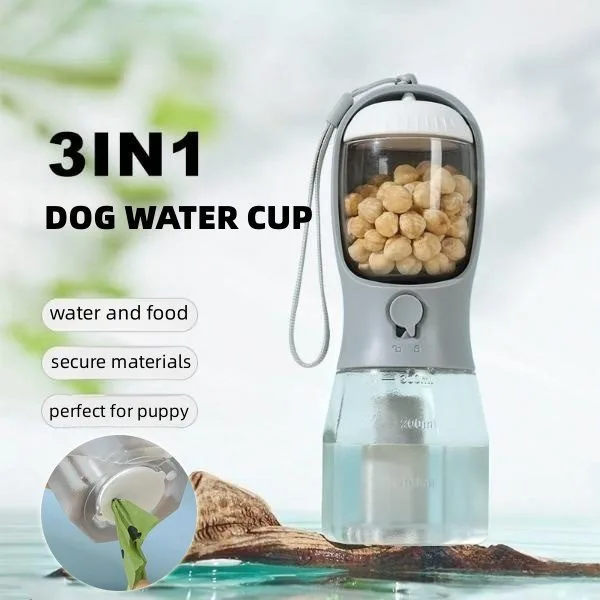
For any trip away from home that lasts more than thirty minutes, carry water for your dog. Do not rely on finding water on the trail or in a park — public water sources may be unavailable, contaminated, or simply not where your dog needs them. A dedicated portable dog water bottle with an integrated flip-out bowl is the most practical solution: one hand holds the bottle, the other is free, and your dog can drink without needing a separate bowl.
Offer water every thirty to forty-five minutes during active hiking, more frequently in hot weather or after intense activity. Do not wait for your dog to show thirst — by the time a dog shows obvious thirst, mild dehydration has already begun. Our guide to the best dog water bottles for walks and hiking covers what to look for in a portable bottle, the main design differences, and our top recommendation for leak-proof, one-handed use.
In the Car: Travel Hydration
Car travel is dehydrating for dogs even when they appear calm. Panting from excitement or anxiety uses water, the car interior is often warmer than outside, and most dogs will not drink during motion even if a bowl is available. Plan hydration around car travel rather than during it: offer water at every stop, use a portable bottle for quick breaks at rest areas, and aim for a stop every ninety minutes to two hours on long journeys.
If your dog travels in a car seat cover in the back seat, keep your portable bottle in the door pocket within reach so rest stop hydration is quick and does not require unpacking your gear.
When Carried: Backpack Carrier Hydration
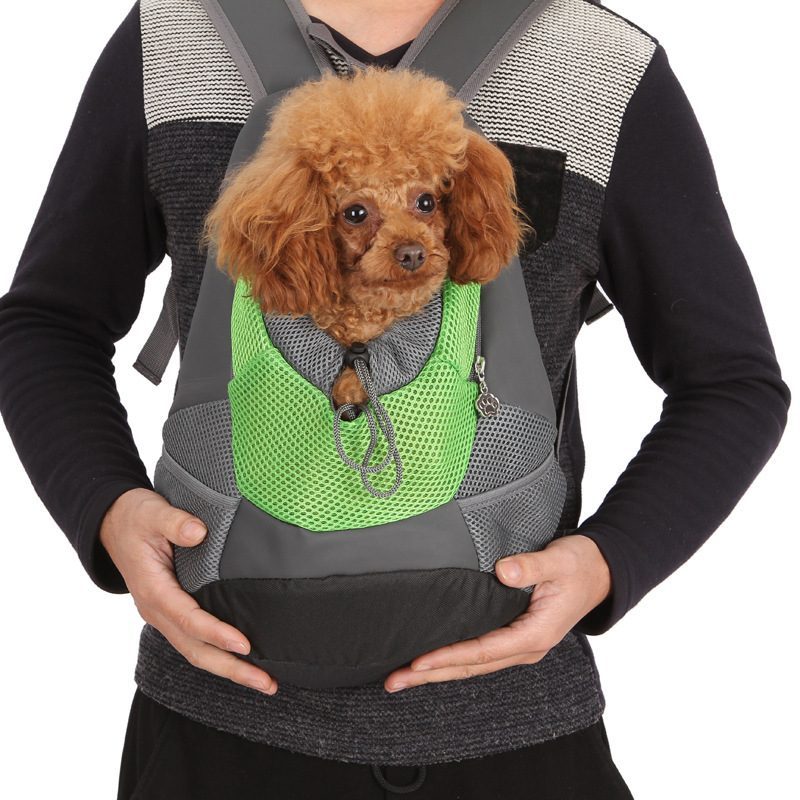
A dog being carried in a dog backpack carrier is not exerting themselves physically but is still affected by heat, particularly in an enclosed space. At every rest stop, open the carrier top and offer water before allowing your dog to explore. A portable bottle slipped into the carrier’s external pocket keeps hydration within arm’s reach the entire time. For hikes of more than two hours, plan water stops into your itinerary rather than assuming your dog will indicate when they need it.
How to Encourage a Dog That Drinks Too Little
Some dogs are chronically under-drinkers — they consistently take in less water than they need without showing obvious interest in their bowl. This is more common in dry-fed dogs and certain breeds, and it has real long-term health implications including increased risk of urinary tract infections and kidney issues. Here are the most effective strategies for increasing water intake in reluctant drinkers.
Add Water or Broth to Food
Adding a quarter to half a cup of warm water or low-sodium, onion-free chicken or bone broth to your dog’s kibble at each meal dramatically increases daily water intake with no change in their drinking behaviour. Most dogs find moistened kibble more palatable and eat more eagerly as a bonus. This is the single most effective intervention for chronically under-drinking dogs on dry food.
Offer Multiple Water Points
A dog that must cross the house to reach their single water bowl will drink less than one with water available in multiple locations. Add a second bowl in the room where your dog spends most of their time. If your home has multiple floors, place water on each floor. Removing friction from drinking reliably increases intake.
Upgrade to a Fountain
Moving water is significantly more appealing to most dogs than still water. If your dog consistently ignores their bowl but rushes to lap from a dripping tap or a puddle, they are telling you they prefer moving water. A recirculating fountain can double or triple voluntary water intake in some dogs purely through the sensory difference.
Keep Water Fresh
Dogs have a much more sensitive sense of smell than humans and can detect the staleness or bacterial load in water that we would consider fine. Changing the water completely twice a day, washing the bowl daily with dish soap, and rinsing it thoroughly before refilling eliminates most reasons a dog might avoid their bowl. The difference between freshly changed water and water that has been sitting overnight is significant to a dog’s nose.
Try Different Bowl Materials and Locations
Some dogs have strong preferences for bowl material — ceramic, stainless steel, and glass are all neutral, while plastic can impart a flavour over time. Some dogs dislike hearing their tags clink against a stainless bowl during drinking. Others are uncomfortable with the sound of their own panting echoing back from a narrow bowl. Experimenting with different bowl types and locations is a low-effort way to identify if a preference issue is affecting intake.
Ice Cubes as Treats
Many dogs love ice cubes, particularly in warm weather. Offering a few cubes as a mid-day treat adds water intake in a form many dogs actively seek out. You can also freeze dog-safe broth in ice cube trays for a hydrating treat that most dogs consider a genuine reward.
Hydration in Hot Weather: Summer Safety
Heat is the biggest hydration risk most dogs face. Dogs cannot sweat through their skin to cool themselves — panting is their primary heat-dissipation mechanism, and it is far less efficient than sweating. In hot weather, the entire system can be overwhelmed quickly, particularly in brachycephalic (flat-faced) breeds like bulldogs and pugs whose anatomy makes panting less effective.
Adjust Exercise Timing
In summer, move walks and active play to early morning and evening when temperatures are lowest and pavement is cooler. Midday heat in summer months can be dangerous for dogs even on short walks. The pavement temperature rule: if the pavement is too hot to hold your palm against for five seconds, it is too hot for your dog’s paws.
Increase Water Availability Outdoors
In a garden or yard during summer, a garden-hose-connected step-on fountain lets your dog self-regulate access to fresh water throughout the day without relying on you to notice they are thirsty. Unlike a bowl that empties and goes unnoticed, a hose-fed fountain is unlimited. See our full guide to outdoor dog water fountains for options that work well in gardens and patios.
Watch for Heatstroke
Heatstroke in dogs is a medical emergency. Warning signs include rapid, intense panting, bright red or pale gums, excessive drooling, vomiting, and collapse. If you suspect heatstroke, move your dog to a cool area immediately, wet their skin with cool (not ice cold) water, and get to a vet as fast as possible. Heatstroke can cause organ failure within minutes — do not wait to see if your dog improves on their own.
According to the American Kennel Club, dehydration significantly increases a dog’s risk of heatstroke because a well-hydrated dog can pant more effectively and maintain safer core body temperatures. Keeping your dog well-hydrated in hot weather is not just about thirst — it is a direct form of heatstroke prevention.
Hydration for Senior Dogs
Senior dogs have reduced kidney function and a diminished thirst response compared to younger dogs. They need more water but are less likely to seek it out. This combination makes age-related dehydration one of the most common and underrecognised health issues in older dogs.
For senior dogs, switch from dry kibble to wet food or add water or broth to every meal to ensure baseline hydration is met through food. Place water bowls at multiple convenient heights — older dogs with arthritis may avoid water if bending to a floor-level bowl causes discomfort. Elevated bowls at standing height eliminate that barrier. Weigh your senior dog regularly; unexplained weight loss in an older dog is sometimes a sign of chronic low-grade dehydration rather than disease.
Hydration After Exercise
The timing of water after vigorous exercise matters. Immediately after a run or an intense play session, allow your dog to drink freely but watch for excessive gulping — some dogs drink so fast after exertion that they risk bloat, a life-threatening condition where the stomach fills with gas. Offer water in smaller amounts over fifteen to twenty minutes rather than leaving a full bowl immediately after heavy activity.
After hiking, factor in water recovery time before putting your dog in the car. A dog that has been exerting themselves for hours may need thirty to forty-five minutes of drinking and rest before being comfortable on the ride home. Carry more water than you expect to need on any significant hike — the return journey is usually when dogs are most depleted and most need it.
The Complete Dog Hydration Toolkit
The right equipment for each situation makes maintaining your dog’s hydration practical and consistent rather than something you have to think about on each individual trip. Here is the full toolkit across different contexts:
- At home: A wide stainless steel or ceramic bowl, changed twice daily. For dogs that prefer moving water or drink too little: a recirculating indoor fountain.
- In the garden or yard: A step-on or gravity-fed outdoor fountain that provides fresh water without relying on you to notice the bowl is empty. See our outdoor dog water fountain guide for the best options by garden size and water source.
- On walks and hikes: A portable dog water bottle with an integrated bowl. Read our full dog water bottle guide to find the right design for your trail style and dog size.
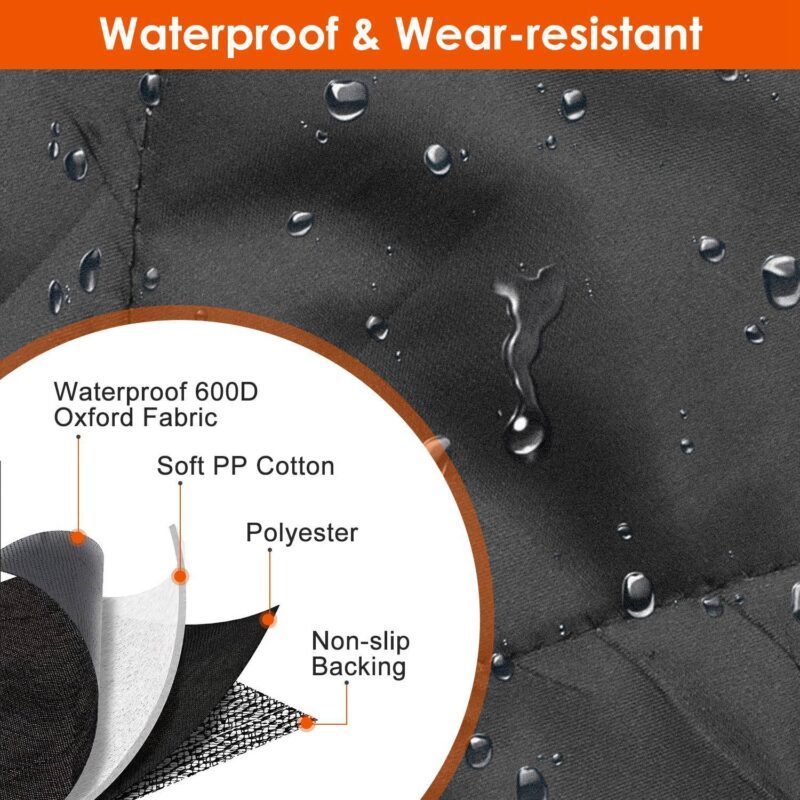
- In the car: A portable water bottle in the door pocket. A waterproof dog car seat cover that protects your back seat on days when wet or muddy hydration stops are involved.
- When carrying: A portable bottle in the external pocket of your dog backpack carrier, offered at every rest stop regardless of whether your dog signals thirst.
Frequently Asked Questions About Dog Hydration
How much water should a dog drink per day?
The baseline guideline is approximately one ounce of water per pound of body weight per day. A 30-pound dog needs around 30 ounces (roughly 900ml) daily at rest. Active dogs in warm weather may need two to three times this amount. Monitor your dog’s gum moisture and urine output to gauge whether their actual intake is meeting their needs rather than relying only on volume estimates.
Is it normal for a dog to drink a lot of water suddenly?
A sudden increase in water intake — called polydipsia — is a symptom of several medical conditions including diabetes, kidney disease, Cushing’s disease, and urinary tract infections. If your dog starts drinking significantly more than usual without a clear environmental cause (hot weather, increased exercise), schedule a vet appointment. Increased thirst is one of the earliest symptoms of several conditions that are manageable when caught early.
What water is safest for dogs to drink?
Fresh tap water is safe for dogs in most municipalities with treated water supplies. If your own tap water is safe to drink, it is safe for your dog. Bottled mineral water is fine but expensive and unnecessary. Avoid giving your dog water from ponds, streams, or puddles on walks — these can harbour giardia, leptospirosis, and other pathogens even when they appear clean.
Can a dog drink too much water?
Yes. Overhydration (hyponatremia) can occur when a dog consumes an excessive amount of water in a short time, diluting the sodium in their bloodstream to dangerous levels. It is rare under normal circumstances but can happen in dogs that compulsively drink, play in water, or are given fluids inappropriately. Signs include lethargy, nausea, bloating, and in severe cases seizures. If you suspect water intoxication, seek veterinary care immediately.
How do I get my dog to drink more water?
The most effective strategies are: add water or low-sodium broth to kibble at meals, upgrade to a recirculating fountain, place bowls in multiple locations, change water twice daily with a bowl wash, and offer ice cubes as treats. If a dog’s intake remains chronically low despite these measures, consult a vet — some dogs have underlying health conditions that suppress thirst.
Do dogs need water on winter walks?
Yes. Cold air is dry air, and panting in cold weather still causes water loss. Dogs are also less likely to show obvious thirst signs in cold weather, making them vulnerable to quiet dehydration during winter activities. Bring water on all walks longer than thirty minutes regardless of the season.
Keeping Your Dog Hydrated: The Key Takeaways
Consistent hydration is not a summer-only concern or something to address only when your dog seems thirsty. It is a daily practice that affects your dog’s energy, joint health, organ function, digestion, and long-term wellbeing. The right infrastructure — a clean bowl at home, an outdoor fountain in the garden, a portable water bottle for every outing — removes the friction from keeping your dog well-watered across every situation.
Start with the gear that matches where your dog spends the most time and work outward from there. If your dog goes on regular hikes or long walks, a quality portable dog water bottle is the highest-impact single purchase. If they spend long hours in the garden, a step-on outdoor fountain eliminates the reliance on you noticing a dry bowl. For travel days combining car, trail, and carrier, plan hydration breaks into every leg of the journey.
Find the full range of dog travel and hydration accessories at Arbsbuy, with free tracked shipping across the USA on every order.
Trusted Veterinary & Expert Sources
📄 Sources & References
- AVMA: Canine Hydration Requirements — daily water intake guidelines and signs of dehydration — https://www.avma.org/resources-tools/pet-owners/petcare/dog-care
- AKC: How Much Water Does a Dog Need? — 1oz per pound of body weight baseline with activity adjustments — https://www.akc.org/expert-advice/health/how-much-water-should-a-dog-drink
- Journal of Veterinary Internal Medicine: Hydration status assessment in dogs — skin turgor, gum moisture and PCV as clinical indicators — https://www.ncbi.nlm.nih.gov
- Cornell University College of Veterinary Medicine: Heat stroke and dehydration in dogs — emergency recognition and first-response cooling protocol — https://www.vet.cornell.edu