⚡ Quick Answer
Outdoor dog water fountains come in three types: step-on (dog activates with a paw — no electricity or plumbing required, water stops when the dog steps off), automatic sensor-activated (turns on as the dog approaches — requires water line connection), and solar-powered recirculating (for patios without water access — runs a reservoir through a pump and filter). Step-on dog fountains are the most practical choice for most yards: no electricity needed, no water waste, and most dogs learn to use them within a few minutes of initial introduction.
💡 Expert Tip
Clean outdoor water fountains weekly — they accumulate algae, debris, and bacteria significantly faster than indoor water sources. A monthly rinse with a 1:10 bleach-to-water solution followed by 3–4 complete rinse cycles removes biofilm and algae effectively. Avoid copper or brass fittings in dog water sources — prolonged exposure to copper leaching into water can contribute to copper storage disease, particularly in certain breeds (Bedlington Terriers, West Highland White Terriers, Labrador Retrievers).
Keeping your dog hydrated outdoors sounds simple — just leave a bowl in the yard, right? In reality, that bowl gets knocked over, fills with leaves and dirt, grows algae in the summer heat, and runs dry exactly when your dog needs it most. An outdoor dog water fountain solves all of that: fresh, clean water available on demand, with no tipping, no daily refilling, and no slimy green bowl to scrub.
Whether you want a fun step-on fountain your dog activates with a paw, a hose-fed dispenser that never runs dry, or a filtered fountain that keeps water moving and fresh, this guide breaks down every type of outdoor dog water fountain, how they work, what to look for, and the best options for 2026 — so your dog stays happily hydrated all day, even when you’re not home to top up the bowl.
- Why an Outdoor Dog Water Fountain Beats a Regular Bowl
- Types of Outdoor Dog Watering Solutions
- How a Step-On Dog Water Fountain Works
- What to Look For in an Outdoor Dog Water Fountain
- The Best Outdoor Dog Water Fountains for 2026
- Quick Comparison
- Keeping Outdoor Water Clean & Algae-Free
- Hydration On the Move, Too
- Frequently Asked Questions
- Final Thoughts
Why an Outdoor Dog Water Fountain Beats a Regular Bowl
A standard water bowl is the default, but outdoors it has real problems. Dogs tip them over while playing, and a single hot afternoon can turn standing water into a breeding ground for bacteria and algae. Bowls also collect grass, dirt, bugs, and pollen, and on a hot day they can empty before you even notice.
An outdoor dog water fountain fixes each of those issues. Step-on and hose-fed designs deliver fresh water only when your dog wants it, so nothing sits stagnant. Recirculating fountains keep water moving and filtered, which discourages algae and actually encourages dogs to drink more. The result is cleaner water, far less maintenance, and a dog that stays properly hydrated — which, according to the American Kennel Club, means roughly one ounce of water per pound of body weight every day, and more in heat.
Types of Outdoor Dog Watering Solutions
There are four main ways to keep fresh water available outside. Understanding them makes the right choice obvious.
1. Step-on / paw-activated fountains. Your dog presses a pedal with their paw and fresh water flows instantly into a drinking dish or up as a small sprinkler. Nothing sits out between drinks, so the water is always fresh and there’s nothing to grow algae. These are the most fun, the most hygienic, and a favorite for active dogs.
2. Hose-connected auto-fill bowls. These connect to a garden hose and automatically refill a bowl as the level drops using a float valve. Great for a yard with a nearby spigot, though the bowl water still sits between drinks.
3. Automatic recirculating fountains. A pump pushes water through a filter and back into a basin, keeping it oxygenated and clean. Best for a covered patio or porch where there’s power; many dogs drink more from moving water.
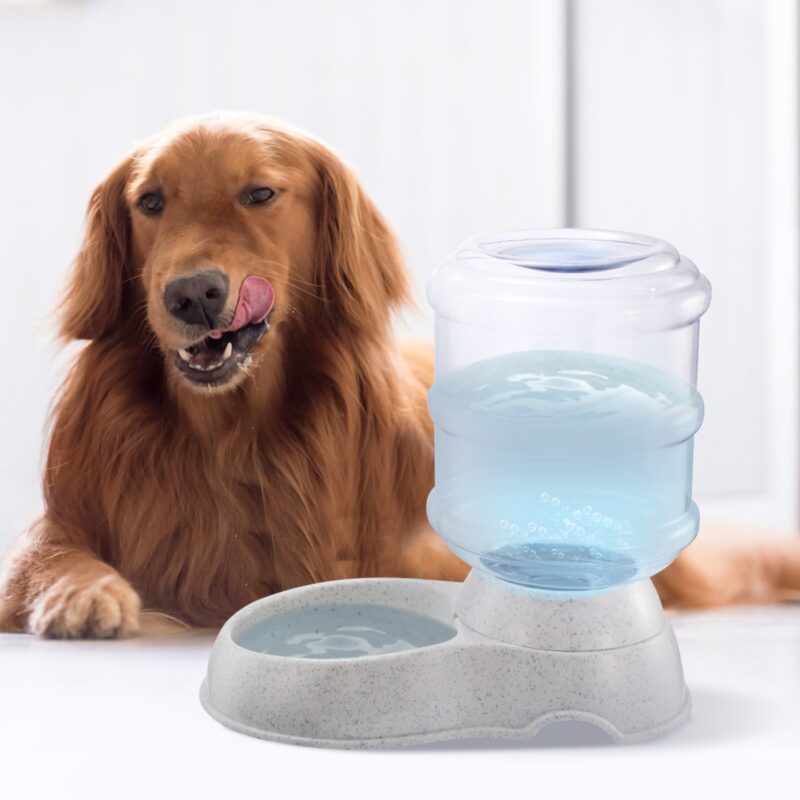
4. Gravity dispensers and elevated bowls. A sealed reservoir refills the bowl as your dog drinks — no power, no plumbing. The simplest always-full option for shade or a covered area.
How a Step-On Dog Water Fountain Works
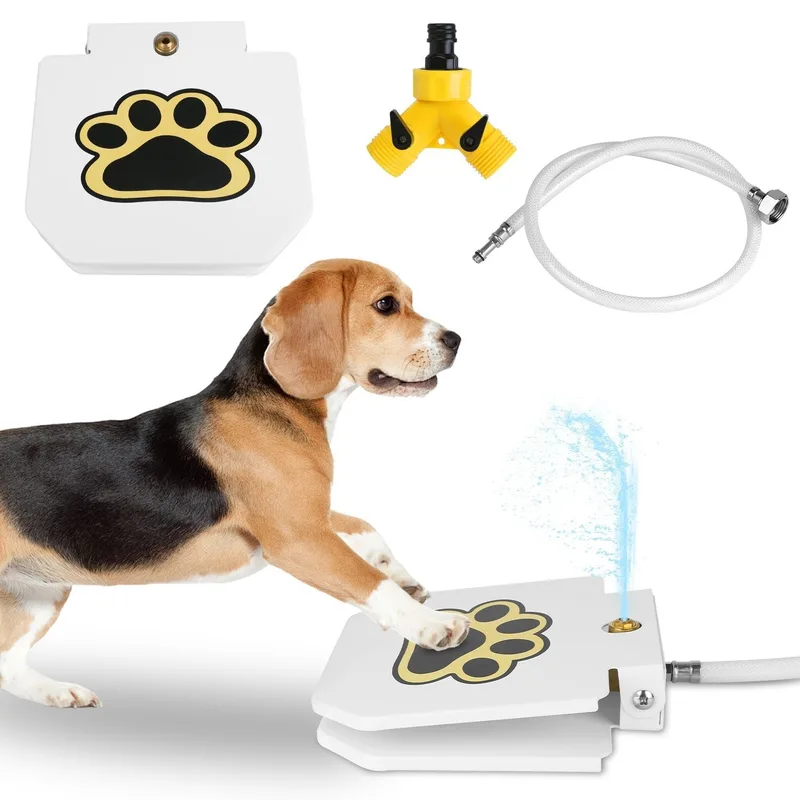
A step-on (paw-activated) outdoor dog water fountain is beautifully simple. It connects to a standard garden hose, and a sturdy foot pedal sits at ground level. When your dog — or you — presses the pedal, a valve opens and fresh water flows out, either filling a small dish or arcing up as a gentle fountain your dog can drink from. Release the pedal and the water stops completely.
Because water only flows on demand, none of it sits around collecting debris or growing algae. Most dogs learn to use the pedal within a day or two with a little encouragement, and many genuinely enjoy the game of triggering their own water — some even use it to cool off on hot days. It’s the closest thing to a self-serve drinking fountain for your dog.
What to Look For in an Outdoor Dog Water Fountain
Run any outdoor dog water fountain through this checklist before buying.
Weatherproof, Durable Build
It lives outside, so it needs to handle sun, rain, and rough paws. Look for heavy-duty, UV-resistant materials and a stable base that won’t tip or slide when an excited dog jumps on it.
Easy Paw-Pedal Activation
For step-on models, the pedal should be sensitive enough for a medium dog to press easily, but firm enough that it doesn’t trigger by accident. A low, wide pedal is easiest for dogs to learn.
Simple Hose Connection
Hose-fed fountains should connect to a standard garden tap with no tools and seal without leaking. Check that the fitting matches a typical US garden hose thread.
The Right Capacity for Your Dog
A small dog is fine with a compact dish, but a large or multi-dog household needs higher flow or a bigger reservoir. Match the fountain to your biggest, thirstiest dog.
Easy to Clean
Even on-demand fountains need an occasional rinse. Smooth, wide dishes wipe clean in seconds; tight corners trap grime.
The Best Outdoor Dog Water Fountains for 2026
Here are our top picks, covering the three situations most owners face: an active dog in the yard, a covered space with power, and a no-electricity always-full option.
🏆 Best Step-On Outdoor Fountain: Outdoor Dog Water Fountain – Step-On Paw Activated — $49.75
This is the standout for any dog with a yard. Just connect it to your garden hose, and your dog gets fresh water on demand by pressing the paw pedal — no bowls to fill, no mess to clean, and nothing standing around to grow algae. Press the pedal and clean water flows instantly; release it and the water stops.
It’s built for medium to large dogs and doubles as a hot-weather treat, since many dogs love triggering their own little fountain to drink and cool off. Because the water is always fresh from the hose, it’s one of the most hygienic outdoor watering solutions you can give your dog.
Best for: active dogs, fenced yards, and owners who want zero-maintenance, always-fresh water.
🧾 Best for Fresh, Filtered Water: Automatic Pet Water Fountain – 3L Radar Sensing — $42.98
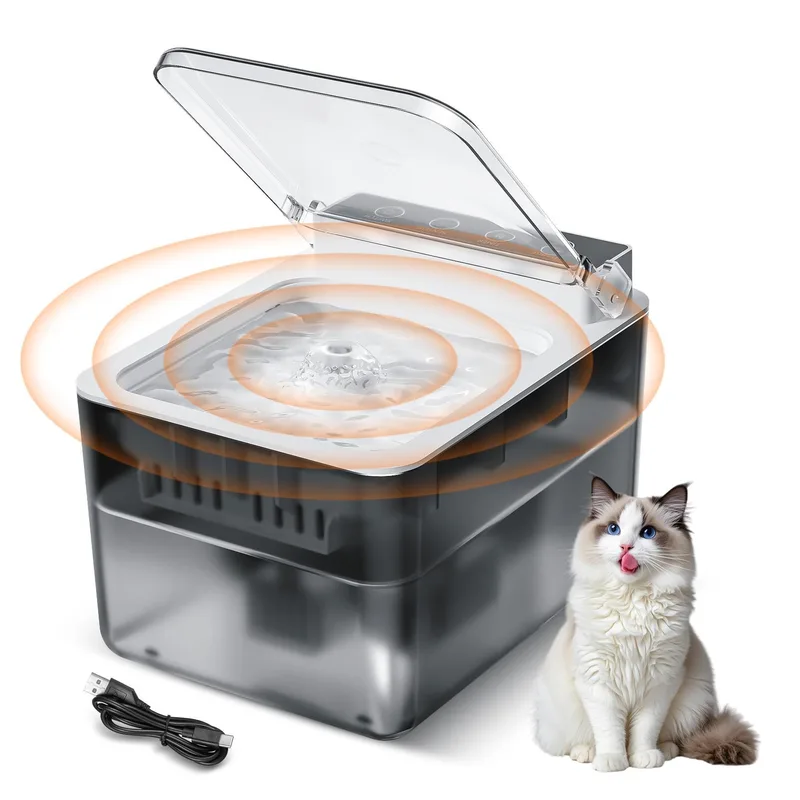
For a covered porch, patio, or indoor spot near power, a recirculating fountain keeps water fresh and moving. This one uses smart radar sensing to detect your pet’s approach and instantly start the flow, with a 3L capacity that lasts up to 10 days between refills and a filter that removes hair and debris.
Flowing, oxygenated water genuinely encourages dogs (and cats) to drink more than they would from a still bowl — a real benefit for pets that don’t drink enough. It’s the best pick when you want filtered, always-fresh water and have an outlet nearby.
Best for: covered areas with power, multi-pet homes, and dogs that need encouragement to drink.
💧 Best No-Electricity Option: Gravity Water Bowl – 3.5L Auto Dispenser — $29.61
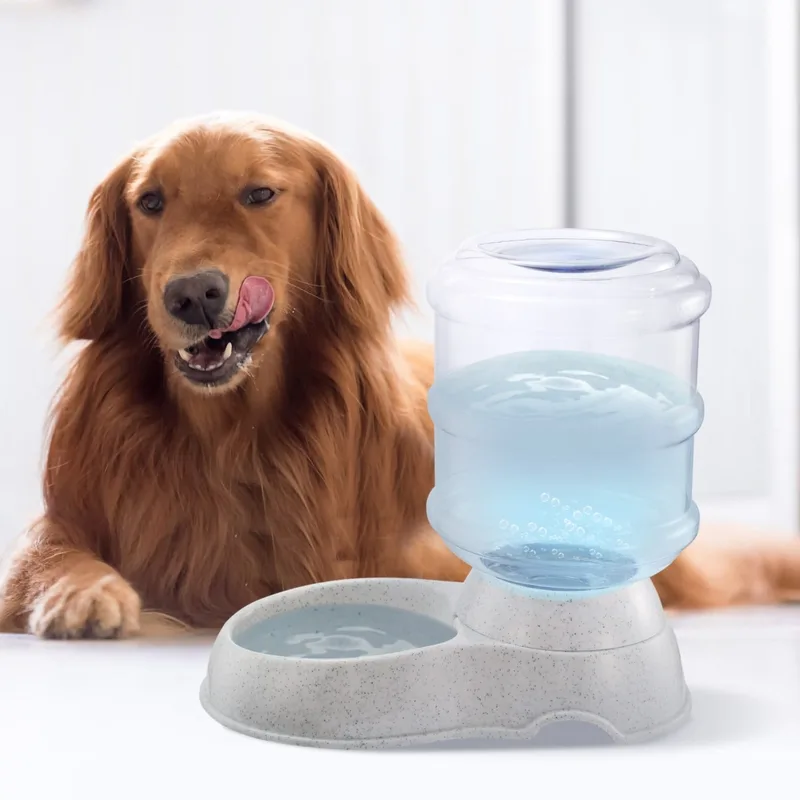
If you want an always-full bowl with no hose and no power, a gravity dispenser is the simplest answer. This 3.5L model automatically refills the drinking bowl as your dog drinks, using a sealed reservoir and a steady gravity feed. It’s made from BPA-free, food-grade material with an anti-slip base that keeps it steady.
It’s ideal for a shaded or covered spot, long workdays, or as a reliable backup so your dog never runs out of water while you’re away.
Best for: shade and covered areas, long workdays, and a no-fuss always-full backup.
Quick Comparison
| Step-On Outdoor Fountain | Automatic Radar Fountain | Gravity Water Bowl | |
|---|---|---|---|
| Price | $49.75 | $42.98 | $29.61 |
| Power needed | No (hose) | Yes | No |
| Water always fresh | ✅ on demand | ✅ filtered | Refills as used |
| Best location | Open yard | Covered + power | Shade / indoors |
| Maintenance | Very low | Filter changes | Refill reservoir |
Bottom line: For a fenced yard, the step-on outdoor dog water fountain is the most hygienic, lowest-maintenance choice. Want filtered moving water near power? Go with the automatic radar fountain. Need a simple, no-power option? The gravity water bowl wins.
Keeping Outdoor Water Clean & Algae-Free
Even the best outdoor dog water fountain benefits from a little upkeep. Here’s how to keep your dog’s water genuinely clean:
- Choose on-demand over standing water. Step-on fountains win here because water never sits long enough to grow algae.
- Rinse dishes every few days. A quick wipe stops biofilm before it starts.
- Keep it in the shade when possible. Sunlight plus warm standing water is what fuels algae growth.
- Refresh filters on recirculating fountains on schedule so they keep trapping hair and debris.
- Watch for dehydration in hot weather. Dry, tacky gums, heavy panting, and skin that’s slow to snap back are warning signs — PetMD notes that severe dehydration is a veterinary emergency, so don’t ignore them.
Hydration On the Move, Too
An outdoor dog water fountain keeps your dog hydrated at home, but they also need water on walks, hikes, and road trips. A leak-proof travel bottle is the perfect companion — see our full guide to the best dog water bottles for walks, hiking, and travel to round out your dog’s hydration setup. Pairing an at-home fountain with a travel bottle means your dog has fresh water everywhere they go. You can browse everything in our dog water bottles & dispensers collection.
Frequently Asked Questions
Do dogs actually use step-on water fountains?
Yes. Most dogs learn to press the paw pedal within a day or two with a little encouragement, and many genuinely enjoy triggering their own water. Start by gently pressing the pedal yourself so your dog sees the water flow, then reward them when they step on it.
How does a step-on dog water fountain work?
It connects to a standard garden hose and has a foot pedal at ground level. When your dog presses the pedal, a valve opens and fresh water flows out into a dish or as a small fountain. Release the pedal and the water stops, so nothing sits out between drinks.
Do I need a garden hose for an outdoor dog water fountain?
Step-on and auto-fill fountains connect to a standard garden hose and tap. If you don’t have an outdoor spigot, a recirculating fountain near a power outlet or a no-power gravity dispenser is a better fit.
Can I leave an outdoor dog water fountain out in winter?
In freezing temperatures, water in hoses and dishes can freeze and damage components, so most hose-fed fountains should be drained or brought in when temperatures drop below freezing. In mild climates they can stay out year-round.
How do I keep outdoor dog water clean and algae-free?
Use an on-demand fountain so water doesn’t sit and stagnate, keep it in the shade, rinse any dishes every few days, and change filters on recirculating models. Standing water in direct sun is what fuels algae, so minimizing both prevents most problems.
Are water fountains better than bowls for dogs?
For outdoor use, generally yes. Fountains keep water fresher, reduce algae and debris, cut down on refilling, and the moving water of recirculating models encourages many dogs to drink more. A simple bowl works, but it needs far more daily attention.
Are outdoor dog water fountains good for large dogs?
Yes, as long as you choose one rated for medium to large dogs with enough flow or capacity. Step-on hose-fed fountains are especially good for big dogs because the water supply is effectively unlimited from the tap.
How much water does a dog need outdoors in summer?
The baseline is about one ounce per pound of body weight per day, but active dogs in hot weather can need two to three times that. Always make sure fresh water is available outdoors, and watch for signs of dehydration on hot days.
Final Thoughts
Fresh outdoor water shouldn’t mean a tipped-over, algae-filled bowl you’re constantly refilling. An outdoor dog water fountain gives your dog clean water on demand — hygienic, low-maintenance, and reliable even when you’re not home. For an active dog with a yard, the step-on paw-activated fountain is the easy winner; for filtered moving water, choose the automatic radar fountain; and for a no-power always-full bowl, the gravity dispenser does the job. Whichever you choose, your dog stays hydrated, healthy, and happy all summer long.
Explore our full range of dog water fountains, bowls & bottles and our complete dog collection to keep your pup hydrated everywhere.
Choosing the Right Outdoor Fountain by Dog Size
The bowl capacity, pedal resistance, and flow rate suitable for a 12-lb Shih Tzu will frustrate a 90-lb German Shepherd. Matching the fountain to your dog size prevents both frustration and equipment failure.
Small Dogs (Under 20 lbs)
Small dogs drink in sips, not gulps. A heavy flow splashes the face and discourages return visits to the fountain. Choose a model with minimal pedal spring tension — you should be able to depress it with light finger pressure. Many toy breeds lack the bodyweight to activate stiff-spring step-on fountains without owner assistance during the learning phase. A slow, gentle stream of 0.3 to 0.5 litres per minute prevents face-splashing. A low-profile bowl that does not require upward stretching works best for short-legged breeds like Dachshunds and Corgis. Even a 1-litre capacity bowl is adequate for most small dog outdoor drinking sessions.
Medium Dogs (20–60 lbs)
Most commercial step-on fountains are engineered for this weight class. Medium dogs provide enough paw pressure to activate spring-loaded valves reliably without being heavy enough to crack plastic housings. Look for at least a 2-litre bowl — a medium dog exercising in summer heat can drink 400 to 600 mL in a single session. The standard 3/4-inch garden hose thread connection found on most consumer fountains connects directly without adapters.
Large and XL Dogs (60 lbs+)
Large dogs require robust construction and a high enough flow rate to satisfy a 90-lb dog drinking at full speed. Four non-negotiable features for XL dogs:
- Stainless steel or heavy-gauge ABS construction: Thin plastic housings crack under repeated paw impact and body contact from powerful breeds
- Wide, low-profile bowl: Tall bowl designs force Great Danes, Irish Wolfhounds and similar large breeds into an unnatural downward head position that discourages use over time
- Non-tip base: Look for stake anchor holes or rubber anti-slip feet — a large dog leaning over the bowl while drinking can tip an unsecured fountain
- Flow rate of 1+ litre per minute: A slow-flow fountain frustrates large dogs who consume a large volume quickly; they will paw at the fountain or walk away unsatisfied
In multi-dog households with size-mismatched dogs, position the fountain so the large dog activates the pedal and the smaller dog benefits from the resulting flow. This arrangement often works naturally without any modification, as smaller dogs quickly learn to position themselves at the flow outlet while the larger dog steps on the pedal.
Troubleshooting Common Outdoor Fountain Problems
Even well-made outdoor dog water fountains develop issues over time. Most problems have straightforward fixes that take under 15 minutes once you know what to look for:
Problem: Water Drips Continuously When Pedal Is Not Pressed
This is the most reported issue with step-on fountains, and it has three common causes. First, check for debris in the valve seat — a small piece of grit or leaf fragment caught between the valve plunger and seat prevents a clean seal. Disconnect the hose, disassemble the valve chamber (usually two screws), and rinse the seat and plunger under running water. Second, check water pressure — if your supply pressure exceeds 60 PSI, the valve cannot hold against it and will drip continuously. Install an inline pressure regulator. Third, if the fountain is over 18 months old, the O-ring on the valve plunger may have hardened and lost its seal — replacement O-rings cost under at any hardware store and fix this instantly.
Problem: Low Water Flow or Dribble Instead of Stream
Restricted flow almost always comes from mineral scale buildup in the valve orifice or the outlet nozzle. Disconnect the fountain, soak the valve assembly in white vinegar for 60 minutes, then flush thoroughly. If the outlet nozzle is removable (check the product manual), soak it separately. In areas with very hard water, this cleaning may need to happen every 2–3 months rather than seasonally to maintain adequate flow.
Problem: Dog Refuses to Use the Fountain
Refusal is almost always a placement or introduction problem, not a dog problem. First, check if the bowl smells of cleaning products — residual bleach or detergent scent will deter dogs even after visual rinsing. Flush the fountain for 5 full minutes, then let it sit overnight before re-introducing. Second, try relocating the fountain to a spot the dog already visits frequently. Third, if the dog is hesitant about the step-on activation, demonstrate by pressing the pedal yourself while the dog drinks, then gradually reduce your involvement over 3–5 sessions. Most dogs that initially refuse a fountain are fully using it within a week of gentle positive exposure.
Problem: Green Algae Covers the Bowl Within Days
Rapid algae growth signals too much direct sunlight on the bowl and stagnant water during periods when the dog is not activating the fountain. The fix requires two changes: move the fountain to a shadier location, and increase cleaning frequency to twice weekly during summer. An opaque (non-transparent) bowl also grows algae more slowly than clear or light-colored bowls because algae requires light to photosynthesize. Some owners add a small amount of food-grade hydrogen peroxide (1 teaspoon per gallon of water) to the bowl weekly as a preventive measure — this is safe for dogs in the concentrations used and inhibits algae and bacterial growth without the rinsing requirement of bleach.
Trusted Veterinary & Expert Sources
📄 Sources & References
- AVMA: Daily Water Requirements for Dogs — 1oz per pound of body weight per day as baseline guideline — https://www.avma.org/resources-tools/pet-owners/petcare/dog-care
- AKC: Outdoor Dog Safety — water access, hydration monitoring and heatstroke prevention outdoors — https://www.akc.org/expert-advice/health/is-it-safe-for-dogs-to-drink-from-puddles
- Journal of Veterinary Internal Medicine: Chronic dehydration in dogs — subclinical effects on kidney function and urinary tract health — https://www.ncbi.nlm.nih.gov
- American Pet Products Association (2023): Outdoor pet product market growth — automated pet water solutions up 23% in 2023 — https://www.americanpetproducts.org