
⚡ Quick Answer
To cut dog nails safely at home, use a sharp scissor-style clipper (recommended for most dogs over 20lbs) or guillotine clipper (for small dogs) and remove small amounts — 1–2mm per cut. On white nails, stop cutting just before the pink quick becomes visible. On black nails, cut in thin slices until the cut surface shows a dark grey or brown spot at the centre — this is the edge of the quick. Always have styptic powder (Kwik Stop or cornstarch) ready before starting. If you hit the quick, apply styptic powder with firm pressure for 30–60 seconds.
💡 Expert Tip
Nail length maintenance is self-reinforcing: the more regularly you trim, the shorter the quick stays, making future trims easier and safer. If your dog has severely overgrown nails with a very long quick, trim just 1–2mm off every 2 weeks — the quick gradually recedes toward the paw as you consistently remove the nail tip. After 6–8 weeks of this approach, you can achieve a proper short nail length without any risk of bleeding.
📋 Table of Contents
- Why Regular Dog Nail Trimming Is Non-Negotiable
- Understanding the Quick — Dog Nail Anatomy Explained
- Tools You Need — Clippers vs Grinder Comparison
- Step-by-Step: How to Cut Dog Nails at Home (10 Steps)
- The Toughest Challenge — How to Cut Black Dog Nails
- Handling a Dog That Hates Nail Trimming
- If You Cut the Quick — Complete First Aid Guide
- How Often to Trim + Signs Nails Are Too Long
- Frequently Asked Questions
- Final Thoughts
There are few grooming tasks that make dog owners more nervous than cutting their dog’s nails at home. The fear of causing pain, the mysterious “quick,” the dog that transforms into a wriggling escape artist the moment the clippers appear — it all adds up to a task that sends many people to groomers or vets just to get this basic job done. But cutting dog nails at home is a completely learnable skill that saves money, reduces vet visits, and — when done correctly — causes no pain and minimal stress.
This complete guide gives you everything you need to cut your dog’s nails at home safely and confidently: a clear explanation of the quick, a detailed step-by-step process, a special section on cutting black nails (the hardest challenge), a desensitization protocol for anxious dogs, and a first aid guide for the one scenario everyone fears — accidentally cutting too short.
🐾 Quick Answer
To cut dog nails at home safely: use sharp dog-specific clippers at a 45-degree angle, trim only 2mm at a time, stop when you see a dark center forming inside the nail (this indicates the quick is near), and always have styptic powder on hand. For nervous dogs, use a nail grinder rather than clippers — it allows slower, more controlled removal. Aim to trim every 3–4 weeks to prevent the quick from growing longer over time.
Why Regular Dog Nail Trimming Is Non-Negotiable
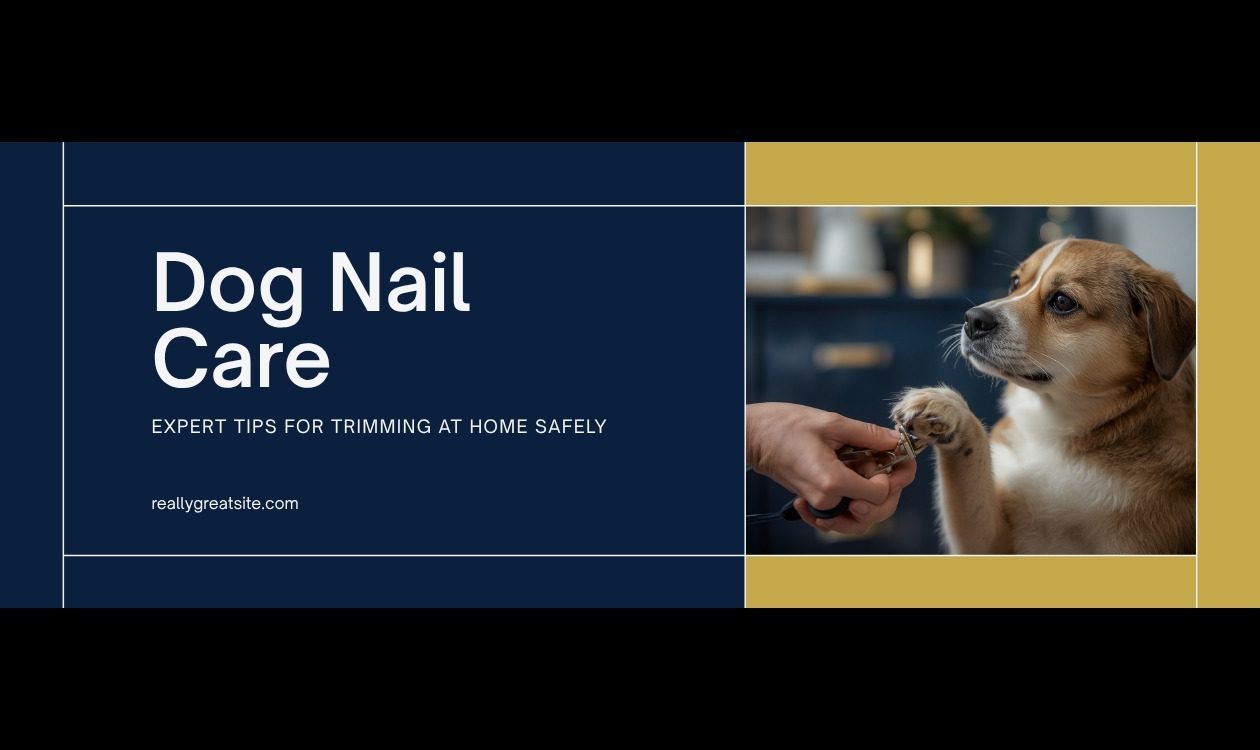
Many dog owners view nail trimming as a cosmetic task — something done to keep nails looking tidy. In reality, overgrown dog nails are a genuine health issue with measurable consequences for your dog’s comfort, posture, and long-term joint health.
Joint and Posture Damage
When nails touch the ground with each step, they push back against the paw — forcing the paw to angle outward and altering the dog’s entire biomechanical chain from paw through ankle, knee, hip, and spine. Chronic nail overgrowth causes measurable changes in gait and posture over months.
Pain with Every Step
Long nails that contact the ground exert constant upward pressure on the nail bed — the equivalent of having something continuously pushing under your fingernail with each footstep. Dogs with overgrown nails often shift their weight and move stiffly to reduce this contact.
Nails Curling Into the Paw
Without trimming, nails curve and can grow in a complete arc — penetrating the paw pad from the inside. This is extremely painful and requires veterinary intervention. It occurs most commonly with dewclaws, which never contact the ground and receive no natural wearing.
Floor and Furniture Damage
Long nails scratch hardwood floors, snag carpet, and make distinctly audible clicking sounds on hard floors — all signs that nails have grown beyond the appropriate length and trimming is overdue.
The Quick Grows Longer
The longer nails are left untrimmed, the longer the blood vessel inside the nail (the quick) grows. This is the most important reason to trim regularly — very long nails have very long quicks, making safe trimming progressively harder.
Nail Splits and Breaks
Overgrown nails are more likely to catch on surfaces and break or split — a painful injury that can expose the sensitive nail bed to infection. Regular trimming prevents the nail length that makes this possible.
“Overgrown nails are one of the most underappreciated sources of chronic pain and discomfort in dogs. Regular nail trimming — every 3–4 weeks — is as important to your dog’s long-term health as annual vaccinations.”
— Dr. Jerry Klein, Chief Veterinarian, AKC
Understanding the Quick — Dog Nail Anatomy Explained
The single most important concept to understand before cutting dog nails at home is the quick — the living tissue inside the nail that contains blood vessels and nerve endings. Cutting into the quick is painful for the dog and causes bleeding. Understanding the quick is what separates confident, effective nail trimming from anxious, hesitant trimming.
Dog Nail Anatomy
The hard outer shell — the part you trim. Made of keratin protein, just like human fingernails. Contains no blood vessels or nerves — cutting this causes no pain.
The living inner core of the nail. Contains blood vessels and nerve endings. Cutting into the quick hurts and bleeds. In light nails it is visible as a pink area. In dark nails it is hidden.
The tip of the nail beyond the curve — where only keratin exists. Always cut here. Stop and reassess when the cut cross-section shows a darker, more moist center — this means the quick is approaching.
✅ Key Principle: Cut only 2mm at a time, stopping to check after each small cut. Look at the cut cross-section: a white or chalky center means you are safely in the dead keratin zone. A darker, slightly pink, moist-looking center means the quick is very close — stop cutting that nail. Trim nails every 3–4 weeks so the quick never has a chance to grow very long.
Tools You Need — Clippers vs Grinder Comparison
✂️ Dog Nail Clippers
- Guillotine clippers: Nail passes through a hole and the blade slides across — good for small breeds
- Scissors style: Best for small dogs and thin nails — most intuitive for beginners
- Pliers style: Spring-loaded for large, thick nails — the most widely used type
- Fast — can trim all nails in 5–10 minutes
- Quiet — no noise for sound-sensitive dogs
- Higher risk of cutting quick than grinder
- Can split or crush nails if blade is not sharp
⚙️ Dog Nail Grinder (Dremel-style)
- Gradually grinds nail down rather than cutting — much lower quick-cut risk
- Produces smooth finish with no sharp edges
- Easier to control — can make micro-adjustments
- Ideal for black nails — can stop before hitting quick
- Slower — may take 15–20 minutes for all nails
- Produces noise and vibration — requires gradual introduction
- Some dogs prefer over clippers after gradual acclimation
Essential Supplies Checklist
- Dog-specific nail clippers or grinder — never use human nail clippers
- Styptic powder — the only reliable way to stop quick bleeding quickly. Keep it within arm’s reach. Alternatives: cornstarch or flour in a pinch
- High-value treats — small, soft, smelly treats your dog does not get at other times
- Bright light source — a well-lit space or small flashlight to illuminate the nail interior
- Non-slip mat — for stability on hard floors
- Helper (optional but useful) — a second person to provide treats and gentle restraint for nervous dogs
Premium Dog Grooming Tools at Arbsbuy
Professional-grade dog grooming equipment · Nail grinders · Grooming kits · Free USA shipping · 30-day guarantee · USA warehouse
Step-by-Step: How to Cut Dog Nails at Home
Follow these ten steps every time you cut your dog’s nails at home. Each step matters — skipping preparation steps is the most common cause of difficult nail-trimming sessions.
Choose the Right Time and Place
Pick a time when your dog is calm — after exercise and a meal, not immediately before. Choose a well-lit room with good natural or overhead lighting. Place a non-slip mat on a hard floor, or sit on a sofa with your dog beside or on your lap. Never attempt nail trimming when your dog is already overstimulated, anxious, or immediately after they have become reactive to something.
Set Up Your Supplies Within Arm’s Reach
Place your clippers or grinder, styptic powder, and treats all within easy reach before you begin. Standing up mid-session to retrieve something disrupts the session and gives a nervous dog an opportunity to escape or reset their anxiety upward. Have everything arranged and ready before you even pick up your dog’s paw.
Begin with Paw Handling — Before the Clippers Appear
Give a treat, then gently pick up one paw. Hold it for 3 seconds. Give a treat. Release. Repeat with each paw. This step confirms your dog is in a relaxed, cooperative state before any equipment is introduced. If your dog shows significant resistance to paw handling alone, this is a signal to slow down — the desensitization protocol in Section 6 applies here.
Position the Paw Correctly
Pick up the paw and place your thumb on the pad of the toe you are trimming, with your forefinger on top of the toe on the skin above the nail. Make sure no fur is obscuring your view of the nail. Gently push your thumb upward against the pad while pressing your forefinger forward — this extends the nail outward and gives you a clear, stable cutting position.
Identify the Quick Before Cutting
For light-colored nails: hold the paw up to a light source and look through the nail. You can see the pink quick inside — identify how far it extends and plan your cut 2mm beyond where the quick ends. For dark nails, see Section 5 for the specific technique required.
Position the Clippers at a 45-Degree Angle
Hold your clippers at approximately 45 degrees to the nail — angling so the cut follows the natural curve of the nail rather than cutting straight across. This removes nail in the same shape as the natural nail tip and reduces the risk of splintering or splitting. For guillotine clippers, ensure the cutting blade is facing toward the tip of the nail, not toward the paw.
Make ONE Small Cut — Then Inspect
Cut only 2mm of nail at a time — one small, decisive clip. Then hold the nail up to your light source and examine the cut surface. A white or chalky center with no visible pink: you are safely in the keratin zone — you can make another small cut. A slightly darker center: you are approaching the quick — stop cutting this nail and move on to the next. Give a treat after every successful clip.
Work Through All Toes — Including Dewclaws
Trim all toes on each paw systematically. Do not forget the dewclaws — the small “thumb” nail on the inner side of the front legs (and sometimes rear legs, depending on the breed). Dewclaws never contact the ground and never wear naturally — they are the nails most likely to overgrow and curve back into the paw pad if left untrimmed. Check dewclaws first at every session as they are often overlooked.
Smooth Any Sharp Edges
After clipping, run your finger across the tip of each trimmed nail. If any edge feels sharp or jagged, use a nail file or a brief pass of a grinder to smooth it. Sharp-edged nails scratch floors and catch on fabric more readily and are more uncomfortable for your dog. If you are using a grinder as your primary tool, this step is handled automatically by the grinding process.
Celebrate — Big Finish Every Time
When the session is complete, give your dog their highest-value reward — a particularly special treat, extended play with a favorite toy, or a meal immediately after. The quality of the post-session reward shapes how your dog feels about the next nail trimming session far more than anything that happened during the trim. End every session on the highest possible positive note, regardless of how the session went.
The Toughest Challenge — How to Cut Black Dog Nails
Black or dark nails are the most challenging aspect of cutting dog nails at home because the quick is not visible through the opaque nail. However, there is a reliable technique that experienced groomers use — the “cut-and-check” method based on observing the cross-section after each small cut.
🔦 The Black Nail Cross-Section Guide — What You See After Each Cut
For dogs with black nails, a nail grinder is significantly safer than clippers because the gradual grinding process allows you to check the cross-section continuously rather than making a single decisive cut. The heat generated by prolonged grinding can be uncomfortable — work in 2–3 second bursts on each nail rather than continuously. According to PetMD, owners of dark-nailed dogs who switch from clippers to grinders consistently report greater confidence and fewer quick cuts.
Handling a Dog That Hates Nail Trimming
Many dogs dislike nail trimming — but a dog that has had a negative experience (quick cut, rough handling, or a traumatic session) can develop genuine phobia-level resistance that makes home dog nail trimming extremely difficult. The solution is a structured desensitization protocol, not forcing through resistance.
⚠️ When to Stop and Seek Professional Help
- If your dog shows aggression (growling, snapping, biting) during nail trimming — stop immediately. This is a safety issue. Consult a certified dog trainer before attempting home nail trimming again.
- If your dog’s anxiety is severe enough that even paw-handling triggers significant distress, a veterinary prescription of mild anti-anxiety medication specifically for grooming sessions may be appropriate — discuss with your vet.
- Professional groomers and vets have specialized handling techniques and restraint options that can make the process safer for both dog and owner in severe cases.
If You Cut the Quick — Complete First Aid Guide
🩸 Quick Cut First Aid — Step by Step
Stay Calm — Your Dog Reads Your Energy
A quick cut is painful but not dangerous. Your reaction matters enormously. Dogs that see their owner panic become more distressed — calmly say “oops, it’s okay” in a matter-of-fact tone and immediately move to step 2.
Apply Styptic Powder Immediately
Press a small pinch of styptic powder directly onto the bleeding nail tip. Hold firm pressure for 30–60 seconds without releasing. Styptic powder contains benzocaine (a local anesthetic that reduces pain) and ferric subsulfate (which causes immediate vasoconstriction and clotting). It works within 60 seconds in most cases.
If No Styptic Powder — Use Cornstarch or Flour
Press a pinch of cornstarch or plain flour directly onto the nail tip. These are less effective than styptic powder but will assist clotting. Do NOT use human styptic pencils — these are designed for fine skin cuts and contain chemicals inappropriate for dog nails.
Keep the Dog Still for 5 Minutes
Have your helper provide gentle, calm restraint while you apply pressure. Encourage the dog to lie down if possible. Walking on a freshly clotted nail reopens the wound. Keep the dog still for at least 5 minutes after bleeding stops.
Give a High-Value Treat Immediately
As soon as bleeding is controlled, give your dog a particularly special treat — not as a reward for being calm (they may not be), but to create a positive association that begins to counter-condition the negative experience of the quick cut.
When to Call a Vet
If bleeding does not slow after 5 minutes of firm styptic powder pressure — contact your veterinarian. This is rare but can occur in dogs on blood-thinning medications or with clotting disorders. Monitor the nail for signs of infection over the following 5–7 days (swelling, redness, discharge, lameness).
How Often to Trim Dog Nails + Signs They Are Too Long
Signs Your Dog’s Nails Are Too Long — Check These Now
- You can hear clicking when your dog walks on hard floors — the most reliable indicator that nails are making ground contact and are too long
- Nails curve visibly when viewed from the side rather than extending straight from the paw
- Nails touch the ground when the dog is standing naturally on a flat surface
- Your dog’s paw turns outward when walking — the nail-length-driven biomechanical shift
- You can see the nail clearly extending past the paw pad when viewed from above
The correct nail length: nails should sit just above the ground when the dog is standing naturally. You should see minimal gap between nail tip and floor but no contact. If you are unsure, ask your veterinarian or groomer to demonstrate the correct length at your next visit.
Frequently Asked Questions — How to Cut Dog Nails at Home
Final Thoughts — How to Cut Dog Nails at Home
Learning how to cut dog nails at home is one of the most practical grooming skills you can develop as a dog owner — it saves money, reduces vet appointments, and removes the stress of scheduling grooming sessions just for nail maintenance. With the right tools, an understanding of the quick, and the step-by-step process outlined above, most dog owners can learn to trim confidently within 2–3 practice sessions.
The most important reminders: trim only 2mm at a time, stop when the cross-section shows any darkening, keep styptic powder within arm’s reach, and always end sessions with the best possible reward. For dogs that resist nail trimming, patient desensitization over 4–6 weeks produces lasting cooperation far more effectively than forcing through resistance.
For a comprehensive guide to complete dog grooming at home — covering bathing, brushing, ear cleaning, dental care, and coat maintenance alongside nail trimming — see our complete dog grooming guide. For premium grooming tools, dog health resources, and our expert-written Dog Health & Care ebook, visit Arbsbuy with free USA shipping and our 30-day guarantee on every order.
Shop Premium Dog Grooming Products at Arbsbuy
Professional dog grooming tools · Nail grinders · Dog health guides · Free USA shipping · 30-day guarantee
Sources: American Kennel Club — How to Trim Dog Nails Safely | PetMD — Dog Grooming Guide | VCA Animal Hospitals — Dog Nail Care | ASPCA — Dog Grooming Basics
📄 Sources & References
- AVMA: Dog Nail Trimming Safety — how to avoid the quick and manage nail-trimming aversion — https://www.avma.org/resources-tools/pet-owners/petcare/dog-grooming
- National Dog Groomers Association of America: Professional nail care standards — recommended frequency and technique by breed size — https://www.nationaldoggroomers.com
- AKC: How to Trim Dog Nails — step-by-step guide with quick identification for dark nails — https://www.akc.org/expert-advice/dog-care/how-to-trim-dog-nails
- Applied Animal Behaviour Science: Desensitization to nail trimming in dogs — counter-conditioning protocol and success rates — https://www.sciencedirect.com/journal/applied-animal-behaviour-science