
⚡ Quick Answer
Raw dog food diets — BARF (Biologically Appropriate Raw Food) or prey model — can provide good nutrition but carry real food safety risks: Salmonella, E. coli, Listeria, and Campylobacter have all been documented in commercial and home-prepared raw pet food. The FDA and American Veterinary Medical Association do not recommend raw diets due to pathogen risk to both dogs and the humans in the household. If you choose raw feeding, use commercially prepared frozen or freeze-dried raw from reputable manufacturers with pathogen-reduction processing, and practise strict food hygiene throughout.
💡 Expert Tip
The most dangerous nutritional error in home-prepared raw diets is incorrect calcium. A raw diet of meat alone is severely deficient in calcium — leading to nutritional secondary hyperparathyroidism and skeletal damage, particularly in growing puppies. Ground eggshell (½ teaspoon per pound of raw food, providing approximately 1,000mg of calcium) or a veterinary calcium supplement is essential for any raw diet not containing raw edible bone. Have any home-prepared raw recipe reviewed by a board-certified veterinary nutritionist (ACVN) before feeding long-term.
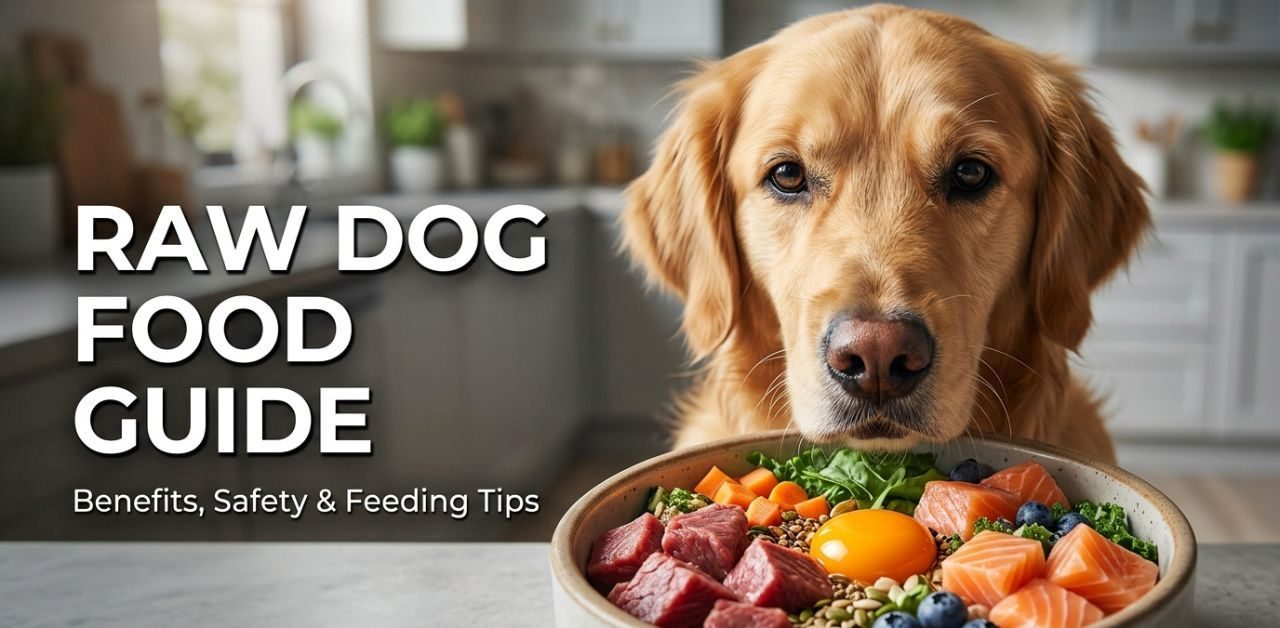
If your dog has been scratching more than usual, seems bored at mealtime, or keeps having an upset stomach, you’ve probably already started wondering whether what’s sitting in that bowl is actually the problem. More dog owners across the U.S. are asking that same question right now. And a lot of them are landing on the same answer: it’s time to look seriously at raw dog food.
This isn’t a fringe movement anymore. Raw feeding has moved well beyond enthusiast forums and into mainstream conversations among veterinarians, breeders, and everyday pet owners who simply want better for their dogs. But it can still feel overwhelming when you start researching. One brand pushes frozen patties. Another claims freeze dried raw dog food is superior. A third insists that air dried dog food is the cleanest option of all.
So what should you actually do?
That’s what this guide is for. We’re going to walk through everything — from understanding what raw feeding actually means to comparing different formats to building a safe transition plan to avoiding the mistakes that trip up most first-time raw feeders. No fluff, no recycled talking points. Just real, practical information that helps you make a confident decision for your dog.
- What Is Raw Dog Food, Really?
- The Different Types of Raw Feeding (And What Nobody Tells You About Each One)
- Comparison: Which Format Is Right for Your Dog?
- Why Owners Are Making the Switch — What They Actually Notice
- How to Choose the Best Raw Dog Food for Your Dog
- Building a Safe Raw Dog Food Diet: What Most Guides Miss
- Common Mistakes That Derail First-Time Raw Feeders
- Freeze Dried Raw Dog Food: A Deeper Look
- Air Dried Dog Food: Why It's Converting Kibble Feeders
- Is Raw Feeding Worth the Cost?
- Dogs That Benefit Most From Raw Feeding (And Dogs That Need Extra Caution)
- Practical Feeding Tips Nobody Puts in the Marketing Copy
- Helpful Resources for Raw Dog Food Shoppers
- Frequently Asked Questions
- Conclusion
What Is Raw Dog Food, Really?
At its core, raw dog food is a diet built around minimally processed animal proteins — muscle meat, organ meat, raw bone or bone meal, healthy animal fats, and sometimes vegetables or nutritional supplements. The idea is straightforward: feed your dog something closer to what their biology is actually designed to process, rather than a heavily cooked and extruded product loaded with grain fillers and synthetic additives.
Dogs are facultative carnivores. Their digestive systems are built to handle raw protein and fat efficiently. Their stomach acid is significantly more acidic than ours, which helps neutralize bacteria in raw meat. Their shorter digestive tract processes food quickly — a very different setup from herbivores or omnivores.
None of that means every dog thrives on every raw diet. But it does explain why so many owners start seeing changes — better coats, smaller stools, more energy — when they shift to higher-quality, less processed feeding options.
The raw dog food diet umbrella covers several different feeding approaches, each with its own pros, cons, and practical realities. Understanding those differences is the first step toward making a decision that actually works for you and your dog.
The Different Types of Raw Feeding (And What Nobody Tells You About Each One)
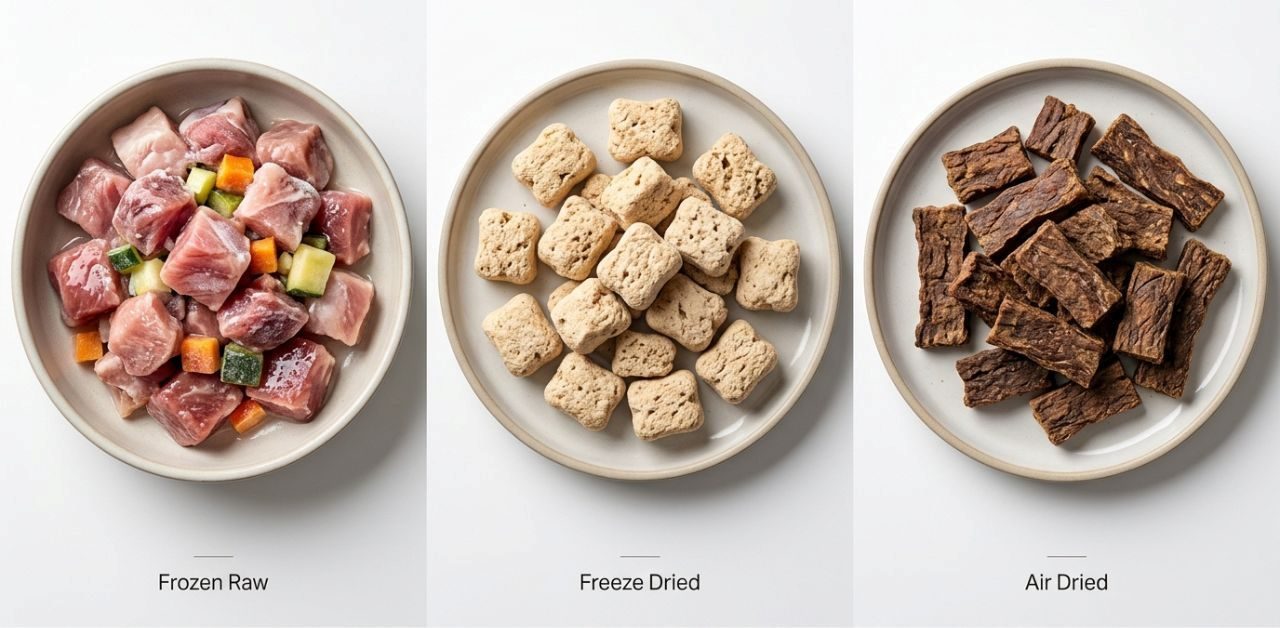
1. Frozen Raw Dog Food
Frozen raw is often what people picture when they first think about switching. Pre-portioned patties, chubs, or medallions made from ground raw meat, organ, and bone — stored frozen and thawed before each meal.
It’s the closest commercial option to a truly natural raw diet. Minimal processing means you’re getting the food in nearly the same state as when the ingredients came in. Moisture is preserved, which is great for hydration. Palatability is usually excellent — most dogs go absolutely crazy for it.
But here’s what first-timers often don’t fully appreciate until they’re already committed: frozen raw has real logistics. You need dedicated freezer space — sometimes a lot of it, especially for large breeds or multi-dog households. You have to plan ahead for thawing (typically 24–48 hours in the fridge). You can’t grab a bag and go on a hiking trip. And if the power goes out for a day or two, you’ve got a problem.
For owners who are organized, have the freezer space, and are fully committed to the lifestyle, frozen raw is genuinely excellent. For everyone else, it’s worth looking at the next two formats seriously.
2. Freeze Dried Raw Dog Food
Freeze dried raw dog food has become one of the fastest-growing segments in the premium pet food market, and it’s not hard to understand why.
The freeze-drying process removes moisture from raw ingredients at extremely low temperatures under a vacuum. What’s left is a lightweight, shelf-stable product that retains the original nutritional structure of the raw ingredients — enzymes, proteins, and fats largely intact. When you add water back (optional in many formulas), you essentially rehydrate it to a state close to its original state.
This format solves basically every practical problem frozen raw creates. No freezer needed. Long shelf life. Easy to measure portions. Travels without any hassle — perfect for road trips, camping, boarding kennels, or just the reality of a busy household where meal prep time is limited.
The one catch is cost. Freeze-dried raw commands a premium price per ounce compared to frozen options because the manufacturing process is significantly more involved. For large breeds, feeding freeze-dried as a primary diet can get expensive quickly.
The smart workaround many owners use: freeze-dried as a topper over kibble or a slightly lower-cost food, or as the primary diet for small and medium breeds, where portion sizes keep the cost manageable.
Important: Before you buy, always check whether a freeze-dried product is labeled as a complete and balanced meal or as a topper/treat/supplement. Many popular freeze-dried products — even well-known brands — are designed to complement meals, not replace them. Feeding an incomplete formula as a primary diet creates nutritional gaps over time.
3. Air Dried Dog Food
Air dried dog food takes a different approach to preserving ingredients. Instead of freezing or freeze-drying, manufacturers use gentle, warm, circulating air for an extended period to slowly draw moisture out of the ingredients — a concept similar to traditional jerky-making, but with far more controlled temperatures and processes.
The result is a product that’s shelf-stable, high in protein, and significantly lower in moisture than frozen raw, yet more palatable and texturally interesting than standard kibble. Many air-dried formulas have impressive ingredient panels with high-quality named proteins, limited fillers, and no harsh synthetic preservatives.
For owners who want to move away from traditional kibble but aren’t ready to handle raw meat, air-dried dog food is often the easiest entry point. You scoop it out of the bag like regular dry food. No thawing, no rehydrating (though some owners add water), no mess.
The flip side: air-drying involves more heat than freeze-drying, which means some enzyme activity is reduced compared to truly raw options. It’s better than extrusion-cooked kibble from a processing standpoint, but not identical to frozen raw in terms of nutritional preservation. And like freeze-dried, it can be calorie-dense, so portion discipline matters.
Comparison: Which Format Is Right for Your Dog?
| Feeding Format | Processing | Storage | Convenience | Best Fit |
|---|---|---|---|---|
| Frozen Raw | Minimal | Freezer required | Lower | Dedicated raw feeders with space |
| Freeze Dried Raw Dog Food | Low temp, moisture removed | Shelf stable | High | Travel, small breeds, busy households |
| Air Dried Dog Food | Gentle warm air dehydration | Shelf stable | High | Kibble transitioners, apartment living |
| Traditional Kibble | High-heat extrusion | Shelf stable | Very High | Tight budgets, simplicity-focused |
Why Owners Are Making the Switch — What They Actually Notice
Ask anyone who’s been feeding raw for more than a few months what they notice, and you’ll hear the same things over and over. Shinier coats. Less scratching. Smaller, firmer stools that don’t linger in the yard. More enthusiasm at mealtime — the kind where the dog hears the food prep from across the house.
Are these changes universal? No. Every dog is different, and a poorly formulated raw diet can create new problems rather than solving old ones. But the owners who see these improvements aren’t imagining things. Here’s what’s actually happening biologically:
Coat and skin improvements often come from better fatty acid profiles. Raw meat and high-quality animal fats deliver omega-3 and omega-6 fatty acids in a more bioavailable form than what survives heavy cooking. These fats directly impact skin barrier function and coat condition.
Smaller stools happen because raw diets are typically more digestible. Less filler means less waste. Dogs absorb a higher percentage of what they eat, so less comes out the other end. For urban apartment dwellers who are counting bags on walks, this is genuinely meaningful.
Better energy and muscle tone in active dogs often come from higher-quality protein sources. Raw animal protein has an excellent amino acid profile that supports lean muscle maintenance — important for working breeds, sporting dogs, and active family pets.
Improved mealtime enthusiasm is partly about palatability. Raw and minimally processed foods simply smell more interesting to dogs. Their food drive responds to that. For picky eaters, this can be a game-changer.
Again, none of this is guaranteed. Some dogs genuinely do better on well-formulated kibble than a poorly balanced raw diet. The goal isn’t raw feeding as a philosophy. It’s better nutrition as a practical outcome.
How to Choose the Best Raw Dog Food for Your Dog
Walking into this with the right framework saves you from spending money on the wrong things. Here’s what actually matters when you’re evaluating options:
Nutritional Completeness Is Non-Negotiable
A stunning package and a beautiful ingredient list mean nothing if the diet isn’t nutritionally complete for your dog’s life stage. Look for the AAFCO statement on the label — it should say the food is formulated to meet AAFCO nutritional profiles or has passed AAFCO feeding trials for your dog’s life stage (puppy, adult, senior, or all life stages).
This is especially critical for puppies and large breeds, where calcium-to-phosphorus ratios directly impact skeletal development. An imbalanced homemade or improperly formulated commercial raw diet fed to a growing large breed can cause permanent joint and bone issues.
Ingredient Transparency Is a Genuine Signal
The best brands in the raw and minimally processed space don’t hide behind vague terms. They name the protein source specifically (beef, chicken, turkey — not “meat” or “animal protein”). They explain where ingredients are sourced. They disclose whether products are batch tested. They make their manufacturing standards findable.
This level of transparency isn’t just a marketing strategy — it reflects a genuine quality-control infrastructure. Companies that invest in traceability and testing have more to lose if they cut corners, so they generally don’t.
Match the Formula to Your Dog’s Actual Needs
Different dogs have distinct nutritional needs. A 90-pound working German Shepherd engaged in daily physical activity has very different caloric and macronutrient needs from a 10-pound indoor Maltese. A senior dog with early kidney issues needs different protein and phosphorus management than a healthy adult.
Here’s a practical breakdown:
| Dog Profile | Priority |
|---|---|
| Working / sporting breeds | Calorie density, high protein for muscle |
| Senior dogs | Digestibility, moderate protein, joint support |
| Small breeds | Precise portion control, calorie-appropriate |
| Sensitive dogs | Limited ingredients, easily digestible proteins |
| Indoor / low-activity dogs | Weight management, lower calorie density |
| Puppies | Complete nutrition, proper calcium-phosphorus ratio |
Think Honestly About Your Lifestyle
This sounds obvious, but it’s the single biggest factor people underestimate. The best raw dog food for your dog is the one you’ll actually feed consistently. A perfectly formulated frozen raw diet that you can’t practically manage is worse than a slightly less ideal format that you can commit to reliably.
If you travel frequently, freeze-dried raw is a significantly better fit than frozen. If you live in a small apartment with limited freezer space, air-dried dog food offers premium ingredients without the logistical challenges. If you have multiple dogs of different sizes, a hybrid approach often makes the most financial and practical sense.
Building a Safe Raw Dog Food Diet: What Most Guides Miss
The raw-feeding community online can be incredibly passionate — which is great — but that passion sometimes leads to oversimplification. “Meat is natural, it’s fine” is not a feeding strategy. Here’s what a thoughtful, safe raw diet actually involves:
The Balance Framework
A properly balanced raw dog food diet generally follows one of two frameworks:
BARF (Biologically Appropriate Raw Food): Typically 70% muscle meat, 10% raw bone, 10% organ meat (with 5% being liver specifically), and 10% plant matter (vegetables, fruits, seeds). This approach incorporates plant ingredients because its proponents believe dogs benefit from the phytonutrients and fiber.
PMR (Prey Model Raw): Based on feeding whole prey ratios — roughly 80% muscle meat, 10% bone, 10% organs. No plant matter, on the premise that dogs are carnivores and don’t need it.
Neither is universally superior. Both can produce excellent results when properly balanced. The key is consistency and ensuring all nutritional requirements are actually met over time — not just in theory.
Food Safety Is Serious Business
Raw meat handling in a home kitchen requires the same food safety discipline you’d apply to preparing human food. Bacteria like Salmonella, E. coli, and Listeria can contaminate surfaces, bowls, and hands if you’re not careful.
The Centers for Disease Control and Prevention (CDC, cdc.gov) consistently recommends thoroughly washing hands before and after handling raw animal products, sanitizing food-preparation surfaces, and keeping raw pet food separate from human food-prep areas.
Practical steps that matter:
- Wash your hands with soap and warm water after every feeding prep
- Use dedicated cutting boards and bowls for raw pet food
- Disinfect surfaces and feeding bowls after each use
- Store raw food in sealed containers, away from human food
- Thaw frozen raw in the refrigerator, not on the countertop
- Don’t let raw food sit at room temperature for more than 20–30 minutes
This isn’t fearmongering — it’s the same hygiene standards that apply to handling any raw meat. Most healthy adults and healthy dogs handle the microbial exposure without issue when hygiene practices are solid.
Rotating Proteins Is Smart
Feeding a single protein source for months or years can eventually create sensitivities or deficiencies. Rotating between beef, chicken, turkey, lamb, duck, rabbit, and fish over time ensures a broader amino acid and micronutrient profile. It also keeps meals interesting for the dog.
If your dog has existing food sensitivities, start with a novel protein (one they haven’t been regularly exposed to) and introduce rotations slowly after they’ve stabilized.
Common Mistakes That Derail First-Time Raw Feeders
Switching Too Fast
The number one mistake. Most dogs need a gradual transition to avoid digestive upset. Jumping straight from kibble to 100% raw often results in loose stools, gas, or vomiting — which many owners then misinterpret as the dog “rejecting” raw food, when it’s actually just the digestive system adjusting.
A standard transition schedule:
| Days | Existing Food | New Raw Food |
|---|---|---|
| Days 1–3 | 75% | 25% |
| Days 4–6 | 50% | 50% |
| Days 7–9 | 25% | 75% |
| Day 10+ | 0% | 100% |
If your dog shows loose stools or significant digestive upset at any stage, pause and stay at the current ratio for a few more days before moving forward. Sensitive dogs sometimes need 3–4 weeks to fully transition rather than 10 days.
Assuming “Raw” Automatically Means “Balanced”
Raw chicken breasts and nothing else is not a balanced diet. It’s high in protein with almost no calcium, inadequate fat-soluble vitamins, and missing critical trace minerals. Raw diets need deliberate formulation — whether you’re buying a commercial complete product or building a homemade one.
If you’re building from scratch at home, strongly consider working with a veterinary nutritionist (at minimum through an online service like BalanceIt.com) rather than relying on general ratios found in online forums.
Overfeeding Calorie-Dense Foods
Both freeze dried raw dog food and air dried dog food are significantly more calorie-dense than standard kibble. A cup of air-dried food can have 2–3 times as many calories as a cup of dry kibble. Owners who pour the same volume of kibble they used to pour are often overfeeding by 50–100% without realizing it.
Always calculate portions by weight or by the manufacturer’s feeding guidelines adjusted for your dog’s actual body weight — not by volume.
Skipping Veterinary Input for Dogs with Health Conditions
For healthy adult dogs, most owners can research and implement raw feeding without issues. But for dogs with pancreatitis, kidney disease, liver disease, immune disorders, or chronic GI conditions — please involve your vet before switching. Some of these conditions require careful management of fat content, phosphorus levels, or bacterial exposure, all of which raw feeding can significantly affect.
The American Veterinary Medical Association (avma.org) recommends discussing raw feeding with a veterinarian, particularly for households with immunocompromised people, elderly family members, or young children, given the bacterial exposure considerations.
Freeze Dried Raw Dog Food: A Deeper Look
Given how popular this format has become, it deserves more than a passing mention.
The freeze-drying process works by first freezing the raw ingredients, then placing them in a vacuum chamber, where the ice sublimes directly into water vapor without passing through a liquid phase. This preserves the cellular structure of the ingredients in a way that heat-drying cannot.
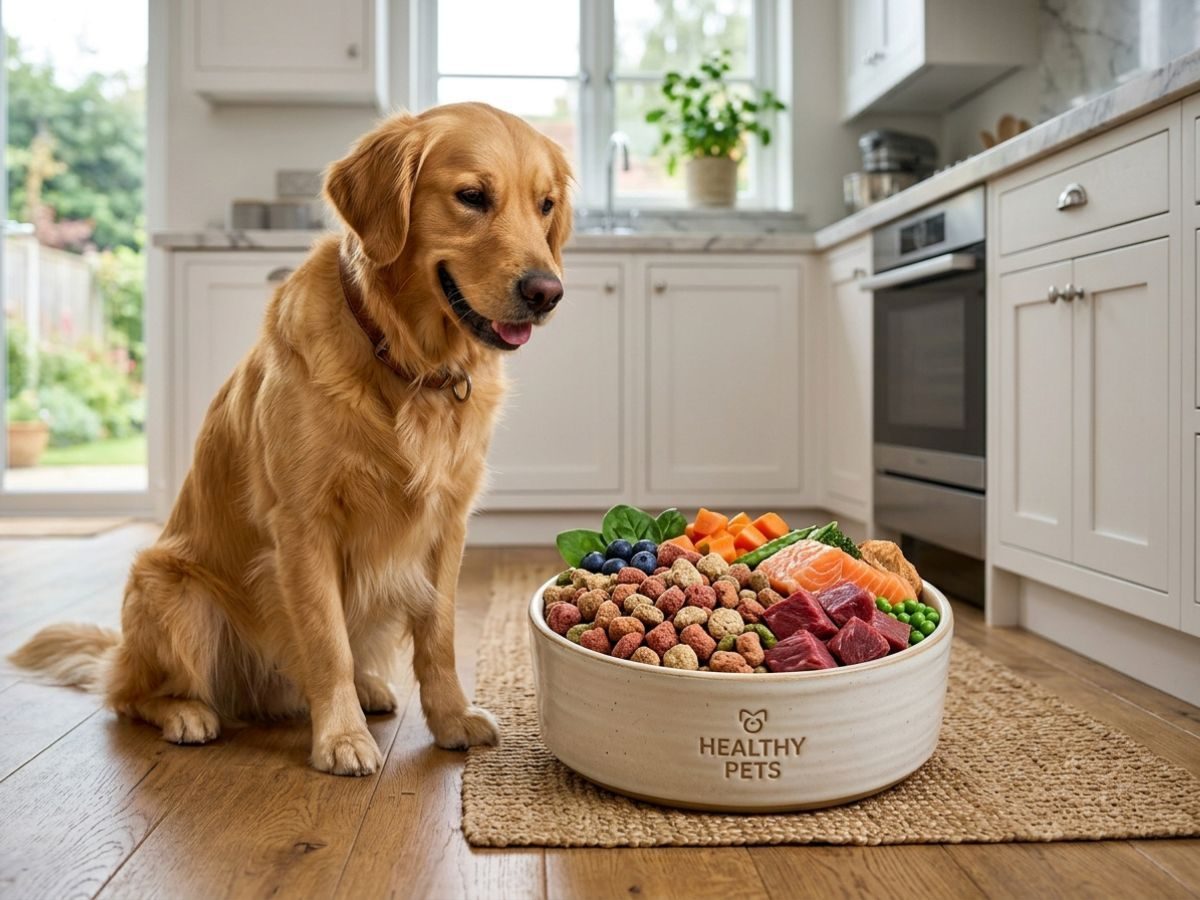
What this means practically: the proteins, fats, and most heat-sensitive nutrients stay in a form that’s very close to the original raw ingredients. When you rehydrate the product, you’re getting something nutritionally similar to what you’d get from fresh-prepared raw — in a bag you can store in a pantry.
Where freeze-dried excels:
- Travel and outdoor activities
- Picky dogs who need high palatability
- Households where raw meat handling is impractical
- As a high-value training reward (break into small pieces)
- Emergency or backup feeding supply
Where freeze-dried has limits:
- Cost for large breed primary feeding
- Not all products are complete meals (many are toppers only)
- Some dogs find the texture unusual at first
One particularly effective strategy: use freeze-dried raw as a topper on a higher-quality kibble base. You get the palatability boost, the higher-quality protein, and the ingredient quality of a raw product — at a fraction of the cost of feeding freeze-dried as a full diet.
Air Dried Dog Food: Why It’s Converting Kibble Feeders
If you ask most premium pet store staff what they recommend to kibble owners who want to upgrade without going full raw, air dried dog food comes up constantly. And there are real reasons for that.
The process is gentler than extrusion. Traditional kibble is made by cooking ingredients under extremely high heat and pressure, which destroys a significant portion of heat-sensitive nutrients and denatures many proteins. Air drying happens at much lower temperatures over longer periods — enough to remove moisture and create shelf stability, but without the aggressive thermal processing.
The result is a product with a notably better ingredient retention profile than kibble, a rich meaty smell that dogs find highly appealing, and a texture somewhere between soft jerky and dry biscuit. Many air-dried products have genuinely impressive ingredient panels — named proteins, limited grain or no grain, good fat sources, and minimal synthetic additives.
For owners transitioning from high-quality kibble to a more natural diet, air-dried dog food is often the most practical first step. There’s no handling of raw meat, no thawing, no special storage. You open the bag and scoop. The dog eats enthusiastically. Everyone’s happy.
The main considerations: calorie density (as mentioned above — portion carefully) and price point. Air-dried is definitely a premium product category, typically priced above standard kibble, though often below full freeze-dried raw.
Is Raw Feeding Worth the Cost?
Honest answer: It depends on how you define “worth it.”
Frozen raw and premium freeze-dried products cost more per day than most kibbles. For a large-breed dog, a fully freeze-dried raw diet can cost $8–$15+ per day. That’s real money over the course of a year.
But several factors complicate a simple cost comparison:
Feeding efficiency: Dogs on high-quality raw diets often eat smaller volumes because the food is more nutrient-dense and digestible. You’re feeding less mass to meet the same nutritional needs.
Health costs down the road: This one is harder to quantify, but many owners and some veterinary professionals believe that better early nutrition contributes to better long-term health — fewer allergy-related vet visits, better joint health, better immune function. If that’s true, the upfront cost difference shrinks when measured against lifetime veterinary expenses.
Hybrid feeding: Many owners find that the most practical approach is to mix formats. Frozen raw or air-dried as the base, freeze-dried as a topper or travel option. This reduces cost while maintaining significant quality improvement over standard kibble.
The most expensive product in the store is not automatically the best raw dog food for your dog. What matters is nutritional completeness, ingredient quality, and fit for your lifestyle.
Dogs That Benefit Most From Raw Feeding (And Dogs That Need Extra Caution)
Dogs That Often Respond Very Well:
- Active and working breeds (Border Collies, Belgian Malinois, Labs, GSDs)
- Dogs with chronic itchy skin or environmental allergies (particularly when switching to limited-ingredient raw)
- Picky eaters who’ve lost interest in kibble
- Dogs with consistently soft or inconsistent stools on commercial kibble
- Highly athletic dogs need dense, efficient nutrition
Dogs That Need More Careful Management:
- Dogs with a history of pancreatitis (high-fat raw diets can trigger flare-ups — lower-fat protein sources and veterinary guidance are essential)
- Dogs with kidney disease (phosphorus management is critical)
- Dogs with immune disorders (some immunocompromised dogs have a higher bacterial infection risk from raw products — discuss with your vet)
- Puppies of giant breeds (calcium-phosphorus balance is non-negotiable during growth)
- Very senior dogs with reduced organ function
None of these situations means raw feeding is impossible — just that it requires more thought, ideally with veterinary input.
Practical Feeding Tips Nobody Puts in the Marketing Copy
A few things that make a real difference once you’re actually doing this:
Prep in batches. If you’re feeding frozen raw, thaw 2–3 days’ worth at a time in the fridge rather than daily. Less hassle, more consistency.
Use a kitchen scale. Eyeballing portions with calorie-dense products leads to gradual overfeeding. A $15 kitchen scale pays for itself quickly.
Keep a feeding journal for the first month. Track stool consistency, skin/coat changes, energy level, and appetite. This gives you real data when evaluating whether the diet is working.
Don’t panic at the transition stool. Some looseness and occasional mucus-covered stools during the first 1–2 weeks of transition are normal. The digestive system is recalibrating. Unless it’s severe or persistent, hold the course.
Introduce organ meats slowly. Organs — especially the liver — are incredibly nutrient-dense. Too much, too fast, reliably causes loose stools. Start with 5% of the diet and build gradually.
Add bone content thoughtfully. Raw meaty bones are nutritional powerhouses, but cooked bones are dangerous (they splinter). If feeding recreational bones, always supervise.
Helpful Resources for Raw Dog Food Shoppers
If you’re ready to start exploring actual products, here are some places to look:
- Browse the full Dog Products collection at Arb Digital for premium feeding options available for U.S. delivery
- Check the Best Sellers section to see what other pet owners are choosing right now
- Look at Pet Grooming products — because a healthier diet often pairs well with a better grooming routine to maintain that improved coat
- For cat owners in the house, the Cat Products collection covers minimally processed options for felines, too
External resources worth bookmarking:
- FDA guidance on raw pet food safety — factual, up-to-date regulatory information
- AVMA raw feeding policy — veterinary perspective on raw feeding risks and considerations
- CDC raw pet food hygiene guidance — household safety recommendations
Frequently Asked Questions
Is raw dog food actually better than kibble? For many dogs, yes — particularly in terms of ingredient quality, digestibility, and palatability. But “better” depends on the specific products being compared and the individual dog’s needs. A well-formulated raw diet significantly outperforms low-quality kibble. Whether it outperforms a premium, high-meat kibble is a closer question and depends on the formulation.
Can puppies eat a raw dog food diet safely? Yes, with the right formula. Puppies have specific calcium-to-phosphorus ratio requirements for proper bone development. A commercial complete-and-balanced raw product formulated for puppies or all life stages is the safest route. DIY raw for puppies requires very careful formulation — strongly consider professional input.
What does freeze dried raw dog food taste like to a dog? Dogs typically love it. The freeze-drying process significantly concentrates the natural meat flavor and aroma. Most dogs that have been picky about other foods respond very enthusiastically to freeze-dried options.
Does air dried dog food need to be refrigerated? Most shelf-stable air-dried products don’t require refrigeration before opening, though some manufacturers recommend refrigerating after opening. Always check the specific product label.
How do I know if a raw product is complete and balanced? Look for the AAFCO nutritional adequacy statement on the label. It should specify the life stage (puppy, adult, senior, all life stages) and whether it was formulated to meet AAFCO nutrient profiles or passed AAFCO feeding trials.
Can I mix raw and kibble in the same meal? This is a debated topic in the raw feeding community. The concern is that kibble digests at a different rate than raw, potentially causing digestive conflict. Many dogs handle mixed meals fine; sensitive dogs may do better with separated feedings (raw in the morning, kibble in the evening). Observe your dog’s response.
How much raw food does a dog need per day? A general starting point is 2–3% of the dog’s ideal body weight per day, adjusted for activity level. Highly active dogs may need 3–4%. Very low-activity or overweight dogs may need 1.5–2%. Freeze-dried and air-dried products have their own feeding calculators — always use the manufacturer’s guidelines as your baseline.
Should I add supplements to a raw dog food diet? Only if the diet requires it. A properly formulated commercial raw product is complete as-is. Homemade diets almost always need supplementation — particularly calcium (if not feeding raw bone), omega-3s (if protein rotation is limited), and potentially vitamin D and zinc. Over-supplementing a complete diet creates its own imbalances.
Conclusion
The conversation around raw dog food has come a long way from the fringes. Today, it’s a legitimate feeding category with serious commercial products, growing veterinary acceptance, and millions of dogs benefiting from it nationwide.
Whether you’re drawn to frozen raw for its minimal processing, freeze dried raw dog food for its convenience, or air dried dog food as an easier transition from kibble, the underlying principle is the same: your dog deserves better ingredients, less filler, and food that works with their biology rather than against it.
The best raw dog food isn’t necessarily the most expensive or the most discussed on social media. It’s the one that’s nutritionally complete for your dog’s life stage, sourced from quality ingredients, handled safely in your home, and fed consistently as part of a routine you can actually sustain.
Start slow. Watch your dog’s response. Ask questions. And don’t let perfect be the enemy of better — even a meaningful improvement in food quality has value, even if you’re not doing a perfectly executed raw diet from day one.
Your dog can’t read the labels. But they feel the difference.
Looking for premium dog food and pet care products with fast U.S. shipping? Visit the Arb Digital Dog Products collection or check the Best Sellers for what pet owners are choosing right now. Free tracked shipping across the USA on all orders.
Trusted Veterinary & Expert Sources
📄 Sources & References
- FDA Center for Veterinary Medicine (2022): Raw pet food safety — Salmonella and Listeria contamination risks in raw diets — https://www.fda.gov/animal-veterinary/animal-health-literacy/get-facts-raw-pet-food-diets-can-be-dangerous-you-and-your-pet
- AVMA: Raw or Undercooked Animal-Source Protein in Cat and Dog Diets — official policy statement — https://www.avma.org/resources-tools/avma-policies/raw-or-undercooked-animal-source-protein-cat-and-dog-diets
- WSAVA Global Nutrition Committee: Raw Meat-Based Diets Position Statement — nutritional completeness and pathogen risk — https://www.wsava.org/WSAVA/media/PDF_old/WSAVA-Raw-Meat-Based-Diets-Guideline.pdf
- Journal of the American Veterinary Medical Association (2006): Evaluation of raw meat-based diets for dogs — nutritional deficiencies identified in 60% of recipes — https://www.avma.org/javma
- AAHA (2021): Canine Life Stage Guidelines — feeding recommendations for all life stages — https://www.aaha.org/aaha-guidelines/life-stage-canine-2019/life-stage-canine-guidelines