
📊 Senior Cat Care: Key Health Statistics
of cats over age 12 have chronic kidney disease — the leading senior cat health condition
Source: AAFP Guidelines
of cats over 12 have radiographic evidence of arthritis — most are never diagnosed due to pain-hiding
Source: Cornell Feline Health Center
of senior cats have hyperthyroidism — and it is highly treatable when caught early
Source: Cornell Feline Health Center
average senior cat lifespan with excellent care vs. 3-4 years with standard care
Source: AVMA Feline Geriatrics
🏭 The Decision That Matters Most After Age 11
Switching from annual to biannual veterinary visits at age 11 is the single most impactful senior cat care change — yet fewer than 30% of senior cat owners make this switch. In 6 months, conditions like hyperthyroidism and CKD can advance from early-detectable to significant organ damage. This guide shows you exactly what to monitor and when.
Quick Answer: Senior Cat Care
Cats are considered senior at age 11 and geriatric at age 15 — though many live actively to 18-20+ with appropriate care. Senior cat care differs from adult cat care in four critical areas: veterinary visit frequency increases to every 6 months (conditions develop faster at this life stage), nutrition shifts toward higher-quality protein to counteract muscle wasting, home modifications are needed for reduced mobility and vision, and early detection of the seven most common senior cat conditions becomes the primary care goal. The difference between a cat declining at 14 and thriving at 18 is almost always how early these conditions were detected.
The senior cat population is the fastest-growing demographic in pet ownership. Advances in feline veterinary medicine, better nutrition understanding, and indoor-only lifestyles have pushed average cat lifespan from 12-14 years a generation ago to 15-20 years today. A cat who reaches age 10 now has a statistically average remaining lifespan of 5-6 more years — and many live beyond that.
But longevity without quality of life is not the goal. Senior cats need different care than adult cats — different veterinary schedules, different nutritional priorities, home environment modifications, and owner attention to subtle signs that aging is causing problems. This guide covers everything that changes when your cat crosses into the senior years.
- When Is a Cat Considered Senior?
- The 7 Most Common Senior Cat Health Conditions
- Nutrition for Senior Cats
- Home Modifications for Senior Cats
- Senior Cat Veterinary Schedule
- Quality of Life Assessment for Senior Cats
- Pain Management for Senior Cats: Current Options
- Month-by-Month Senior Cat Wellness Calendar
- Feeding a Senior Cat With Reduced Appetite
- Dental Care for Senior Cats: Options and Timing
- Supporting Your Senior Cat's Mental Health
- Talking to Your Veterinarian About End-of-Life Planning
When Is a Cat Considered Senior?
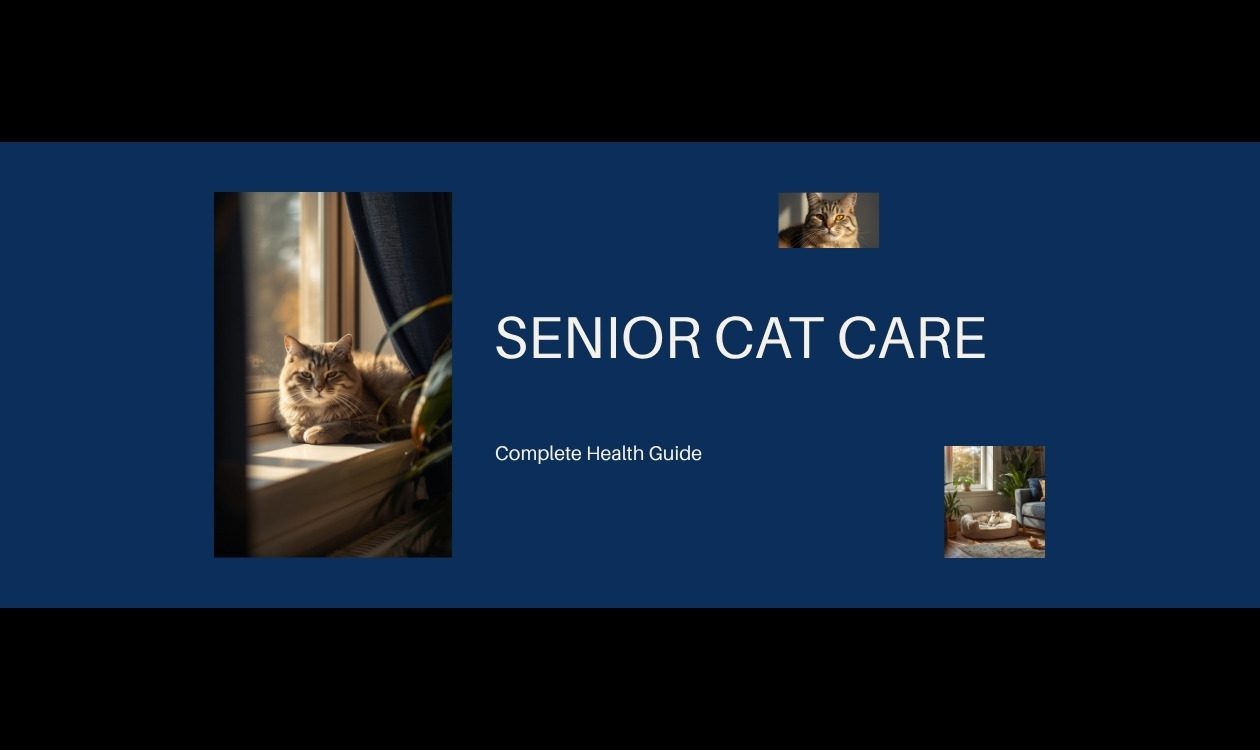
The American Association of Feline Practitioners (AAFP) defines feline life stages as:
- Kitten: Birth to 6 months
- Junior: 7 months to 2 years
- Prime: 3-6 years
- Mature: 7-10 years
- Senior: 11-14 years
- Geriatric: 15+ years
A commonly cited comparison: at age 10, a cat is roughly equivalent to a 56-year-old human. At 15, approximately 76. At 20, approximately 96. Each human-year equivalent the cat experiences after age 10 represents approximately 4 human years of physiological change — which is why annual-only veterinary care becomes inadequate at this life stage.
The 7 Most Common Senior Cat Health Conditions
1. Chronic Kidney Disease (CKD)
The most common serious disease of senior cats — affecting an estimated 30-40% of cats over age 12. The kidneys filter blood and produce concentrated urine; kidney disease reduces this function progressively and irreversibly. The insidious feature of CKD is that clinical signs (increased thirst, increased urination, weight loss, vomiting, reduced appetite) do not appear until approximately 70% of kidney function is already lost. Bloodwork detects CKD significantly earlier. Early-stage CKD is manageable with dietary modification and supportive care; late-stage CKD substantially reduces quality and duration of remaining life.
Detection: Annual bloodwork includes creatinine and BUN (blood urea nitrogen) — elevated values indicate impaired kidney filtration. SDMA (symmetric dimethylarginine) is a newer biomarker that detects kidney disease when only 25% of function is lost — ask your vet if this is included in your cat’s senior panel.
2. Hyperthyroidism
Overproduction of thyroid hormone by benign thyroid tumors — extremely common in cats over 12, affecting approximately 10% of senior cats. Paradoxically presents as apparent hyperactivity and weight loss despite increased appetite (increased metabolic rate burns calories faster than increased consumption replaces them). Other signs: unkempt coat, increased vocalization, vomiting, and secondary hypertension.
Detection: T4 (total thyroxine) level included in senior bloodwork. Highly treatable — options include daily oral medication (methimazole), radioactive iodine therapy (curative), or surgical removal. Left untreated, hyperthyroidism causes progressive heart disease and kidney damage from chronically elevated blood pressure.
3. Diabetes Mellitus
Insulin deficiency or resistance causing chronic high blood glucose. Presents with classic signs: dramatically increased thirst, increased urination, weight loss despite normal or increased appetite, and plantigrade stance (walking on heels due to diabetic neuropathy affecting the hind legs). Unlike dogs, approximately 50-70% of diabetic cats can achieve remission with correct early management (diet change to high-protein/low-carbohydrate food and initial insulin therapy) — early detection makes a critical difference in outcome.
4. Hypertension (High Blood Pressure)
Most commonly secondary to hyperthyroidism or CKD in senior cats. The most dramatic complication is acute hypertensive retinal detachment — a cat that was seeing normally becomes suddenly blind within hours. Signs of hypertension: sudden blindness, dilated pupils that do not respond to light, disorientation, and in advanced cases, neurological signs from cerebrovascular damage. Blood pressure measurement should be included in all senior wellness visits.
5. Arthritis (Degenerative Joint Disease)
Profoundly underdiagnosed in cats — an estimated 90% of cats over age 12 have radiographic evidence of arthritis, but only a fraction are diagnosed because cats hide pain extremely effectively. Signs: reduced jumping height (jumping to lower surfaces, using intermediate steps before jumping), reluctance to use stairs, reduced grooming of difficult-to-reach areas (back end, belly), aggression when touched in joint areas, and general reduced activity. Pain management with veterinarian-prescribed NSAIDs (specifically feline-safe formulations — human NSAIDs are acutely toxic to cats) or newer monoclonal antibody therapies (frunevetmab/Solensia) significantly improves quality of life.
6. Dental Disease
Affects 85% of cats over age 3 and is nearly universal in senior cats. Periodontal disease causes chronic pain that owners frequently miss because cats continue eating until dental disease is advanced — out of necessity rather than absence of pain. Regular dental cleanings under anesthesia (safe even for senior cats with appropriate pre-anesthetic bloodwork and monitoring) and at-home dental care significantly reduce disease progression.
7. Cognitive Dysfunction Syndrome (CDS)
Feline dementia — accumulation of amyloid plaques in the brain causes progressive cognitive decline. Signs: disorientation (appearing lost in familiar spaces), vocalization especially at night (yowling in elderly cats is a classic CDS sign), altered sleep-wake cycles (active at night, sleeping excessively during the day), reduced interaction with owners, house soiling by previously housetrained cats, and decreased grooming. Supplements with some evidence include omega-3 fatty acids, antioxidants, and SAMe. Veterinary prescription medication selegiline has FDA approval for cognitive dysfunction in dogs and is used off-label in cats.
Nutrition for Senior Cats
Senior cat nutrition is the most misunderstood area of feline geriatric care. Outdated recommendations suggested low-protein diets for all senior cats to “protect the kidneys.” Current evidence does not support protein restriction in cats with normal or early-stage kidney disease — and restricted protein causes muscle wasting (sarcopenia) that significantly reduces quality and length of life.
Current evidence-based senior cat nutrition guidelines:
- High-quality protein: Cats over 11 years have reduced ability to metabolize protein and need MORE dietary protein than adult cats to maintain muscle mass, not less. Minimum 30% protein on a dry matter basis, ideally 35-40%. Meat-based protein, not plant-based.
- High moisture content: Cats are naturally low-thirst animals who depend on food moisture for hydration. Wet food (75-80% moisture) supports kidney health, prevents urinary crystals, and is significantly easier for senior cats with reduced dental capacity. If feeding dry food, supplement with a cat water fountain to encourage water intake.
- Caloric adjustment: Senior cats (11-14 years) typically need slightly fewer calories than prime-age adults. Geriatric cats (15+) frequently need calorie increases as metabolism changes and absorption efficiency declines. Monitor body condition score (visible ribs = underweight; cannot feel ribs = overweight) rather than relying on age-based calorie tables.
- Phosphorus moderation (for cats with CKD): A phosphorus-restricted diet is recommended specifically for cats diagnosed with CKD. Prescription renal diets provide appropriate phosphorus levels with maintained protein quality. Do not restrict phosphorus in cats without CKD — the tradeoff is not warranted for healthy kidneys.
Home Modifications for Senior Cats
- Litter box accessibility: Lower-sided boxes or box ramps for cats with arthritis. Cats with painful joints will eliminate outside the box rather than climb a high entry point. If your cat has stopped using the box, accessibility and pain are the first things to evaluate before behavior modification.
- Food and water at floor level: Cats with arthritis find overhead reaching painful. Lower the water fountain or food bowl to floor height, or use a platform at the height they are comfortable with.
- Ramps and steps to favored surfaces: If your cat previously jumped to the bed or couch and has stopped, provide 2-3 step portable pet stairs. Maintaining access to favored social spaces maintains psychological wellbeing and reduces isolation-related stress.
- Warmth: Senior cats have reduced ability to thermoregulate. Heated cat beds or blankets (always with temperature control) significantly improve comfort, especially in arthritic cats whose joint pain is worsened by cold.
- Grooming assistance: Cats with reduced flexibility or arthritis cannot groom their hindquarters effectively. A gentle soft brush daily, and trimming the hair around the hindquarters for long-haired cats, prevents matting and maintains hygiene in areas the cat cannot reach.
Senior Cat Veterinary Schedule
| Age | Visit Frequency | Standard Panel |
|---|---|---|
| 7-10 (Mature) | Annually | Physical exam, complete bloodwork, urinalysis, blood pressure |
| 11-14 (Senior) | Every 6 months | All above + T4 (thyroid), SDMA (early kidney marker), chest X-ray every 1-2 years |
| 15+ (Geriatric) | Every 3-6 months | All above + cognitive assessment, weight monitoring every visit, pain scale assessment |
Quality of Life Assessment for Senior Cats
Knowing when intervention is helping versus when a senior cat’s quality of life has declined to a level where palliative care should be discussed with your veterinarian is one of the most difficult aspects of senior cat ownership. The HHHHHMM quality of life scale (developed by veterinarian Dr. Alice Villalobos) provides a structured framework:
- Hurt: Is pain being managed effectively?
- Hunger: Can the cat eat enough to maintain body weight?
- Hydration: Is the cat adequately hydrated?
- Hygiene: Can the cat maintain cleanliness, or be kept clean by the owner?
- Happiness: Does the cat express interest in life — interaction, play, sunbathing?
- Mobility: Can the cat move enough to reach food, water, and litter?
- More good days than bad: Is the trajectory positive or negative?
Each category is scored 1-10; a total above 35/70 generally indicates acceptable quality of life. This scale does not replace veterinary guidance, but provides a consistent framework for objective assessment.
📚 Want the Complete Senior Cat Care Bible?
Our Senior Cat Care Complete Guide covers every age-related condition, vet visit protocols, pain assessment, specialized nutrition, home modifications, and how to make the quality-of-life decisions that matter most in the final years.
Trusted Sources
Pain Management for Senior Cats: Current Options
Pain management in senior cats has improved dramatically in the past 5 years with the approval of new treatments specifically developed for feline arthritis pain — a historically difficult problem to address because most effective pain medications in humans and dogs are toxic to cats.
The Feline NSAID Problem
NSAIDs (ibuprofen, naproxen, aspirin, and even meloxicam at dog doses) cause fatal kidney and gastrointestinal damage in cats because cats lack the liver enzymes to metabolize these drugs safely. This has historically left feline chronic pain management with very few options — but this has changed significantly:
Solensia (Frunevetmab)
FDA-approved in 2022 specifically for feline osteoarthritis pain — the first medication in this class approved for cats. Solensia is a monoclonal antibody that targets nerve growth factor (NGF), which drives pain signaling in arthritic joints. It is given as a monthly veterinary injection and avoids the NSAID toxicity issue entirely. Clinical trials showed significant reduction in owner-observed pain signs (reduced jumping difficulty, improved mobility) in cats with radiographically confirmed arthritis. Ask your veterinarian specifically about Solensia if your senior cat is showing reduced mobility.
Buprenorphine (Partial Opioid Agonist)
Can be prescribed for short-term moderate-to-severe pain management in cats (post-surgical, acute injury, advanced cancer pain). Available as an oral transmucosal formulation (absorbed through the gum) that owners can administer at home — an important feature for cats who are difficult to pill. Not suitable for long-term chronic pain management but valuable for acute pain control.
Gabapentin
Originally an anticonvulsant, gabapentin is increasingly used in cats for neuropathic pain and as a pre-veterinary-visit anxiolytic (2 hours before the appointment, dramatically reduces stress in most cats). For chronic pain, it is used adjunctively rather than as sole treatment. Your veterinarian can prescribe it as an inexpensive compounded liquid formulated for cats.
Environmental Modifications as Pain Management
Environmental changes are not a substitute for medication in cats with significant arthritis, but they reduce the number of times per day the cat must use painful joints: heated bedding (warm muscles and joints have lower pain at rest), low-sided litter boxes (eliminate painful entry maneuver), ramps and steps to favored resting spots (eliminates full jumping height), food bowls at a comfortable height, and soft bedding in quiet areas reduces the motivation to move to uncomfortable locations.
Month-by-Month Senior Cat Wellness Calendar
A structured annual calendar ensures nothing slips through the gaps in senior cat care:
| Month | Task |
|---|---|
| January | Veterinary wellness visit #1: full bloodwork, urinalysis, blood pressure, T4, SDMA; dental evaluation |
| February | Check and trim nails; assess litter box usage pattern changes from winter temperature drop |
| March | Spring flea/tick prevention renewal; outdoor cat heartworm prevention check |
| April | Weigh and record; spring coat check for matting; assess indoor air quality (dry indoor air dries skin) |
| May | Review diet: is food being consumed fully? Any weight change from winter? Adjust calorie targets. |
| June | Heat monitoring — check for heat stress signs if indoor temperature rises above 80°F; fresh water access confirmed |
| July | Veterinary wellness visit #2: full repeat panel; review any findings from January and compare trends |
| August | Dental hygiene check; score quality of life with HHHHHMM scale |
| September | Fall coat check; note any changes in grooming behavior (self-grooming less = pain or cognitive decline signal) |
| October | Annual vaccination review with veterinarian — senior cats may benefit from adjusted vaccine schedules |
| November | Winter prep: heated bed placement, litter box accessibility check, water fountain winterization |
| December | Year-end quality of life review; compare to same month last year; update veterinary notes with any changes |
Feeding a Senior Cat With Reduced Appetite
Loss of appetite in senior cats is one of the most common and most serious care challenges. Multiple conditions cause reduced appetite in senior cats — hyperthyroidism, kidney disease, dental pain, nausea from any cause, and cognitive dysfunction all affect food intake. The approach to reduced appetite depends on ruling out treatable underlying causes first:
- Rule out dental disease first: A senior cat who has always been a good eater and stops eating or shows preference for wet food over dry has dental pain until proven otherwise. Veterinary dental evaluation is indicated.
- Warm food to body temperature: Cats have a reduced sense of smell as they age, and food scent is critical to appetite stimulation. Warming wet food to approximately 100°F (body temperature) releases volatile aroma compounds that significantly enhance palatability for cats with reduced olfactory sensitivity.
- Try higher palatability foods: Wet food with added broth, pâté-style food (easier to eat with dental disease), and premium quality protein sources. Rotational feeding with different proteins and brands maintains interest and prevents the refusal patterns that can develop with a single food.
- Mirtazapine as appetite stimulant: A veterinary-prescribed medication (also available as a transdermal ear gel formulation for cats who cannot be pilled) that reliably stimulates appetite in cats with reduced food intake from most causes. Safe for use in cats with early kidney disease at appropriate dose adjustments. Ask your veterinarian about this option for senior cats who have lost significant weight from reduced appetite.
Dental Care for Senior Cats: Options and Timing
Dental disease affects virtually all senior cats and is responsible for a quality-of-life reduction that most owners do not fully appreciate because cats hide dental pain effectively. A cat who is eating but eating slowly, preferring wet over dry food, dropping food while chewing, or who has started sitting with a slightly open mouth is likely experiencing significant dental pain.
Professional Dental Cleaning Under Anesthesia
The only way to fully evaluate and treat feline dental disease is under general anesthesia. Many senior cat owners are worried about anesthetic risk for their older cat — a valid concern that is well-managed by pre-anesthetic blood panel (checking kidney function, liver function, blood cell counts), IV catheter and fluid support during the procedure, and continuous monitoring of blood pressure, oxygen saturation, respiratory rate, and core temperature. Modern veterinary anesthesia protocols make dental cleaning under anesthesia safe for most senior cats — far safer than allowing chronic oral infection to continue depositing bacteria into the bloodstream.
Cats with well-controlled CKD, hyperthyroidism, or diabetes can safely undergo anesthesia for dental procedures when the underlying condition is medically optimized first. The question is not “is my cat too old?” but “is my cat’s current health status manageable for this procedure?” — a question your veterinarian can answer with a pre-anesthetic physical and bloodwork evaluation.
Supporting Your Senior Cat’s Mental Health
Senior cats experience cognitive and psychological decline as well as physical changes. Mental health for a senior cat is determined by three factors: cognitive function, pain level (pain is a major driver of behavioral changes including aggression and withdrawal), and maintenance of meaningful interactions and stimulation.
Adapting Enrichment for Senior Cats
Enrichment for senior cats must adapt to their reduced mobility and cognitive capacity — the play session that exhausted your cat at age 3 may be physically impossible at age 13. Modified enrichment that is accessible regardless of mobility level:
- Puzzle feeders at floor level: Cognitive engagement through food work does not require mobility. Licki mats, snuffle mats, and simple puzzle feeders engage the brain with minimal physical demand.
- Shortened play sessions with appropriate toys: Gentle wand toy movement at low height (the toy moves horizontally at ground level rather than requiring the cat to jump) maintains hunting behavior expression without joint loading.
- Window perches with accessible ramps: Watching outdoor activity provides significant environmental enrichment for indoor cats. A window perch accessible via a ramp (not a jump) keeps this resource available as jumping becomes difficult.
- Regular gentle handling: Cats who are handled gently and consistently throughout senior years maintain social bonds that protect against depression and isolation. Keep grooming sessions short as the cat’s tolerance for being handled may reduce with pain and fatigue.
- Maintain routine: Predictability reduces cognitive load for cats with cognitive dysfunction. Same feeding times, same daily interaction windows, same sleeping spots minimize disorientation.
Talking to Your Veterinarian About End-of-Life Planning
One of the most compassionate things a cat owner can do during the stable senior years is have an end-of-life conversation with their veterinarian before a health crisis forces it. Understanding the options, establishing your cat’s quality-of-life baseline, and knowing what thresholds would prompt palliative care or the euthanasia conversation removes the pressure of making those decisions in a moment of acute distress.
Topics to discuss with your veterinarian during a wellness visit in your cat’s senior years: what conditions are most likely to become end-of-life concerns for your specific cat given their current health status, what the progression of those conditions typically looks like, what palliative care options are available, and what in-home euthanasia resources exist in your area. Veterinarians who provide senior wellness care appreciate these conversations because they allow for a much higher quality end-of-life experience for both the cat and the owner.
📄 Sources & References
- AAFP Senior Care Guidelines: Chronic kidney disease prevalence in cats over age 12 — 30–40% — https://www.catvets.com/guidelines/practice-guidelines/senior-care-guidelines
- Cornell Feline Health Center: Arthritis in senior cats: radiographic evidence in 90% of cats over age 12 — https://www.vet.cornell.edu
- Cornell Feline Health Center: Feline hyperthyroidism — 10% prevalence in senior cat population — https://www.vet.cornell.edu/departments-centers-and-institutes/cornell-feline-health-center
- AAFP Life Stage Guidelines: Biannual veterinary visit recommendation for cats over age 11 — https://www.catvets.com/guidelines/practice-guidelines/life-stage-guidelines