
Quick Answer: Best Dog Grooming Clippers
The Wahl Professional Animal KM10 is the best overall dog grooming clipper for thick and double-coated breeds, while the Andis EasyClip Pro-Animal is the top pick for home groomers who want professional results without a steep learning curve. For small or fine-coated dogs, the Oster A5 Turbo offers whisper-quiet operation that minimizes stress. Choose based on your dog’s coat type, your grooming experience, and how often you plan to clip.
If you’ve ever watched a professional groomer glide through a Golden Retriever’s coat in minutes, you already know the right clippers make an enormous difference. Most pet owners end up spending $80–$150 per professional grooming session, adding up to $600–$900 a year for a single dog. Investing in a quality pair of dog grooming clippers pays for itself in two to three uses — and gives you full control over your dog’s comfort and appearance year-round.
This guide covers the five best dog grooming clippers tested across coat types ranging from fine Poodle curls to dense Husky double-coats. Every recommendation is based on motor durability, blade heat management, noise levels, and real-world ease of use for both beginners and experienced groomers.
- What Makes a Dog Clipper Professional-Grade?
- Top 5 Best Dog Grooming Clippers — 2025 Reviews
- Dog Clipper Comparison Table
- How to Choose the Right Dog Grooming Clippers for Your Breed
- Clipper Blades Explained: Which Number Does What?
- 5 Beginner Mistakes to Avoid When Using Dog Clippers
- Clipper Maintenance: Making Your Investment Last
- Where to Buy Dog Grooming Clippers — What to Watch Out For
- Best Dog Grooming Clippers by Breed and Coat Type
- Professional Grooming vs. At-Home Clippers: When to DIY
- Frequently Asked Questions
What Makes a Dog Clipper Professional-Grade?
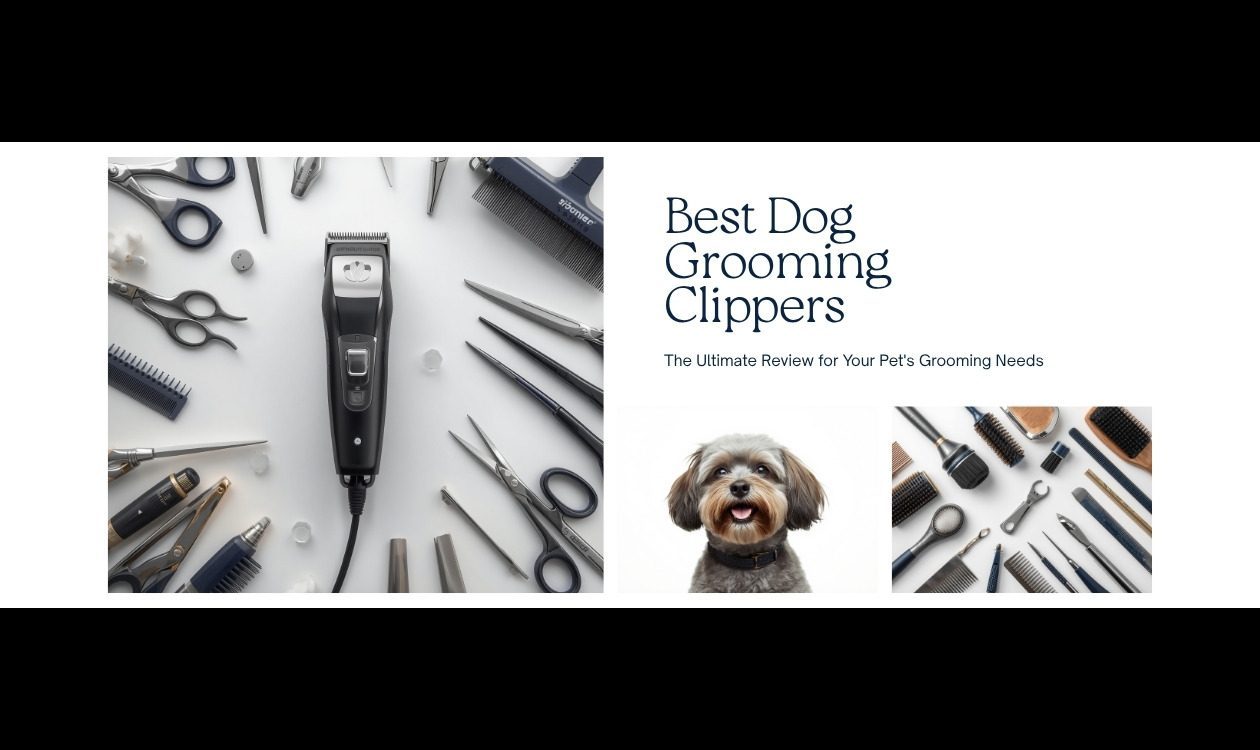
Consumer clippers from general hardware brands are built for human hair — softer, finer, and far less dense than a dog’s coat. Professional dog grooming clippers differ in three critical areas:
- Motor type: Rotary motors (used in Wahl KM10, Andis AGC) deliver constant torque and handle matted or thick coats without stalling. Pivot motors (most budget clippers) are lighter but bog down on double coats.
- Blade speed (SPM): Professional units run 3,000–5,000 strokes per minute. Faster SPM means cleaner cuts and less pulling — a major factor in whether your dog tolerates the session calmly.
- Heat dissipation: Cheap clippers overheat in under 10 minutes. Pro-grade clippers use vented housings and detachable blades you can swap mid-session to prevent blade burn on sensitive skin.
Top 5 Best Dog Grooming Clippers — 2025 Reviews
1. Wahl Professional Animal KM10 — Best Overall
Editor’s Choice
The KM10 is the industry gold standard, used in grooming salons worldwide. Its two-speed rotary motor delivers 3,000 and 3,700 SPM — more than enough for any coat type, including Newfoundlands and Bernese Mountain Dogs with legendarily thick fur. The snap-on blade system accepts all #10, #7, #5, #4, and #3 blades, meaning your investment in blades is protected if you ever upgrade the body.
What sets the KM10 apart is its balanced weight distribution. At 12 oz without the cord, it doesn’t fatigue your hand during long sessions. The rubberized grip prevents slipping, and the cool-running motor rarely needs a cooling break before 45 minutes of continuous use.
- Motor: Heavy-duty rotary, 2-speed (3,000 / 3,700 SPM)
- Compatible blades: Wahl #10, #7, #5, #4, #3, #3-3/4 snap-on
- Noise level: Moderate — detectable but not alarming for most dogs
- Best for: Medium-to-large breeds, double coats, professional use at home
2. Andis EasyClip Pro-Animal 7-Piece — Best for Beginners
Andis has been making professional grooming tools since 1922, and the EasyClip Pro-Animal distills that expertise into a beginner-friendly package. The clipper comes bundled with seven attachment combs covering 1/8″ to 1″ lengths, so you can achieve any style without buying additional blades immediately.
The electromagnetic motor runs quieter than most rotary models, which is a genuine advantage if your dog is noise-sensitive. It runs at a single speed of 3,400 SPM — plenty for most coat types excluding the very thickest double coats.
- Motor: Electromagnetic, single-speed (3,400 SPM)
- Kit includes: 7 comb attachments, blade oil, cleaning brush, blade guard
- Noise level: Low — ideal for anxious dogs
- Best for: Beginners, mixed-breed coats, single-layer coats
3. Oster A5 Turbo 2-Speed — Best for Small Dogs
The Oster A5 has been the clipper of choice in veterinary clinics for decades. The turbo model runs at 3,000 and 4,000 SPM, and its unique quality is extreme blade precision — the A5’s universal blade system is compatible with Andis blades as well, giving you the widest selection of interchangeable options on the market.
For toy breeds and small dogs like Yorkies, Maltese, or Shih Tzus, the A5’s quiet operation and precise cutting make grooming a calmer experience. The housing runs slightly warmer than the KM10 but stays manageable with regular blade swaps.
- Motor: Single-phase induction, 2-speed (3,000 / 4,000 SPM)
- Compatible blades: Oster A5 universal (also fits Andis AG/AGC)
- Noise level: Low-to-moderate
- Best for: Small breeds, fine to medium coats, vet-style precision
4. Christensen & Co. Uber Professional Series — Best for Thick Coats
Less widely known outside professional grooming circles, the Christensen Uber handles arctic-breed coats like Samoyeds, Malamutes, and Chow Chows that would stall a lesser clipper within minutes. Its high-torque motor maintains consistent SPM under load — meaning the blade speed doesn’t drop when it hits resistance, which is what causes pulling and discomfort.
The drawback is weight: the Uber is heavier than the KM10 and less comfortable for prolonged single-handed use. It’s best suited to groomers doing multiple large-dog appointments or owners with one very heavy-coated dog who want to get through the session efficiently.
5. Casfuy Dog Clippers — Best Budget Pick
At a fraction of the cost of professional models, the Casfuy USB-rechargeable clipper is the right tool for touch-up grooming on short-coated breeds — think Beagles, Labradors, or Boxers who need a paw-pad trim and face tidy rather than a full body clip. The low noise (50 dB) and vibration-reducing design make it excellent for dogs who have previously been traumatized by louder clippers.
Do not expect it to handle matted coats or thick undercoats — it will stall and heat up quickly. Used within its intended scope (touch-ups and short coats), it performs beyond its price point.
Dog Clipper Comparison Table
| Clipper | Motor Type | SPM | Best For | Approx. Price |
|---|---|---|---|---|
| Wahl KM10 | Rotary 2-speed | 3,000–3,700 | All breeds, thick coats | $180–$220 |
| Andis EasyClip Pro-Animal | Electromagnetic | 3,400 | Beginners, single-layer coats | $60–$80 |
| Oster A5 Turbo | Induction 2-speed | 3,000–4,000 | Small breeds, vet clinics | $140–$170 |
| Christensen Uber | High-torque rotary | 3,500+ | Arctic/double coats | $200–$250 |
| Casfuy USB | Pivot (rechargeable) | ~2,000 | Touch-ups, short coats | $25–$40 |
How to Choose the Right Dog Grooming Clippers for Your Breed
Coat type is the single most important factor in clipper selection. Here’s a quick decision framework:
- Short, single-layer coats (Labrador, Boxer, Beagle): Any decent clipper works. Prioritize quiet operation and light weight. The Casfuy or Andis EasyClip covers this category perfectly.
- Medium coats with some undercoat (Cocker Spaniel, Border Collie): Go with the Andis EasyClip Pro-Animal or Oster A5. Blade versatility matters here — you’ll want multiple lengths for blending.
- Heavy double coats (Golden Retriever, Husky, Chow Chow): Don’t compromise — the Wahl KM10 or Christensen Uber is non-negotiable. Underpowered clippers create pulling and heat that turns grooming into a negative experience.
- Curly or wire coats (Poodle, Schnauzer, Irish Terrier): Rotary motors are essential. The KM10 with a #10 blade followed by scissors-over-comb finishing is the standard professional approach.
Clipper Blades Explained: Which Number Does What?
In the universal blade numbering system, higher numbers cut shorter — counterintuitively. Here’s the practical breakdown:
- #3 / #3-3/4: Leaves about 1/2″ of coat — a common summer cut length for Goldens and Cockers.
- #4: 3/8″ — good for body work on medium-coated breeds.
- #5: 1/4″ — a standard working length for many all-breed trims.
- #7: 1/8″ — commonly used for Poodle faces and feet, also for sanitary trims.
- #10: 1/16″ — very close. Used for paw pads, around ears in show trims, and as a starting blade for most professional body clips.
- #40: Near-surgical. Used for prep work before procedures, not for regular grooming.
5 Beginner Mistakes to Avoid When Using Dog Clippers
- Running a dull or dirty blade: A blade dull enough to pull rather than cut is painful. Blades need oiling every 10–15 minutes and professional sharpening every 6–8 months of regular use.
- Forgetting to check blade temperature: Hold the blade to your wrist before placing it on the dog’s skin. If it’s too hot to hold comfortably, switch to a second blade while the first cools.
- Clipping a dirty dog: Dirt and grit destroy blades. Always bathe and fully dry the dog before clipping — wet coats also cause the blade to drag and unevenly cut.
- Rushing through mats: Matting is painful to clip through and can result in skin cuts. De-mat first with a slicker brush and mat splitter, then clip.
- Skipping the safety guard on the belly: The belly, armpits, and groin have thin, loose skin that folds. Use a #10 blade or longer with extreme care in these areas, or use scissors.
Clipper Maintenance: Making Your Investment Last
Professional clippers can last 10–15 years with proper care. The key steps are simple:
- Oil before and after each use: Two drops of clipper oil on the blade teeth while running. Wipe off excess.
- Clean the blade with a spray disinfectant like Andis Cool Care Plus between dogs (not just between uses).
- Remove hair from the motor vent with the included cleaning brush after each session. Packed hair causes overheating.
- Store in the case: Blades nick against each other in drawers. The carrying case protects both the cutting edge and the hinge teeth.
Where to Buy Dog Grooming Clippers — What to Watch Out For
The professional grooming clipper market has a significant counterfeit problem, particularly on third-party marketplace listings. Always purchase Wahl, Andis, and Oster clippers from their official brand stores or from authorized retailers. Counterfeit Wahl KM10 units have been found with the wrong motor type inside — they overheat within minutes and lack the blade compatibility of the real unit.
Look for clippers that include the manufacturer’s warranty card in the box, as counterfeits typically omit this. The Wahl website maintains a list of authorized dealers by country.
Best Dog Grooming Clippers by Breed and Coat Type
No single clipper works best for every coat. Understanding what your dog’s coat actually requires — and where clippers fit in the grooming process — saves money, prevents coat damage, and makes the experience easier for both of you.
Double-Coat Breeds: Husky, Malamute, Golden Retriever, German Shepherd
Warning: Never shave a double-coated breed. The undercoat and topcoat grow back at different rates and textures after shaving. The resulting coat is often referred to as “clipper alopecia” or “post-clipping alopecia” — a permanently altered coat that loses its insulating function for cold AND heat regulation. This damage can be irreversible.
Double-coated breeds have a dense, soft undercoat beneath stiff guard hairs. Clippers serve a very limited role here. Proper grooming for these breeds involves a high-velocity blow dryer first — this separates and blows out the undercoat far more effectively than any brush. Follow with an undercoat rake and a slicker brush. Clippers should only be used on hygiene areas: paw pad hair (between pads), sanitary trim, and inside the ear flap where air circulation matters. Use a #10 blade for hygiene areas only. Clippers running at 3,000+ SPM handle the thick topcoat without stalling, but even on hygiene trims, blade heat is a concern — check frequently.
Wiry and Harsh-Coat Breeds: Wire Fox Terrier, Airedale, Scottish Terrier
These breeds ideally require hand-stripping — a technique where dead outer coat is pulled by hand or with a stripping knife to maintain the hard, wiry texture the breed standard requires. Clippers cut the hair shaft rather than pulling the dead coat, permanently softening the wiry texture over repeated sessions. For show dogs, this matters enormously. For pets, the coat change is cosmetic but irreversible.
If you are clipping a wiry-coated dog anyway (most pet owners do), use a #4F or #7F skip-tooth blade, work in the direction of coat growth, and accept that the coat texture will change after several clip cycles. The Andis Excel 2-Speed and Oster A5 Turbo are the workhorses for wiry coats — both produce enough torque to handle the dense structure without overheating.
Curly and Wavy Coats: Poodle, Labradoodle, Goldendoodle, Bichon Frise
Curly coats are the most demanding to clip correctly, and they are the primary reason pet owners invest in professional-grade clippers. The coat must be completely blown out dry before clipping — any moisture in curls causes the blade to drag, heat rapidly, and leave track marks. Even slightly damp coat will jam a mid-range clipper blade.
Recommended clippers for curly coats: Andis ProClip 2-Speed (4,400 SPM) or Wahl KM10 (2-speed, up to 4,500 SPM). These produce genuine professional power at a sustained rate. Use a #30 or #40 blade under snap-on comb attachments for body length — the fine blade under the comb cuts cleanly through the comb’s tines even in thick, springy curls. Never try to clipper curly coats with a #4 or #5 blade directly — even on Doodles, the blade picks up too much coat and leaves an uneven result.
Common styles explained: a teddy bear cut leaves 1–2 inches of length all over (use a 1″ snap-on comb over a #30 blade); a kennel cut is a shorter, lower-maintenance style (3/8″ or 1/2″ comb). The face, ears, and tail are scissored to finish.
Smooth and Short Coats: Labrador, Boxer, Beagle, Doberman
Smooth-coated dogs rarely require body clipping. Their coat length is managed entirely by natural shedding. Clippers are needed only for hygiene areas: between paw pads (#10 blade), the sanitary area, and the belly for female dogs. A basic cordless clipper — Wahl Bravura, Oneisall cordless, or even a trimmer — handles everything a smooth-coated dog needs. Do not invest in a high-torque professional-grade clipper for a Labrador; it is unnecessary for the limited hygiene work required.
Long Silky Coats: Yorkshire Terrier, Maltese, Shih Tzu, Afghan Hound
Silky coats are not particularly thick but they mat easily, especially behind the ears, in the armpits, and between rear legs. The clipper is a roughing tool for silky-coated dogs — it sets the basic length, and scissors do the finishing. Use a lighter, quieter cordless clipper; small dogs are sensitive to vibration and noise, and being pinned down with a loud, heavy machine is the primary cause of grooming anxiety in toy breeds.
Critical rule: brush the coat completely mat-free before clipping. Mats tent the skin — the blade runs along the surface of the mat while the skin below is pulled up into the mat, and the blade cuts through skin without warning. A mat splitter or dematting rake must be used before any clipper contact. #4F or #5F blades give a puppy cut length; snap-on combs in the 3/4″ to 1″ range are common. All blending and finishing around the face, legs, and tail is done with curved and straight scissors.
Professional Grooming vs. At-Home Clippers: When to DIY
The decision to groom at home versus use a professional groomer is financial, practical, and safety-related — not just a matter of preference. Here is an honest assessment of both sides.
The Real Cost Comparison
Professional grooming for a medium to large dog runs $50–120+ per visit depending on breed, coat condition, and geographic location. For a Doodle or Poodle that needs grooming every 6–8 weeks, that is $325–780 per year — and prices have risen sharply since 2022 as groomer shortages continue. A quality home clipper kit costs $80–200. Professional-grade blades run $20–40 each, and you will need 2–4 blades (a #10 for hygiene, a #30 or #40 for under snap-on combs, and at least one body blade). Total startup investment: $120–300. The math breaks even within 2–4 grooming sessions and continues to save money every year thereafter.
What You Can Realistically Do at Home
- Puppy cuts on Poodles and Doodles (takes 5–10 sessions to develop consistency, but it is learnable)
- Hygiene trims: paw pads, sanitary area, ear flap — these are high-value and easy to learn
- Maintenance clips between professional appointments — extending groomer visits from every 6 weeks to every 10–12 weeks
- Full body clips on smooth-coated and medium-short-coated dogs
- Nail grinding and ear cleaning as part of a home grooming routine
What You Probably Should NOT Do at Home
- Breed-standard show clips: The Poodle Continental clip, Schnauzer banding, Cocker Spaniel skirts — these require professional scissoring skill that takes years to develop. Attempting them at home results in uneven, embarrassing cuts that the dog does not care about but owners often regret.
- Hand-stripping on terriers: This is a distinct skill from clipping. Done incorrectly, it causes pain. Done correctly, it is time-consuming and requires a trained technique.
- Fear-reactive or aggressive dogs: A dog that bites during grooming is a genuine safety hazard. Bite injuries from home grooming are common, and a bite during a grooming attempt makes the dog harder to handle in every future grooming situation. If your dog has growled, snapped, or bitten during grooming, seek a professional who specializes in fear-free grooming before attempting at home.
Critical Safety Considerations
Clipper burn: A blade that has been running for 5–10 minutes generates significant friction heat. The 10-second wrist test: hold the blade flat against the inside of your wrist for 10 seconds. If it is uncomfortable, it is too hot for your dog’s skin (which is far more sensitive than the top of a hand). Cool blades with clipper coolant spray, a blade bath, or simply switching to a second blade while the first cools.
Never clip matted fur: Matted areas tent the skin upward into the mat. The blade cuts through what it contacts — which is the mat, but also the skin beneath it. Blade-to-skin injuries from clipping through mats are the most common home grooming injury. Always dematting before any clipping.
Dull blades pull and bruise: A dull blade does not cut cleanly — it grips and pulls individual hairs, which is painful even without cutting the quick. Have blades professionally sharpened ($5–10) every 6–12 months depending on use. Keep styptic powder (Kwik Stop) on hand for any skin nicks.
The “Professional Plus Maintenance” Strategy
The most cost-effective approach for most dog owners: let a professional groomer set the style every 8–12 weeks, and maintain length in between with your own clippers. This strategy cuts professional grooming costs by 30–50%, keeps the dog’s coat in better condition between appointments (less matting = easier professional grooms = lower cost), and gradually builds your home grooming skills without the pressure of managing the full cut from scratch.
Frequently Asked Questions
Trusted Sources & Further Reading
📄 Sources & References
- National Dog Groomers Association of America: Professional clipper standards — blade grades, motor types and coat-appropriate selection criteria — https://www.nationaldoggroomers.com
- AKC: Dog Grooming Clippers Guide — choosing the right clipper for coat type, frequency and budget — https://www.akc.org/expert-advice/dog-care/best-dog-clippers
- Applied Animal Behaviour Science: Desensitization to grooming tools — clipper noise and vibration habituation protocol — https://www.sciencedirect.com/journal/applied-animal-behaviour-science
- American Pet Products Association (2023): Home pet grooming market — $4.1B and growing as owners shift from salon to DIY grooming — https://www.americanpetproducts.org