
Buying Guides & Reviews
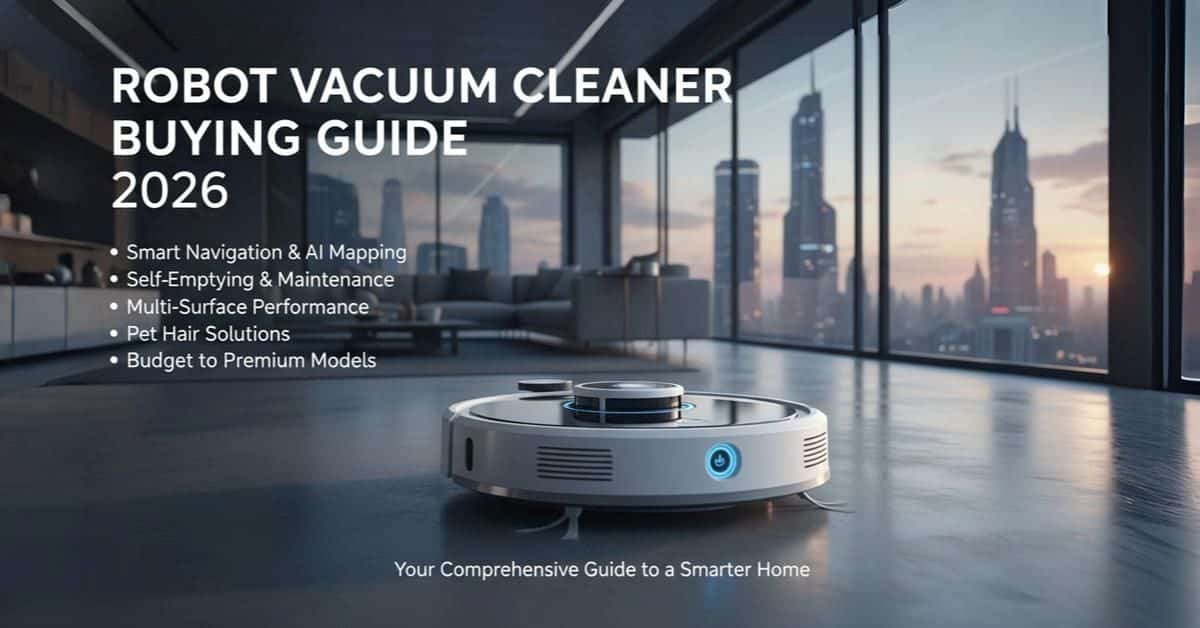
Robot Vacuum Cleaner Buying Guide 2026: Smart Cleaning, Lower Risk, Better Value
Jan
Introduction
A robot vacuum cleaner is no longer a luxury gadget—it has become a practical household asset, much like insurance or a diversified investment portfolio. As someone who advises clients on financial planning and risk protection, I evaluate home technology the same way I assess long-term financial decisions: cost efficiency, risk reduction, durability, and return on investment.
In this guide, you will learn how to evaluate a robot vacuum cleaner using a structured, decision-driven framework. We will examine performance, cost, automation value, and risk mitigation—while also comparing popular options such as the best robot vacuum, robot vacuum and mop systems, and specialized solutions for pet owners.
Whether you are optimizing time, protecting flooring assets, or seeking predictable home maintenance costs, this article will help you make an informed, low-risk purchase decision.
The Robot Vacuum Cleaner as a Long-Term Asset
From a financial planning perspective, household tools should be evaluated as assets, not expenses.
A robot vacuum cleaner delivers value in three measurable ways:
- Time preservation – Automated cleaning reduces manual labor hours.
- Asset protection – Consistent cleaning extends the life of flooring, carpets, and rugs.
- Predictable maintenance costs – Fewer emergency cleanups and replacements.
According to consumer home-care studies, consistent vacuuming can extend carpet life by 30–40%, reducing long-term replacement expenses. This aligns closely with how preventive insurance works—small, consistent actions reduce large future costs.
Therefore, the question is not whether to buy a robot vacuum cleaner, but which model offers the best risk-adjusted return.
How to Evaluate a Robot Vacuum Cleaner Like a Financial Planner
Before reviewing brands or features, it is essential to apply a decision framework similar to underwriting an insurance policy.
Total Cost of Ownership
The purchase price is only part of the equation. Consider:
- Replacement filters and brushes
- Battery lifespan (typically 2–4 years)
- Software support and updates
A lower upfront cost may result in higher long-term expenses—an issue I frequently see in poorly structured insurance policies.
Risk Reduction Capability
A strong robot vacuum cleaner reduces:
- Dust accumulation (important for allergy-prone households)
- Pet hair buildup
- Wear and tear on flooring
Models with advanced sensors and mapping reduce collision risk, protecting furniture and baseboards.
Automation Reliability
Automation must be dependable. Intermittent performance creates uncertainty, which is undesirable in both finance and home systems.
Best Robot Vacuum Options Based on Household Risk Profiles
Different households face different “risk exposures,” much like individuals do in financial planning.
Best Robot Vacuum for Busy Professionals
If your primary risk is time scarcity, look for:
- Smart scheduling
- App-based control
- Accurate room mapping
These features create predictable outcomes, similar to automated savings plans.
Best Robot Vacuum for Families with Children
Homes with children require:
- Strong suction
- Reliable obstacle detection
- Consistent daily cleaning
Inconsistent cleaning increases hygiene risks, much like gaps in insurance coverage.
Best Robot Vacuum for Long-Term Value
From a pure cost-benefit standpoint, the best robot vacuum is one that:
- Performs consistently over several years
- Has affordable replacement parts
- Receives long-term software updates
Robot Vacuum and Mop Systems: Risk Mitigation Through Consolidation
A robot vacuum and mop system is the equivalent of bundling insurance policies.
Instead of purchasing separate devices, these hybrid systems:
- Reduce upfront equipment costs
- Minimize storage needs
- Simplify maintenance schedules
However, consolidation introduces risk if one function underperforms. From a planning perspective, this is similar to combining insurance riders—efficient, but only if execution quality is high.
Robot vacuum and mop systems are best suited for:
- Hard flooring environments
- Homes with minimal carpet coverage
- Users seeking low-touch maintenance
Best Robot Vacuum for Pet Hair: Managing a High-Risk Variable
Pet hair is a high-frequency risk factor, much like recurring medical expenses in financial planning.
The best robot vacuum for pet hair should include:
- High-torque suction
- Tangle-resistant brush systems
- High-efficiency particulate filters
Households with pets experience significantly higher debris loads, increasing wear on motors and filters. Investing in a pet-optimized robot vacuum cleaner reduces replacement frequency and improves air quality—an often overlooked but valuable health benefit.
Brand Risk Analysis: Shark, Eufy, and iRobot
Brand selection matters in both insurance and technology. Track record, support, and reliability all influence risk.
Shark Robot Vacuum
A shark robot vacuum appeals to value-focused buyers. These models typically offer:
- Competitive pricing
- Solid suction performance
- Straightforward maintenance
They are suitable for consumers who want predictable performance without premium pricing, similar to term insurance strategies.
Eufy RoboVac
The eufy robovac line targets cost-conscious households. Benefits include:
- Quiet operation
- Simple app interfaces
- Lower upfront investment
However, limited advanced features may increase long-term opportunity costs for complex home layouts.
iRobot Vacuum
An irobot vacuum, produced by iRobot, represents a premium, lower-risk choice.
These models typically provide:
- Advanced navigation algorithms
- Long software support cycles
- Strong resale and brand trust
From a financial planning lens, iRobot vacuums resemble whole-life policies—higher cost, but long-term stability.
Cost vs Value: A Practical Scenario Analysis
Consider two households:
Household A
- Buys a low-cost robot vacuum cleaner
- Replaces it every two years
- Experiences inconsistent cleaning
Household B
- Buys a mid-range model with better navigation
- Uses it for five years
- Requires fewer replacements and repairs
Over five years, Household B often spends less total money, despite higher upfront cost. This mirrors long-term investment planning—quality reduces volatility.
Smart Integration and Data Security Considerations
Modern robot vacuum cleaners connect to home networks. From a risk-management perspective, this introduces data and privacy exposure.
Mitigation strategies include:
- Using strong Wi-Fi passwords
- Updating firmware regularly
- Selecting brands with established security practices
As with financial data, transparency and vendor credibility matter.
FAQs
Is a robot vacuum cleaner worth the investment?
Yes. When evaluated over several years, a robot vacuum cleaner often reduces cleaning costs, time loss, and flooring wear.
How often should a robot vacuum cleaner run?
Most households benefit from daily or alternate-day schedules, depending on foot traffic and pet presence.
What is the best robot vacuum for pet hair?
Models designed specifically for pet environments offer stronger suction and specialized brushes, reducing long-term maintenance risk.
Are robot vacuum and mop systems reliable?
They are effective for hard floors but should be evaluated carefully for durability and dual-function performance.
How long does a robot vacuum cleaner last?
With proper maintenance, quality models last 4–6 years, comparable to other major home appliances.
Does a robot vacuum replace traditional vacuuming?
It reduces frequency but does not eliminate the need for occasional deep cleaning.
Conclusion
Choosing a robot vacuum cleaner is not just a home upgrade—it is a strategic household decision. When evaluated through the lens of financial planning and risk management, the right model delivers predictable value, reduces long-term costs, and protects physical assets like flooring and indoor air quality.
By focusing on total cost of ownership, reliability, and suitability for your household risk profile, you can confidently select a robot vacuum cleaner that supports both convenience and financial efficiency. For readers interested in exploring options, review product specifications carefully and compare them within your broader home-management strategy.
Arbsbuy Useful Links
- Homepage: https://www.arbsbuy.com/
- Category Page: https://www.arbsbuy.com/product-category/categories/home-and-kitchen/
External Sources
- https://www.consumerreports.org/appliances/vacuum-cleaners/
- https://www.energy.gov/energysaver/choosing-and-using-vacuum-cleaners
- https://www.epa.gov/indoor-air-quality-iaq

Subscribe to receive in-depth reviews, honest comparisons, and practical recommendations that help you choose the right products with confidence.
Newsletter coming soonNo spam. No hype. Just clear, helpful insights.